Chaque version du rituel est donnée dans l'état de sa source, de la plus
ancienne à la plus récente. Choisissez une version pour la lire ; sélectionnez-en une
seconde pour les comparer côte à côte. Fiche du grade :
le REAA du 4e au 33e degré.
Les textes issus de numérisations anciennes ont été corrigés automatiquement
(césures, ligatures, mots collés) puis relus : des coquilles peuvent subsister. D'autres
versions inventoriées au corpus (Francken 1783, Pyron 1811, rituels de Charleston ) rejoindront
cette page à mesure de l'établissement de leur texte.
Copie d'un officier du régiment de Foix en garnison à Saint-Domingue : le Rite de Perfection en 25 degrés, tel qu'arrêté au convent de Bordeaux. Cahier « Le grade de prince de Jérusalem » (p. 155-161 de la transcription). Le texte suit la transcription d'Aeditimus : son apparat critique est repris ici, ainsi que les repères de folio du manuscrit.
L'Ordre des princes de Jérusalem, après la reconstruction du temple dont Zorobabel eut la conduite sous Cyrus, ce sont de grands élus parfaits maçons sublimes écossais créés chevalier de l'Orient à la sortie de la captivité de Babylone, après la rencontre sur le fleuve Euphrate, ou Starbuzanaï, et la victoire signalée qu'ils remportèrent. Ce sont, dis-je, ces dévoués chevaliers qui furent occupés à défendre les ouvriers constructeurs contre les Samaritains qui étaient continuellement à les combattre.
Pour encourager encore davantage les ouvriers, on les vit mettant la main à l'œuvre, se servant de la truelle d'une main et de l'autre à une épée défensive aux assauts continuels qu'ils furent obligés d'essuyer.
Zorobabel pour récompenser le courage intrépide, la fermeté et la constance de ceux qui s'étaient le plus distingués dans ces différents combats, les chargea d'une glorieuse mission en les chargeant d'une ambassade auprès du roi Darius à Babylone qui, informé du motif de cette ambassade et touché des plaintes qui lui furent portées par les grands élus parfaits maçons et sublimes écossais contre les Samaritains, prit des justes décrets pour les empêcher par la suite de s'opposer plus longtemps à ses desseins, accorda aux ambassadeurs ce qu'ils demandaient et les chargea de ses ordres pour la nation de laquelle ils se plaignaient.
Le peuple de Jérusalem fut si charmé de la bonne suite de cette ambassade, que pour en témoigner sa reconnaissance à Zorobabel et à ceux qui l'avaient accompagné, il alla en devant d'eux, les reçut avec acclamation, leur rendit les honneurs les plus distingués, les honora du nom de princes de Jérusalem, les priant en cette qualité de les gouverner par la suite et les protéger, leur promettant autant de soumission que de fidélité et d'obéissance. Ce fut Zorobabel lui-même qui fut chargé d'y aller et se fit accompagner de quatre autres.
C'est de cette époque que les chevaliers princes sont reçus dans les loges symboliques avec les hommes distingués, eux qui furent rendus de braves chevaliers princes, auxquels nous devons tant comme on le narra dans la suite. Forme du grand conseil
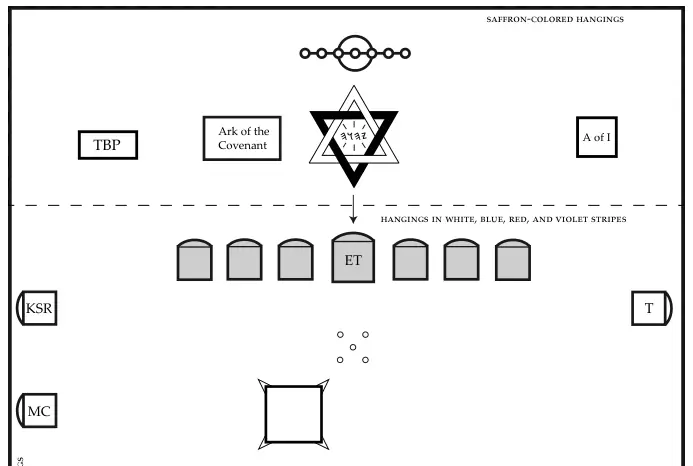
Le lieu où se tient le conseil doit être séparé en deux parties. Dans celle du fond, qui est l'Orient du grand conseil, est le roi Darius, qui réside sous un dais jaune avec une table devant lui, une épée nue, un bouclier, un chandelier à cinq branches, une balance et une main de justice. Cette salle nous représente la ville de Babylone et doit être tendue de rouge. Celle qui est à l'Orient représente la ville de Jérusalem où est pareillement un trône pour le prince Zorobabel, qui y préside. La séparation des deux salles est la figure du chemin qu'il fallut faire d'une ville à l'autre. La salle où préside Zorobabel doit être tendue de jaune aurore et au retour des ambassadeurs doit être éclairée par des lumières mises en pelotons qui doivent représenter les feux de joie que fit le peuple de Jérusalem au retour des ambassadeurs. Formule de réception
Le prince Zorobabel, dans le second appartement, ouvre le conseil des chevaliers de l'Orient à la manière accoutumée. Ce conseil étant ouvert, on se plaint des difficultés continuelles que l'on essuie de la part des Samaritains dans la réédification du temple. On propose de les combattre, et Zorobabel, louant le courage, la constance et la fermeté des
ambassade au roi Darius pour se plaindre des Samaritains et lui demander sa protection contre eux… Nota. On observe de n'appeler à ce conseil du chevalier de l'Orient que cinq chevaliers au plus, qui ne soient pas prince de Jérusalem, et ce sont ordinairement ces cinq-là que l'on députe vers Darius. Dans l'autre appartement où il n'est accompagné que de ses gardes, qui sont deux chevaliers princes armés de boucliers et de cuirasses, pour tenir compagnie à l'illustre chevalier qui représente Darius. S'il n'y avait pas cinq récipiendaires, Zorobabel compléterait le nombre des ambassadeurs par d'autres chevaliers princes.
Le plus ancien chevalier récipiendaire est celui qui portera la parole à Darius. Il doit marcher à la tête des quatre autres qui, comme lui, doivent être armés d'épée, bouclier et cuirasse, marchant comme s'ils avaient toujours quelqu'un à combattre. Nota. Il y a des manuscrits où il est dit que le récipiendaire doit avoir les yeux bandés, cela est contradictoire avec le caractère des combattants que ces chevaliers portent avec eux et la manière affable dont Darius les reçoit.
Ces cinq chevaliers introduits par les deux gardes auprès du roi Darius, celui qui est à la tête lui expose le sujet de l'ambassade et lui demande justice contre les Samaritains. Darius alors écrit une lettre, qu'il remet aux ambassadeurs, par laquelle il ordonne à son peuple de se soumettre. Copie de la lettre de Darius au gouverneur de Samarie
Nous, Darius, souverain roi des rois, souverain des souverains, seigneur des seigneurs, voulant favoriser de notre gratitude et bonté nos chers peuples de Jérusalem à l'exemple de notre très illustre et très excellent prédécesseur le roi Cyrus, après avoir ouï les plaintes de leurs ambassadeurs contre le peuple de Samarie qui refuse de contribuer à la réédification du temple à Jérusalem pour y faire les sacrifices et fournir aux autres besoins que l'ouvrage, nous redisons par ces présentes qu'ils aient à se soumettre sous peine d'en choisir notre haine et juste vengeance. Donné dans notre cour le quatrième du deuxième mois de l'année 3534 sous le sceau du
[fidèle] Daniel et de notre règne 3 courant de l'année ci-dessus. Signé : Darius roi.
Ces patentes expédiées, le récipiendaire prend congé du roi en faisant une inclination de tête et en lui baisant la main puis s'en retourne par la même route d'où il est venu, marchant d'une manière toujours disposée à combattre. Arrivé à la porte de l'appartement où se tient Zorobabel, ils sont reçus avec acclamation et conduits sous la voûte d'acier jusqu'au pied du prince, qui leur fait conseil prenant la lettre que lui adresse Darius.
Lorsqu'il en a fait lecture, ceux qui composent le conseil et qui n'étaient point de l'ambassade, les proclament princes de Jérusalem leur confiant toute l'autorité et, pour marque de leur allégresse, allument des feux de joie, qui sont figurés, comme nous l'avons dit plus haut, par des bougies en pelotons. Lorsqu'elles sont allumées Zorobabel reçoit le serment des ambassadeurs en leur disant prêter l'obligation des princes de Jérusalem, après laquelle ils sortent de la chambre et vont dans l'autre où Zorobabel ouvre le conseil des princes de la manière qui suit.
Nota. Lorsqu'il y a réception on commence par ouvrir le conseil des chevaliers d'Orient pour recevoir le récipiendaire. Au point où nous sommes et si c'est seulement un conseil de délibération entre les princes de Jérusalem, il s'ouvre de la manière suivante.
Ouverture du conseil des princes
Le très valeureux et très illustre : Frères grands surveillants, pourquoi ce lieu est il en deux parties, l'une jaune aurore et l'autre rouge ? La partie d'Orient représente Jérusalem et est tendue de jaune aurore figure de l'aurore céleste, qui régnait sur le lieu saint, où le temple premier du Seigneur a été construit. La partie orientale tendue de rouge représente la ville de Babylone et la couleur rouge est le symbole du sang, qui fut répandu dans les différents combats qui furent livrés aux chevaliers princes maçon dans la voûte.
D. Qui préside à nos conseils.
R. Zorobabel, sous le titre de très équitable.
D. Quels sont les grands surveillants ?
R. Deux autres princes, sous le titre de très éclairés.
Puisque c'est ainsi, très excellents princes et frères, le valeureux et très excellent se lève et nous éclaire dans ce grand conseil notre état nous appelle ici. Avertissez les très excellents, très illustres et très valeureux princes ici présents, que je vais ouvrir le grand conseil.
Très excellents, très illustres et très valeureux princes, le souverain des souverains et le seigneur des seigneurs nous avertit qu'il va ouvrir le grand conseil Soyez attentifs à ce qu'il va proposer. –
[47v°] D. Très excellent, très illustres et très valeureux princes, le grand conseil est ouvert. Zorobabel frappe ensuite cinq coups, le premier détaché et les quatre autres précipités, ce qui est répété et annoncé de la même manière par les grand surveillants.
Alors on fait entrer les récipiendaires et tous les frères présents viennent les recevoir à la porte, les complimenter et les conduire à Zorobabel, qui les honore du grand discours en leur faisant l'histoire et leur donnant les signes, mots et attouchement de l'Ordre, ce qui doit faire ressouvenir, que tout le peuple vint au devant de l'ambassade et proclama princes de la ville les ambassadeurs qui portaient de nouvelle aussi favorables. Signes, mots et attouchements
Le signe de valeureux prince de Jérusalem se fait en signe de combattant, pliant la main gauche sur le côté gauche. Il y a un autre signe qui est celui d'ordonnance qui se fait en tenant le bras en hauteur d'épaule comme pour commander.
L'attouchement se donne en se frappant avec le pouce droit sur la jointure du petit doigt cinq coups dont le premier détaché et les quatre derniers précipités et cela par deux. Pendant ce temps-là on place les deux pieds droits, pointe à part, ce qui figure la planche à tracer. On approche ensemble le genou contre à contre, ce qui forme une équilatérale. On se met la main gauche sur l'épaule [du partenaire] en ouvrant les doigts pour marquer le nombre de l'ambassade, qui doit toujours être de cinq. L'un dit : Vingt et l'autre : 23 vingt et trois, ce qui signifie le mot. La main et les mots sont connus des princes maçons de l'épée. En prononçant ces mots, on doit approcher le talon gauche du côté de talon droit, ce qui forme l'équerre. Après, vous vous quittez les mains et portez la pointe du pied au talon gauche et faites le salut en restant en bataille.
Le premier mot de passe est Thebet, mot hébreu, qui signifie le 20 du 9 mois où ils firent leur entrée à Jérusalem.
La parole est Adar, mot hébreu, qui signifie le 23 jour du 11 mois où l'on rendit grâce au Seigneur de la reconstruction du temple. Après avoir appris aux récipiendaires les signes,
mots et attouchements, on délibère les différents points, qui peuvent être proposés, puis, avant de fermer le conseil, on fait les questions suivantes :
Doctrine
D. Très excellent et très illustre prince éclairé, êtes-vous prince de Jérusalem ?
R. Le chemin de Babylone m'est connu.
D. Qu'étiez-vous avant d'avoir fait ce chemin ?
R. Très illustre et très valeureux prince, j'étais chevalier d'Orient et j'avais mérité de l'être durant la captivité, mes ancêtres ayant conservé pendant 70 ans auparavant le précieux dépôt des grands élus parfaits maçons sublimes écossais sous les ruines du temple détruit par Nabuzardan, général qui commandait les troupes de Nabucodonozor, roi d'Assyrie.
D. Comment êtes-vous parvenu à la dignité de prince ?
R. Par le zèle et l'ardeur, que j'ai fait paraître en différentes occasions.
D. Pourquoi très illustre ?
R. Parce que les Samaritains refusant de payer le tribut pour les sacrifices du temple, il fut envoyé une ambassade par le peuple vers le roi Darius, pour lui emporter les plaintes.
D. De combien fut cette ambassade ?
R. De cinq.
D. N'eurent-ils par des ennemis à combattre sur leur route ?
R. Ils eurent à combattre le peuple de qui ils se plaignaient et vainquirent tous les obstacles qui se présentaient à leur passage.
D. Qu'obtinrent-ils de Darius à leur arrivée à Babylone ?
R. Des ordres au peuple de Samarie de se soumettre comme ils l'avaient prié.
D. Comment furent-ils reçus à leur retour a Jérusalem ?
R. Avec pompe et une magnificence royale ; le peuple alla au-devant dehors de la ville avec des cris d'allégresse et les accompagnèrent dans l'intérieur de Jérusalem, dont ils les proclamèrent princes en faveur de lui.
D. Ou s'assemblèrent-ils pour rendre la justice au peuple ?
R. Dans deux des appartements du temple.
D. Comment étaient ils habillés ?
R. D'or.
D. Pourquoi ?
R. C'est que pour décorer des personnes aussi respectables, on avait choisi les étoffes les plus rares et les plus précieuses.
D. En portaient ils rien de plus remarquable ?
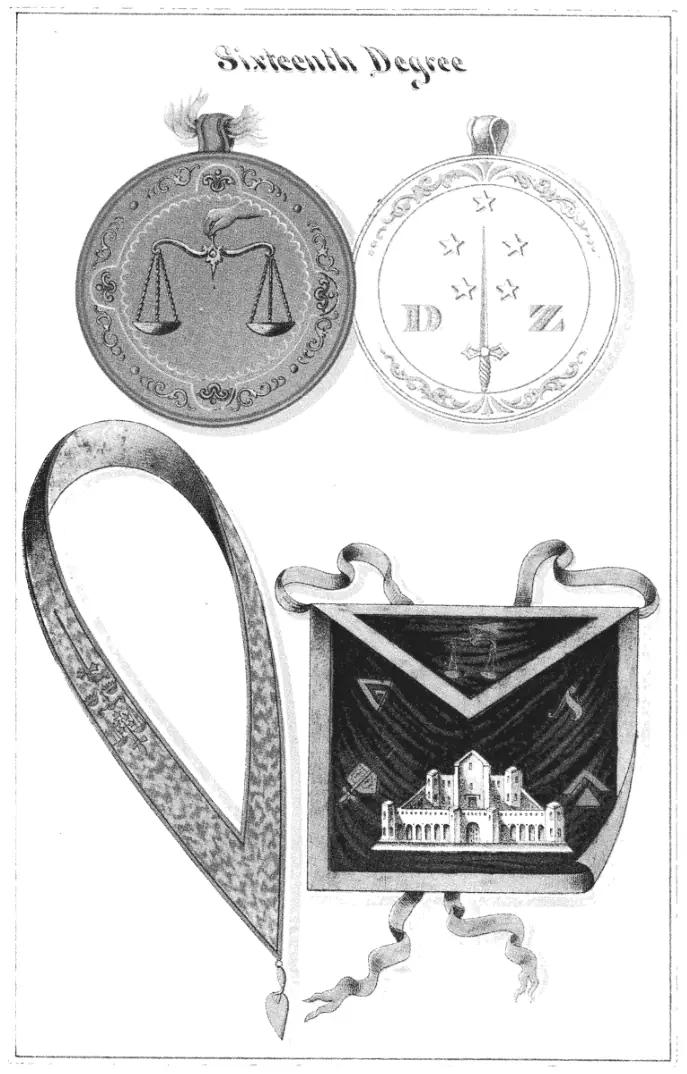
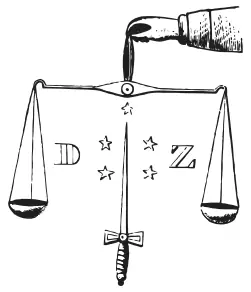
R. Ils portèrent un grand cordon aurore de droit à gauche en bout duquel pendait une médaille sur laquelle était gravé : d'un côté une main tenant une balance égale et de l'autre une épée a deux tranchants.
D. Pourquoi portaient-ils cet attribut ?
R. Pour marquer qu'ayant par leur zèle, leur courage et leur grande connaissance obtenu le titre de gouverneurs et princes de Jérusalem, ils doivent toujours les gouverner avec équité.
D. Que représente le tableau des princes de Jérusalem ?
R. Le temple de Salomon rebâti dans un carré long, un compas, une épée, un équilatéral, une main de justice et une truelle.
D. Que signifient toutes ces choses ?
R. Le temple de Salomon rebâti rappelle le zèle des chevaliers princes, lors de sa reconstruction, l'équerre et le compas sont les outils qu'on y a employés, l'épée et le bouclier
furent employés à défendre les ouvriers qui y travaillèrent, l'équilatéral sur un quart de cercle désigne leur qualité antérieure de grand élu parfait maître et sublime écossais, sortis de captivité sous Cyrus et reçus ensuite chevalier d'Orient pour être employés à la réédification du temple, la main de justice, la balance, et l'épée à deux tranchants désignent les pouvoirs que les princes de Jérusalem ont dans toutes les loges en cette qualité.
D. Pourquoi les princes consacrent-ils leur tablier dans leurs conseils ?
R. Parce qu'ils se souviennent qu'ils ont commencé par le grade d'apprentif avant de parvenir aux sublimes connaissances qu'ils possèdent.
D. Comment doit être éclairé la partie occidentale du premier conseil ?
R. Par 125 lumières dispersées de cinq en cinq.
D. Pourquoi ce nombre ?
R. Pour marquer que l'ambassade était de cinq députés.
D. Comment doit être éclairé l'autre partie du grand conseil de princes de Jérusalem ?
R. De plusieurs lumières placées indifféremment
D. Comment peut-on être introduit dans un conseil de princes de Jérusalem ?
R. Par vingt et cinq coups frappés de 5 et 5.
D. Quelle est la marche des princes ?
R. Un pas très grave en équerre fermée par la pointe du pied et non du talon comme à l'Orient
D. De quelle couleur sont les tabliers ?
R. D'un fond rouge, doublé et bordé de jaune, parce que dans tous les combats qu'ils ont essuyé, les tabliers ont été teints du sang qu'ils ont répandu.
D. Comment doit-on être dans un grand conseil ?
R. Assis d'un air grave, la main gauche appuyée sur le côté gauche en équerre contre un dais aurore, une Bible devant soi, une épée nue, un bouclier, un chandelier à cinq branches et une lanterne.
D. De quelle façon les princes se saluent-ils dans un grand conseil ?
R. Par une inclination de tête.
D. Comment les princes sont-ils rangés dans un grand conseil ?
R. Comme dans les autres loges, mais chaque prince a devant, comme le chef du conseil une table sur laquelle sont les différents attributs de l'Ordre et un chandelier à cinq branches.
Pour fermer le conseil
D. Très excellent valeureux prince éclairé, quelle heure est-il ?
R. Très excellent très illustre et très valeureux prince, le Soleil a parcouru la moitié de course et la justice est rendue au peuple.
D. Très excellents, très illustres et très valeureux princes, le conseil est fermé. Puis il frappe sur la table cinq coups avec les mains, le premier détaché et les quatre autres précipités. Les valeureux princes répètent et épellent le même nombre et se saluent par une inclination de tête sans ôter leur chapeau on se retire.
[Signature]
[48r°] Privilèges maçonniques des princes de Jérusalem
Ils sont les chefs de la Maçonnerie et ne doivent des honneurs qu'aux chevaliers du Soleil, aux grands inspecteurs K[ados] et aux chevaliers sublimes du royal secret.
Ils ont droit de casser et révoquer en loge symbolique tout ce qui s'y fait lorsqu'ils ne le trouvent pas conforme à l'esprit et aux règles de l'Ordre pourvu toutefois qu'il ne se trouve présent quelque chevalier de grade supérieur [ ?] chevalier sublime qui sont les chefs de tous les Ordres maçonniques quoique cependant ils n'ont que trois voix délibératives en conseil souverain.
Lorsqu'un prince [ ?] et qu'il y a quelque frère qui le reconnaisse et l'atteste en cette qualité, [la] loge lui députera aussitôt un frère décoré du même grade pour savoir s'il désire faire son entrée avec les honneurs qui lui sont dus. Il doit répondre qu'il est obligé d'accepter l'offre et qu'il ne peut s'en dispenser.
Pour lors le député prince avertit à la porte de la loge que le valeureux prince untel demande à faire son entrée avec tous les honneurs qui lui sont dus.
Dans ce cas le vénérable de la loge viendra lui-même le recevoir à la porte de la loge, l'épée à la main, ainsi que tous les frères qui suivront le vénérable [ ?] formant deux colonnes les surveillants toujours à leur [ ?] le prince avancera au siège accompagné du vénérable, les frères formeront un berceau avec leurs épée [ ?] le voudront à leur place jusqu'au bout et resteront sur cette attitude jusqu'à ce que le grand orateur ait fini son compliment au valeureux prince visiteur ; si le nombre des frères est suffisant on formera le berceau en deux pour [ ?] jar. et bab. Si le vénérable qui siège était de même grade que le frère prince visiteur, dans ce cas il ne sortira pas de sa place pour l'introduire mais il députera un frère en charge pour l'accompagner et les autres resteront et formeront le berceau où le prince visiteur passera après avoir reçu le compliment du vénérable et de l'orateur, et si le vénérable maître n'est pas au même grade il lui présentera le marteau et le prince visiteur l'acceptera ou le refusera comme il le jugera à propos.
Si le valeureux prince veut se retirer, le vénérable maître s'il n'est pas prince l'accompagne de même qu'il est entré.
Lorsque les princes se trouveront dans les loges symboliques on les qualifiera du titre de très valeureux et très illustres princes. Ils peuvent se faire rendre un compte exact de tout ce qui s'y passe et sont obligés même de voix de leurs [ ?] si elles sont ratifiées par les grandes et souveraines loges et [s'ils] ont été [ ?] à se soumettre aux statuts et règlements qui leurs sont prescrits envers elles et sur toutes choses, d'avoir en loge la liste ou catalogue des frères qui composent la loge y mentionnant chaque année tous les nouveaux venus.
Les très valeureux et très illustres princes de Jérusalem ont le droit d'être assis pendant toutes les opérations de la loge ; [ils ont] le chapeau sur la tête s'ils le jugent à propos ; ils entrent en loge le chapeau sur la tête, l'épée mue de la main [de la] droite et de la gauche, tenant un bouclier cuirassé et une marche de combattant. Cinq valeureux princes forment grand conseil et jugent en dernier ressort et lorsqu'ils ont prononcé il n'y a plus [à] revenir. Ils y sont autorisés par les pouvoirs que donna anciennement à leurs [ ?] le peuple de Jérusalem.
Le droit leur a été accordé par les sublimes connaissances qu'ils ont acquises dans l'art royal.
Ce sont là les privilèges, honneurs et prérogatives des princes de Jérusalem ; ils ne peuvent être jugés dans aucune loge, chapitre, conseil excepté des grades supérieurs, du Soleil ou chaos débrouillé, grand inspecteur K[ados] ou chevalier sublime du royal secret [ ?] ont partout ailleurs que le droit de [ ?] à leur souverain conseil.
Ils sont honorés de ces titres glorieux parce qu'ils représentent ces illustres maçons qui par leur mérite parvinrent [ ?] le peuple de Jérusalem avec le grand Zorobabel prince hébreu de la race de David.
[Signature]
Manuscrit Quesada 1804 (copie 1813-1821)
manuscrit · BNE Mss 7834 · 3 120 mots
Le manuscrit Quesada (Mss 7834 de la Bibliothèque Nationale d'Espagne) : copie (1813-1821) d'un état du Rite de 1804, voire antérieur, tel que pratiqué dans la mouvance du Suprême Conseil d'Amérique. Les didascalies du manuscrit sont en italique. Le texte est celui de l'édition Latomia, donnée en vis-à-vis du fac-similé du manuscrit : l'apparat critique de cette édition est repris ici, de même que les repères de folio du manuscrit.
Texte intégral sur ce site · transcription C. M. & P. T., Latomia / Chantier de fouilles maçonniques, d'après le Mss 7834 de la BNE
Chefs des Régulières
Grand Conseil
Le lieu ou se tient l’assemblée se nomme Gd∴ Conseil ^parties ou appartements contigus avec une communication vers l’intérieur La salle doit être séparé en deux ^ dans celle du fond est le roi Darius ^et un trône qui préside sous un dais ^ couleur aurore devant une table, devant lui sont une épée nue, un bouclier, un chandelier à 5 branches, une balance et une main de justice, cette salle représente la ville de Babylone elle doit être tendue en noir ruge505 Celle qui est avant représente la ville de Jérusalem où est pareillement un Trône du prince Zorobabel qui y préside la séparation des deux salles est l’emblème du chemin qu’il fallait faire d’une ville à l’autre, cette dernière salle est tendue en jaune et aurore, et au retour des ambassadeurs elle doit être éclairée par des lumières mises en faisceaux pour représenter les feux de joie que fit le peuple de Jérusalem au retour des ambassadeurs envoyés à Darius.
Réception
Le prince Zorobabel dans le 1er∴ appartement ouvre le Conseil en la manière accoutumée, lorsqu’il est ouvert il fait quelques questions propres à l’instruction de la réception projetée il ordonne au Me∴ des Cies∴ P∴ de Jérusalem d’aller préparer le Cand∴ ce qu’il exécute étant dans la chambre de préparation, soit avec un, soit avec cinq ( ce qui est plus conforme à la règle Folio 190 recto ) il prononce le discours suivant :
Il est très flatteur pour moi Ill∴ Chev∴ d’être envoyé aujourd’hui vers vous pour guider vos pas dans la nouvelle carrière où vous vous préparez d’entrer, le g de∴ de T∴ Ill∴ T∴ Ex∴ et T∴ V ble Prince de Jérusalem que nous allons vous communiquer est la récompense ordonnée par les anciens Maç∴ pour ceux qui en tous temps on fait éclater leur zèle pour l’Art Royal et qui comme vous mes FF∴ possèdent toutes les connaissances nécessaires pour éclairer les LL∴ symboliques dont ils sont les membres nés, nous vous rappellerons dans les cérémonies de votre réception tous les privilèges toutes les prérogatives & vous verrez que c’est à juste titre qu’on leur rend dans toutes les LL∴ les honneurs distingués qu’un Prince de Jérusalem ne peut se dispenser d’accepter la première fois qu’il y fait son entrée, avant de vous introduire, dans le Conseil des Princes assemblés pour vous recevoir, je me crois obligé de vous rappeler en abrégé l’histoire des Chev∴ d’Orient, par la liaison qu’elle a avec celle des Princes de Jérusalem, dont vous allez augmenter le nombre.
Il lui fait un court récit de cette histoire & finit par ces mots :
Dispensez-moi mon F∴ de vous complimenter sur l’heureux choix que nous avons faits de vous si vous pouviez pénétrer le fond de mon cœur mon silence serait pour vous le témoignage d’une satisfaction que j’aurais peine à vous exprimer. La préparation terminée le F∴ Me∴ des Cies
conduit le Cand∴ à la porte du Conseil & y frappe en Chevr d’Orient l’Introducteur se fait connaître, pour un Chev∴ qui serait sorti & qui demande l’entrée. Les Cand∴ étant entre les deux Colonnes à l’Occident, le prince Zorobabel dit :
Je connais les difficultés qu’on éprouve de la part des Samaritains dans la réédification du Temple, on m’a proposé de les combattre, je connais la fermeté des Chev∴ d’Orient mais je déclare qu’il convient avant toutes choses d’envoyer un ambassadeur au roi Darius, pour s’en plaindre & lui demander protection contre eux.
Na∴Il faut n’appeler à ce Conseil que 5 Chev∴d’Orient qui ne soient
pas Princes de Jérusalem, c’est ordinairement eux qu’on envoie vers Darius et son ministre d’État qui est dans le 2e∴appartement, accompagné seulement des deux gardes^qui doivent être Princes et armés de boucliers & de cuirasses s’il n’y avait pas 5 Chev∴Zorobabel, compléterait le nombre des ambassadeurs, par d’autres Chevaliers déjà reçus, le plus ancien porterait la parole au roi, & doit monter à la tête des 4 autres, tous sont armés de cuirasses boucliers & épées marchant comme s’ils avaient quelqu’un à combattre. Ces cinq Chev∴sont introduits par les deux gardes du roi Darius, celui qui est à la tête expose au roi le sujet de cette ambassade et lui demande justice contre les Samaritains, alors Darius fait un édit en forme de lettre, par lequel il ordonne à son peuple de se soumettre, & le remet aux ambassadeurs.
Édit
Nous, Darius roi des rois, souverain des souverains
seigneur des seigneurs voulant favoriser de notre bienveillance et bonté, notre cher peuple de Jérusalem, à l’exemple de notre Ill∴ prédécesseur roi Cyrus après avoir entendu les plaintes de ces ambassadeurs contre le peuple de Samarie qui refusa de contribuer à la réédification du Temple de Dieu, pour y faire les sacrifices, et fournir aux autres besoins ordinaires Ordonnons par le présent, qu’il ait à se soumettre sous peine d’encourir notre juste vengeance. Donné à notre cour le 4 e jour du 2 e∴ mois maçonnique l’an 3534. Sous le sceau du fidèle Daniel, et de notre règne le 3 e∴ courant de l’année ci-dessus signé Darius roi.
Ces patentes expédiées, l’ambassade prend congé du roi en faisant une inclination de tête, ils lui baisent la main et s’en retourne par le même chemin qu’ils sont venus arrivés à la porte de l’appart où se trouve Zorobabel, elle est reçu avec acclamation conduite sous la voûte d’acier jusqu’aux pieds du Prince, qui fait le plus grand accueil prend la lettre que lui adresse Darius et en fait lecture à peine at-il fini que ceux qui composent le Conseil et qui n’étaient pas de l’ambassade, proclament les Récipiend∴ Princes de Jérusalem et leur en confèrent toute l’autorité pour marquer de leur allégresse ils allument des feux de joie par des bougies en peloton lorsqu’elles sont allumées, Zorobabel reçoit le serment des ambassadeurs & leur fait prêter l’obligation des Princes de Jérusalem
Obligation
Je N....... jure & promets, foi de Chev∴ Prince Maç∴ et sous les mêmes obligations que j’ai prêté dans les grades précédents de ne jamais révéler les secrets des Ill∴ Princes de Jérusalem à aucun profane ni à aucun F∴ de grades inf rs∴ de ne jamais contrevenir à tout ce que cet éminent grade me prescrit, sous peine d’être à jamais privé des prérogatives qu’il m’attribue dont par avance je m’avouerai indigne si j’avais le malheur de me trouver dans l’un de ces cas et en outre sous telle peine que le Souverain Conseil jugerait convenable de m’infliger. Sur ce, Dieu me soit en aide, amen.
Les ambassadeurs sortent de la chambre et Zorobabel ouvre le Conseil de la manière suivante.
Ouverture du Conseil
D∴ T∴ Val∴ et T∴ Ill∴ F∴ 1 r∴ Survt∴ pour quoi ce lieu est-il en 2 parties dont l’une jaune et l’autre
rouge.
R∴ La partie d’Occident représente Jérusalem, elle est tendue de jaune aurore figure de l’aurore céleste, qui régnait dans ce Lieu Saint où le premier Temple du Seigneur a été construit, la partie Orientale tendue de rouge représente la ville de Babylone la couleur rouge est la couleur du sang qui fût répandu dans les différents combats qui furent livrés aux premiers Maçons dans cette route.
D∴ Qui préside à votre Conseil. R∴Zorobabel sous le titre de Prince T∴ Équitable.
D∴ Quels sont les Grands Surveillants ?
R∴ Deux autres Princes sous le titre de TT∴ Ex∴ Princes Éclairés. Puisqu’il en est ainsi avertissez les TT∴ Éclairés Princes ici présents, que je vais ouvrir le Gd∴ Conseil Les TT∴ Ex∴ Princes Éclairés annoncent, le T∴ Équitable Prince, dit au Premier Survt∴.
D∴ T∴ Valeureux Prince qu’elle heure est-il ? R∴Cinq heures après midi.
D∴ À quelle heure s’ouvre le Gd∴ Conseil ? R∴Cinq heures du soir.
Alors le T∴ Eq∴ P∴ frappe de la main 5 coups sur l’Autel = le Pr∴ & 2e∴ Survts∴ répondent de même ce travail terminé, on fait entrer les Récipiendres∴ que tous les FF∴ viennent recevoir à la porte, ils les complimentent, & les conduisent à Zorobabel, qui les décore de la dignité des Princes de Jérusalem, ceci rappelle le temps, où tout le peuple fut au-devant des ambassadeurs qui apportèrent des nouvelles aussi favorables.
Discours historique
La Société des Princes de Jérusalem a pris naissance après la construction du Temple, dont Zorobabel eut la conduite sous Cyrus, c’était les Gd∴ Élus Parfaits & Subl∴ Maç∴ Écossais créés Chev∴ d’Orient, à la sortie de la captivité de Babylone, après la victoire signalée qu’ils remportèrent au passage de l’Euphrate, ce sont dis-je ces dignes Maç∴ qui furent occupés à le défendre des Samoritains qui les heurtaient508 continuellement par les combats qu’ils leurs livraient, pour encourager les ouvriers mettant la main à l’œuvre on les vit, se servir de la Truelle d’une main, et de l’autre opposer une Épée offensive509 aux assauts contraints qu’ils furent obligés d’essuyer, Zorobabel pour récompenser leur intrépide courage la fermeté et la constance de ceux qui s’étaient le plus distingués dans les différents combats, les chargea d’une mission glorieuse en les honorant d’une ambassade, à Babylone près le roi d’aryius qui informé des motifs de leur voyage & touché des plaintes qui lui furent portées contre les Samaritains, prit de justes mesures, pour les empêcher de s’opposer à leur dessein et donna des ordres sévères à la nation, dont ils se plaignaient, le peuple de Jérusalem fut si charmé de la réussite de cette ambassade, que pour en témoigner sa reconnaissance aux envoyés, il alla au-devant d’eux les reçut avec acclamation, leur rendit les honneurs les plus distingués, les honora du titre de Princes de Jérusalem, les priant en cette qualité, de les gouverner par la suite et les protéger, leur promettant soumission fidélité & obéissance, c’est de cette époque que les Chev∴ Princes de Jérusalem, sont reçus dans les L∴ symboliques, avec les honneurs distingués, qui furent rendus à ces braves Chevaliers, auxquels nous devons succéder
Ces discours terminés le T∴ Équitable, leur donne les Mots Signes & Attouchements.
Signe
Il se fait en figure de combattant, pliant la main gauche sur le côté gauche, celui de l’ordre se fait en tenant le bras tendu à la hauteur du front comme pour commencer le combat
Attouchement
Il se fait en frappant avec le pouce droit sur la grosse jointure du petit doigt, cinq coups dont le premier lent les quatre Folio 192 recto précipités cela par deux fois, pendant ce temps, on place les deux pieds droits pointe à pointe, ce qui figure la planche à tracer on approche ensuite les genoux l’un contre l’autre ce qui forme un équilatéral, on se met réciproquement la main gauche sur l’épaule gauche, en ouvrant les doigts pour désigner le nombre des ambassadeurs qui est cinq. L’un dit vingt, l’autre 23. ce qui signifie les mois de l’année et les mots connu des princes Maç∴ Mot de Passe.Thebat mot hébreu qui signifie le
20e∴ 2e∴mois qui fut le jour de leur rentrée à Jérusalem
Mot Sacré.Adar mot hébreu qui signifie le 23 jour du 2e
mois, où l’on rendit grâces au Seigneur de la reconstruction du Temple.
Doctrine des Princes de Jérusalem
D∴ T∴ Ex∴ T∴ Ill∴ & T∴ V∴ P∴ Éclairé, êtes-vous Prince de Jérusalem.
R∴ Le chemin de Babylone m’est connu.
D∴ Qu’étiez-vous avant d’avoir fait ce chemin ?
R∴ T∴ Resp∴ Prince, j’étais Chev∴ d’Orient et j’avais mérité de l’être mes ancêtres ayant conservé pendant 70 ans le précieux trésor des Grands Élus Parfaits & Subl∴ Maç∴ Ecossais, sous les ruines du Temple, détruit par Nabuzardan général qui commandait les troupes de Nabuchodonosor roi de Syrie.
D∴ Comment êtes-vous parvenu à la dignité de Prince ?
R∴ Par le zèle & l’ardeur que j’ai fait paraître en différentes occasions.
D∴ Comment voyagent ceux qui sont revêtus de ce grade sublime ?
R∴ De Jérusalem à Babylone D∴Pourquoi T∴ Ill∴ ?
R∴ Parce que les Samaritains refusèrent de payer les tributs pour les sacrifices du Temple. Il fut envoyé par le peuple une ambassade au roi Darius pour lui en porter des plaintes.
D∴ De combien fut cette ambassade ? R∴De 5 Chevaliers.
D∴ N’eurent-ils pas d’ennemis à combattre sur la route ?
R∴ Ils eurent à combattre le peuple dont ils se plaignirent & vainquirent tous les obstacles qui s’opposaient à leur passage.
D∴ Qu’obtinrent-ils de Darius à leur arrivée à Babylone ?
R∴ Un édit portant ordre au peuple de Samarie de se soumettre.
D∴ Comment furent-ils reçus à leur arrivée à Jérusalem ?
R∴ Avec une magnificence royale le peuple alla au-devant d’eux hors la ville, avec des acclamations d’allégresse, il les accompagna dans l’intérieur de Jérusalem, où ils les proclama Princes en faveur de leur grand mérite. D∴Où s’assemblèrent-ils pour rendre justice au peuple ?
R∴ Dans deux chambres du Temple D∴Comment étaient-ils habillés ?
R∴ D’étoffe d’or. D∴Pourquoi ? R∴C’est que pour décorer des personnes aussi respectables on avait choisi les objets les plus rares. et les plus précieux. D∴Ne portaient-ils rien de remarquable ?
R∴ Ils portaient un grand cordon aurore, au bas duquel pendait une médaille, sur laquelle était gravé d’un côté une main tenant une
balance, et de l’autre une épée à deux tranchants ( Voyez planche figure )
D∴ Pourquoi portaient-ils ces attributs ?
R∴ Pour marquer qu’ils avaient par leur zèle leur courage et leurs grandes connaissances obtenu le titre de gouverneurs en Équité. Que représente le Tableau des Princes de Jérusalem516 ? D∴
R∴ Le Temple de Salomon rebâti représente et rappelle le zèle que les Chev∴ Princes témoignèrent lors de la reconstruction, l’Équerre et le Compas sont les outils qu’on y employa, l’épée et le bouclier servirent à défendre les ouvriers qui y travaillaient l’équilatéral sur ¼ de cercle que517 leur qualité antérieure de Gd∴ Élu et Subl∴ Maç∴ Subl∴ Écossais, sortis de la captivité sous Cyrus et reçus ensuite Chev r∴ d’Orient pour être employés à la réédification du Temple. La Main de Justice, la Balance & l’Epée à deux tranchants désignent le pouvoir qu’ont les Princes de Jérusalem dans les Loges Symboliques en cette qualité. Pourquoi les Princes de Jérusalem, conservent-ils leur qualité519 dans le Conseil ? D∴
R∴ Parce qu’ils se souviennent qu’ils ont commencés par le grade d’App∴ avant de parvenir aux sublimes connaissances qu’ils possèdent.
D∴ De quelle couleur sont les tabliers ?
R∴ D’un fond rouge doublé et bordés de jaune aurore, (Pl∴fig ) parce que dans tous les combats qu’ils ont essuyés leurs tabliers ont été teints du sang qu’ils ont
répandu D∴ Comment doit-être éclairé la partie Occidentale du Conseil ?
Par 125 lumières520 disposées de 5 en 5. D∴Pourquoi ce nombre ? R∴
R∴ Pour marquer que l’ambassade était composée de 5 députés.
D∴ Comment doit-être éclairée l’autre partie du Grand Conseil ? De plusieurs lumières en pelotons disposées521 différemment. R∴
D∴ Comment peut-on être introduit dans le Gd∴ Chap∴ de Jérusalem ?
R∴ Par 25 coups frappés de 5 en cinq.
D∴ Quelle est la marche des Princes de Jérusalem ?
R∴ Un pas grave en Équerre sur la pointe des pieds ?
D∴ Comment doit-on être dans un Gd∴ Conseil ?
R∴ Plein d’un air grave la main gauche appuyée sur le côté gauche en Équerre, couvert d’un dais couleur aurore, une table devant eux sur laquelle est une Épée nue, une Main de Justice, une Balance, et un Chandelier à
5 branches
D∴ De quelle manière les Princes saluent-ils dans un Gd∴ Conseil ?
R∴ Par une inclination de tête.
D∴ Comment sont-ils rangés ? Comme dans les autres LL∴ mais chaque chef, à devant son chef de R∴ L∴ Symbolique, une table sur laquelle sont différents attributs de l’Ordre et un chandelier à 5 branches.
Clôture
D∴ T∴ Ex∴ T∴ Éclairé Prince quelle heure est-il ?
R∴ T∴ Ex∴ T∴ Ill∴ T∴ Éq∴ Souv∴ le Soleil a parcouru la moitié de sa carrière, il la justice est rendue au peuple.
Le 3 Fois Ill∴ et T∴ Éq∴ Souverain dit : TT∴ Ex∴ TT∴
Valeureux Princes, proclamez sur vos Colonnes que je vais fermer le Grand Conseil par les nombres mystérieux.
Il frappe cinq coups sur la table. , les Survts∴ répètent le même nombre, et tous les Princes le saluent par une inclination. Ainsi se ferme le Grand Conseil.
Apparat critique de l’édition Latomia
505. Rature et correction, toujours dans un français approximatif, du copiste C. Cette correction est justifiée, cf. Pyron 1812 et Kloss.
508. Erreur du copiste A : les mots exacts sont « ... des Samaritains qui les harcelaient », cf. Pyron 1812. L’erreur sur « Samoritain » est un signe supplémentaire de l’inculture du copiste A.
509. Erreur du copiste A : le mot exact est « défensive », cf. Pyron 1812 et Kloss.
510. Erreur du copiste A : le mot exact est « Darius » ; encore un signe d’inculture.
516. Pyron 1812 et Kloss rajoutent après un couple de demande-réponse, absent du Francken. C’est un indice de plus sur la plus grande ancienneté du texte recopié par le copiste A.
517. Erreur du copiste A : mot en excès, cf. Pyron 1812 et Kloss.
518. Erreur du copiste A ? Ce serait plutôt « Parf∴ », cf. Pyron 1812 et Kloss.
519. Erreur du copiste A : le mot exact est « tablier », cf. Francken, Pyron 1812 et Kloss.
520. Francken indique qu’on peut les ramener à 25 ; Kloss indique uniquement 25 ; Pyron 1812 indique uniquement 125, comme le présent manuscrit.
521. Erreur du copiste A : le mot exact est « dispersées », cf. Pyron 1812 et Kloss.
524. Oubli du copiste A : les mots exacts sont « ils ne purent », cf. Pyron 1812 et Kloss.
525. Erreur du copiste A : deux doublons sur cette ligne « de » et « zèle ».
526. Francken et Pyron 1812 donnent le même nom ; KLoss écrit « Garinum ». D’autres rituels écrivent « Garimond ». Il s’agit probablement de Gormond (Guarmond) de Picquigny, Patriarche Latin de Jérusalem de 1118 à 1128. il encouragea en 1118 la création par Hugues de Payns de l’Ordre des Pauvres Chevaliers du Christ et du Temple de Salomon, futur Ordre du Temple.
533. Pyron 1812 et Kloss ont a peu près la même expression qui est en fait un anglicisme mal traduit : Francken écrit « he puts his feet in a square » c’est-à-dire « il met ses pieds en équerre » et non pas la traduction littérale « il met ses pieds dans un carré »
Delaulnaye 1813
tuileur imprimé · 1 102 mots
Le « Thuileur des trente-trois degrés de l'Écossisme » de Delaulnaye (Paris, 1813), premier tuileur imprimé du REAA constitué : mots, signes, décors et remarques du grade. Texte relu mot à mot sur le fac-similé, mots hébreux restitués. Pages 101-110 de l'édition originale.
Ce grade est comme le second point du Chevalier d'Orient. Le sujet de ce dernier est la permission accordée aux Juifs, par Cyrus, de retourner à Jérusalem, après une captivité de soixante-dix ans (Voyez ESDRAS, l. 1, c. 1). Dans le Prince de Jérusalem, on commémore la contestation qu'excita la réédification du Temple, et la décision que Darius donna sur ce sujet (ESDRAS, l. 1, c. 5 et 6).
Décoration de la Loge.
La Loge est séparée en deux parties ; la première représente Jérusalem, où préside Zorobabel ; elle est tendue en couleur Aurore, et, au retour de l'ambassade, éclairée par vingt-cinq Lumières, de cinq en cinq. La seconde [p. 102] partie représente Babylone, où règne Darius ; elle est tendue de Rouge ; mais le trône et le dais sont de couleur Aurore. La séparation des deux parties de la Loge est censée représenter le chemin qui conduit de Jérusalem à Babylone.
Titres.
Zorobabel se nomme Très-Équitable ; les Surveillants, Très-Éclairés Princes ; et tous les Frères, Valcureux.
Signes.
Se présenter fièrement comme pour combattre, la main gauche sur la hanche gauche.
Réponse. Tendre le bras à la hauteur de l'épaule ; comme pour commencer le combat, le pied droit en équerre sur la pointe du pied gauche.
Attouchement.
Se frapper mutuellement avec le pouce droit, sur la jointure du petit doigt, cinq coups, ainsi ○——○ ○——○ ○. En même temps, joindre [p. 103] les pieds droits par la pointe, ce qui forme la Planche à tracer ; puis joindre les genoux, ce qui représente l'Équilatéral. Enfin, l'on se met réciproquement la main gauche sur l'épaule en ouvrant les doigts. L'un dit VINGT ; l'autre, VINGT-TROIS (ces deux nombres vont être expliqués) : alors on ramène le talon gauche en équerre sur le droit, on se quitte les mains, on porte la pointe du pied droit au talon gauche, et l'on se salue en s'inclinant.
Batterie.
Vingt-cinq Coups, par cinq fois cinq égaux.
Mot Sacré.
ADAR, אֲדָר
Mot de Passe.
TEBETH, טֶבֵת, que l'on prononce aussi Teveth.
Ces deux mots Tebeth et Adar sont les noms du douzième et du dixième mois de l'année [p. 104] des Hébreux. Le Vingtième jour du mois Tebeth fut celui de leur rentrée dans Jérusalem, et, le Vingt-troisième jour du mois Adar, ils rendirent grâces au Seigneur de la réédification du Temple. Voilà l'explication et la raison du choix des mots Sacrés, de Passe et d'Attouchement.
Heure.
Pour ouvrir ; le Soleil est levé.
Pour fermer ; la Moitié du jour.
Tablier.
Rouge, doublé et bordé de Jaune. On peut y représenter le temple de Salomon, une équerre, un bouclier, un delta, une main de justice.
Gants Rouges.
Cordon.
Couleur d'Or, et liséré d'or. On y brode une balance, une main de justice, un poignard, cinq étoiles et deux petites couronnes.
[p. 105]
Bijou.
Une Médaille, sur laquelle on a gravé, d'un côté, une main tenant une balance égale ; de l'autre, une épée à deux tranchants et cinq étoiles.
Les Princes de Jérusalem jouissent de grands priviléges dans les Loges inférieures.
Les 15.e et 16.e degrés sont remplacés, dans l'Écossisme réformé, par le seul Prince de Jérusalem, de même qu'ils correspondent au Chevalier d'Orient du Rit françois.
Les mots Sacrés de ce dernier grade sont Juda, en hébreu IEHOUDAH, יְהוּדָה (laudatio) et Benjamin, (hébr. BINIAMIN), בִּנְיָמִין (dextræ filius).
Ce furent les deux tribus les plus empressées à retourner à Jérusalem.
Le fleuve que l'on doit passer est appelé Starbuzanaï, en hébreu, SCHETHAR BOZENAÏ, שְׁתַר בּוֹזְנַי (contemnentes me putrefaciens).
[p. 106]
Nous observerons, à ce sujet, que presque tous les faits de détail sur lesquels on appuie le grade de Chevalier d'Orient, sont matériellement faux, et ne peuvent appartenir qu'à l'allégorie. En revenant de Babylone à Jérusalem, les Juifs n'avoient aucun fleuve à traverser, et il n'en étoit aucun dans leur pays qu'on appelât Stharbuzanaï. Ce nom est celui d'un officier de Darius, commandant pour lui dans la Palestine, ainsi qu'on peut le voir dans le 1.er livre d'Esdras, et particulièrement dans le passage suivant : In ipso autem tempore venit ad eos Thathanaï, qui erat dux trans flumen, et Stharbuzanaï, et consiliarii eorum ; sicque dixerunt eis, (Esdras, l. 1, c. 5, v. 3).
Dans le Prince de Jérusalem, les principaux officiers sont le roi Cyrus, souverain Maître ; Nabuzardan (Nebouzaradan), officier de Nabucodonosor ; Mithridates (Mithredath), trésorier de Darius : on y trouve encore Nabucodonosor (Neboukadnetsar), son fils Belschatsar, le grand-prêtre Seraiah, le sacrificateur Sophonie (Tsephaniah), Hananiah, Intendant
[p. 107]
de Néhémie. La ville de Riblathah, en Syrie, est Antioche. Les trois chefs des portiers du temple, sont Schallum, Hakoub, Telmon ; les six portiers, Schelemiah, Zekariah, Hobededom, Schuphim, Chosah, Achiiah (1) ; le gardien de l'arche, architecte du temple, est Cephane (hébr. Tsaphon צָפוֹן) (reconditus) ; les trois intendans des Maçons de Jérusalem, sont Zorobabel, Josué, Néhémie ; les neuf Sous-Intendants, Hazariah, Rahamiah, Nachamani, Mardochée (Mordokai), Bilschan, Misphereth, Bigvaï, Nachum, Bahanah ; etc. Tous ces braves gens ont, dans la Maçonnerie Angloise, les noms les plus plaisants.
L'Instruction de ce grade est tirée du 4.e liv. des Rois, c. 25, et du 1.er liv. d'Esdras, c. 4 et suivants.
(1) Dans Esdras, l. 2, c. 7, v. 46, on ne nomme en tout que six Chefs des Portiers du temple, qui sont Schallum, Hakoub, Talmon, Ater, Chatita et Schobaï. Nous n'avons pas besoin de rappeler que tous les noms propres des Juifs sont significatifs.
[p. 108]
BANQUET.
DE CHEVALIER D'ORIENT (de France).
On sait que le caractère de ce grade est essentiellement militaire. Un Chevalier d'Orient doit travailler d'une main et combattre de l'autre. Ce caractère se retrouve dans le Rit du Banquet.
Commandement.
Aux Armes, Chevaliers.
Drapeau autour de la ceinture.
Main droite au Glaive. — Haut le Glaive. — Salut du Glaive, en trois temps. — Main gauche au Canon. — Haut le Canon. — Videz en trois temps. — En avant le Canon. — Exercice du Glaive, qui se fait en le promenant par trois fois (à gauche, à droite, et en avant), ce qui forme l'Équerre et neuf temps. Au neuvième, on pose sur la table le Glaive de la main droite, et le Canon, de la gauche.
[p. 109]
A ce moment, quelques-uns s'entrelacent les mains gauches comme dans l'Attouchement ; l'un dit : je suis de la tribu de Juda ; l'autre — de celle de Benjamin, puis on frappe un coup de pied contre la porte.
Ensuite la Batterie.
Puis on dit : Gloire à Dieu et au Souverain.
[p. 110]
Vuillaume 1820
tuileur imprimé · 568 mots
Le tuileur de Claude-André Vuillaume, « Manuel maçonnique, ou Tuileur de tous les rites de maçonnerie pratiqués en France » (Paris, Delaunay et Hubert, 1820) : décoration, titres, signes, attouchement, marche, batterie, âge, mots, habillement du grade, avec l'étymologie et l'interprétation des mots hébreux. Texte établi sur le fac-similé et relu mot à mot sur les images : océrisation à 600 dpi du volume numérisé, fusion avec la couche texte de la numérisation Gallica, puis relecture page par page. Orthographe de 1820 conservée, hébreu et grec restitués, batteries rendues comme l'imprimé les note, pagination de l'original. Pages 125 à 128.
La loge est séparée en deux parties; ou plutôt, il est mieux d'avoir deux appartemens contigus, avec une communication dans l'intérieur.
Le premier appartement représente la cour de Zorobabel, roi de Jérusalem; la tenture en est aurore; il est éclairé au dernier point de la réception, par vingt-cinq lumières, en cinq groupes de cinq lumières chacun.
Le second appartement représente la cour de Darius, successeur de Cyrus, qui règne à Babylone; la tenture en est rouge; le trône et le dais sont de couleur aurore.
Le passage par où l'on conduit le récipiendaire, pour aller d'un appartement dans l'autre, représente le chemin qui conduit de Babilone à Jérusalem.
[p. 126]
TITRES.
Dans les deux appartemens, le président prend le titre de très-équitable prince; les surveillans, celui de très-éclairés princes, et tous les frères, celui de valeureux princes.
La loge a le titre de Conseil.
Les princes de Jérusalem jouissent de grands privilèges dans les loges inférieures, dont le conseil a la surveillance et l'administration.
SIGNES.
Se présenter fièrement, l'épée haute, prêt à combattre, la main gauche appuyée sur la hanche. En réponse, tendre le bras à la hauteur de l'épaule, oomme pour commencer le combat, ayant le pied droit en équerre, le talon à la pointe du pied gauche.
ATTOUCHEMENT.
Se frapper mutuellement avec le pouce droit sur la jointure du petit doigt, cinq coups par un, deux et deux : ○ — ● ○ — ● ○; se joindre en même tems le pied droit, par la pointe, formant ensemble une ligne droite; puis se toucher les genoux; enfin, se porter réciproquement la main gauche ouverte sur l'épaule; le premier dit : vingt; le second ré- [p. 127] pond : vingt-trois; ce qui rappelle l'époque de la rentrée des Israélites à Jérusalem, après la captivité de Babylone, qui eut lieu le vingtième jour de Tebeth, dixième de l'année; et celle des actions de grâces rendues par le peuple Juif après la réédification du temple, ce qui fut fait le vingt-troisième jour d'Adar, douxième mois de la sixième année du règne de Darius. Le temple avait été terminé le troisième jour du même mois, et le quatorzième jour du mois suivant, la Pâque y fut célébrée. (Esdras 1. chap. 6. v. 15. et 19.)
BATTERIE.
Vingt-cinq coups, par cinq fois cinq ● ● ● ● ○! cinq fois.
MARCHE.
Un pas grave, sur la pointe des pieds.
On en fait quelquefois cinq; étant au signe, avancer le pied gauche en glissant; rapporter le pied droit à la pointe du gauche, en marquant le pas, et ainsi de suite jusqu'à cinq pas.
HEURES DU TRAVAIL.
On commence au soleil levant, et l'on termine à la moitié du jour.
[p. 128]
HABILLEMENT.
Tablier rouge, doublure et bordure jaune aurore. On peint quelquefois sur le tablier le temple de Salomon, une équerre, un bouclier, un delta, et une main de justice. Les princes portent des gants rouges.
Cordon couleur aurore, liséré d'or; sur le cordon est brodée une balance, une main de justice, un poignard, cinq étoiles et deux couronnes.
Le bijou est une médaille en or; sur l'une des faces est gravée une main tenant une balance; sur l'autre est une épée à deux tranchans, et cinq étoiles.
MOT DE PASSE.
TEBETH ou TEVETH, nom du dixième mois lunaire (héb. טֵבֵת).
MOT SACRÉ.
ADAR, nom du douxième mois (héb. אֲדָר).
Pike 1857
rituel imprimé · en anglais · 10 383 mots
« The Magnum Opus or Great Work » (1857) : le premier corps complet de rituels révisés par Albert Pike pour la Juridiction Sud des États-Unis. Texte en anglais, établi par reconnaissance optique corrigée : des coquilles subsistent.
D'après la réimpression Kessinger de l'édition de 1857 (numérisation archive.org)
THE LODGE, ITS DECORATIONS, ETC.
There are two apartments. The first represents the Court of Zerubbabel, King or Viceroy of Jerusalem. The hangings are saffron-colour; and it is lighted by 25 lights, in groups of 5. Los The second apartment 'represents the Court of Darius, King of Persia. The hangings are green; the Throne and canopy -saffron-colour.. . :
_ «Jn the centre of the first apartment is an altar: on which lie a roll of parchment representing the Book of. the Law, & square, compasses, plumb and level, a sword and a balance. , Over the M.°, All.-. in the East is a large gilded triangle; and:in the centre of it the Ineffable-N: ame in Hebrew, cbsracters. --
OFFICERS, AND THEIR TITLES.
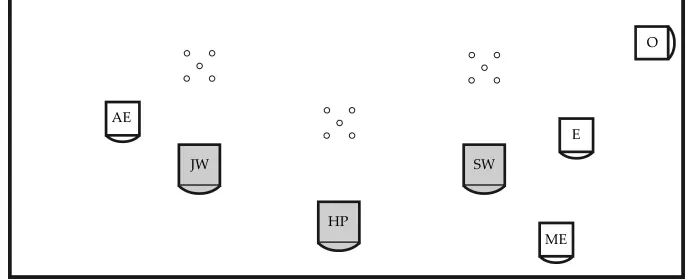
"In the second apartment,:the same os in the second apartment 'or. Hall of the East) in the Degree of Knights of the East; the Presiding Officer representing King Darius. * °° ' To the' first, he 'represents Zervseaset, the Viceroy of Darius; and is styled Most Mustrious Tirshatha.
The Sen.*. Warden represents Nesexran; and is styled Illustrious Scribe.
The Jun.-. Warden represents Isava, and is styled [Vise and Venerable Priest. 'Who Senior Deacon is styled Captain of the Tribes.
The Junior Deacon is styled Captain of the Guards.
The three Principal officers sit together in the East.
The -Pritices are styled Valiant: and Bodies in this Degree are styled Cocxcrzs or Princes or Jervsatex.
The battery is t | — by 99 *C= at equal intervals. .
DRESS, DECORATIONS, ETC.
The apron is crimson, lined and edged with saffron-colour. On the finp is an equal balance, held by &
band of Justice. In the middle of the apron, a representation of the Second Temple; on one side of which is
a'aword lying-across 0 buckler; and on the other, & square and triangle. The letter i) is on one side, and ® on the other.
The cordon is of saron-coloured silk, at least four inches wide, and bordered with gold. On it are embroidered a balance, a hand of Justice (holding a sword), a poniard, five stars, and two small crowns.
The jewel is a medal of gold. On one sido is engraved a hand, holding an equal balance; and on the other 2 double-edged sword, surrounded by fire stars; on one side of which is the letter D.*. and on the other the letter Z., '
The gloves are crimson.
The order is worn from the right shoulder to the left hip.
TO OPEN.
{The Counsel is opened and closed in the first apartment].
[The M.-. Ill. raps | and says]:
AL. Ur. Ul: Scribe, what is the hour?
Sen.*. We. The Sun is risen, M.*, Il. Tirshatha.
Af, il. M.+. Wise and Venerable Priest, return thanks to God, for this Council, that He hath sent his great gift of Light once more upon the earth. Kneel, Princes, and let us offer up our prisons to God!
PRAYER.
Jun. D.". QO Lord our God! we bless thee for ever and ever! Blessed be Thy Glorious Name, which is exalted above all blessing and praise! Thou, Thou art the only God. Thou has made Heaven, the Heaven of Heavens, with all their Armies of Stars, the Earth and all therein; and Thou preserves them.all; and the Armies of Light worship Thee! Thou art a gracious and merciful God, Great, Mighty and Terrible, who keepest covenant and mercy; and midst preserve our ancient brethren,'a remnant, in all the trouble that came upon them, on their Kings, their Princes, their Priests, their Prophets, their Fathers, and all thine elected People, since the time of the Kings of Assyria until that of the rebuilding of the Temple. : Since the. days of their fathers they: were wrong-doers, and for their sins they, their. Kings and -their. Priests were delivered into the hands of the. Assyrian Kings, to the sword, to captivity and to great spoliation and misery: from all which do Thou be pleased, O our Father, to save us in Thine Infinite Mercy. For afterwards Thou midst show them favour, and midst permit s remnant to return, and to occupy Thy Holy City, and midst give Light té their eyes, and relief from their bondage, that they might set again upon its foundations Thy House, and repair its desolation, ag we would do with the Temple of Masonry, and fortify themselves in the Holy City: and now again Thou performest Thy daily miracle, and makes the Great Sun, Thy Central Light, to rise again in the East, and gladden the world, and renew the life of all creatures that lay dead in sleep since the evening. - . ;
We thank Thee, we praise Thee, we magnify Thee, for Thy great gift of Light, which is the Life of all
'the Universe; and wo pray Thee to let also the Dawn of Masonry, which is the True Light, coeval with the world, shine again in the souls and intellects of all mankind, and conquer the whole world to its religion of Love and Peace and Toleration! Amen! . ,
Mf. I-. I+. Scribe, how goes on the work?
Sen.°. Wi. M.°. IIL, as the People of the land weakened the hands of our ancient brethren, and troubled them in building, and hired counsellors against them, and frustrated their purposes, all the days of Cyrus King of Persia, and in the reigns of Ahasuerus and Artaxerxes, and even unto the second year of Darius the King; even so, for many years did enemies without and indolence and apathy within, weaken the bands of the Brethren of the Ancient and Accepted Rite, and trouble them in their work, and frustrate their purposes; until our Rite became almost disused, and the work almost ceased; as the chiefs of the Samaritans, from the days of Artaxerxes and his decree against our ancient brethren, caused their work to cease by violence and
force. But the sun is now risen, and the darkness disappears.
Af: Til, What said the Prophets to our ancient brethren, when the clouds lowered upon their hopes, and the elements around them seemed gloomy and threatening?
June. Do. Thus said Uagyai the Prophet, on the first day of the Gth month: " Thus saith the God of Armies, 'Go up to the mountain and bring timbers, and build the House; and I will sake pleasure in stand I will be glorified. Iam with you,' saith the Lord."
Sea... D.. On the one and twentieth day of the seventh month, thus said Haggai the Prophet: "Be strong, O Zerubbabel! and be strong, O Joshua, the son of Josadak the Iigh Priest! and be strong, all ye people of the land, and work! For Iam with you, saith the Lord of hosts. The glory of this latter House shall be greater than that of the former, and in this place will I give peace."
Jun. W.:. Thus said Iageai the Prophet, on the four and twentieth day of the ninth month: "In that day, saith the God of Armies, will I take thee, O Zerubbabel, my servant, the son of Shealtiel, and will make thee as a signet: for I have chosen thee, saith the Lord of Iosts."
Sen', We. Thus said Zechariah, the son of Dido, on the four and twentieth day of the month Sebat; "Thus saith the Lord, 'I am returned to Jerusalem with mercies: my House shall be built in it, and a line shall be stretched forth upon Jerusalem. Sing and rejoice, O Daughter of Zion! for, lo! I come, and I will dwell in the midst of Theo, saith the Lord. Who art thou, O great mountain ?—before Zerubbabel a plain; and he shall bring forth the Key-stone, while the People cry, 'Stability and continuance unto it!' The hands of Zerubbabel have laid the foundation of this louse. Lis hands shall also finish it: and ye shall know that the Lord of Armies hath sent me unto you."
M, Il". My Brethren, as our Ancient Brethren arose, encouraged by the Prophets, let us rise up, and begin to build anew the Temple of Masonry. For we, like them, dwell too long in our called houses, while that House falls into decay and kieth waste. We, like them, have sown much and reaped little. We eat and are still hungry; we drink and are still a-thirst: we clothe ourselves, and are not warm; wae earn wages, and pat them in a sack with holes. Because the Temple of our Rite kieth waste, and we run every man to his own house; and we neglect the interests of Masonry, which are the interests of all humanity,
My Brethren, let this Council be now opened, and our labours upon the Masonic Temple resumed, IIIL.*. . Captain of the Tribes, let all the brethren he arrayed for the work which we have to do, that it may no more be hindered or delayed.
&:. W.. Princes and Brethren, it'is the pleasure of the M.:. IIL. Master, that this Council be now opened, and that our labours on the Masonic Temple recommence. Let all therefore bo prepared for whatever work there is to do; as our ancient Brethren worked with sword and trowel when they rebuilt God's House at Jerusalem.
[The Capt.-. of the Guards raps J — and the Capt.". of the Tribes, the Jun.'. W.°., the Sen.'. W.". and the M.°, IIL". do each the same in succession].
M:. Tl, Together, my Brethren!
[The Brethren all give the sign; clap the hands J times, applaud, seying Lavs Do; and the M.", IIL". says):
a:. 10.". My Brethren, this Council is open.
RECEPTION.
The Brethren being in the second apartment, dressed and decorated as in the IInil of King Cyrus or Court of Cyrus, in the 15th Degree, the Master of Ceremonies and three other Brothron receive the candidate in the preparation room. The five sre all dressed alike, in the dress and with the ornaments and jewel of a Knight of the East; and the Master of Ceremonies bears a roll of parchment, tied with a green ribbon, and sealed with « large seal.
The M.*, of Car.:. gives the alarm at the door, by! |
M:. Inf. Prince M.. of Can.*., there is an alarm at the door of the Palace.
M. Can, Attend to that alarm, my Brother, and learn who approach, and their request.
XVIL:. 4
Me. Inf. [Going to and opening the door]: Who approach the presence of Darius the Great King, and
what is their request?
aL. Her. Serainh, Reelaiab, Mordecai, Bilshan; and Mispar, Princes of Judah ond Knights of the East,.
with letters to the King from Tatnat, Governor beyond the river, and from Satabazanes, crave an audience. (The M.-. Inf.*. reports to the M.:. Can.*.; who repairs to the East, and makes the some report].
_ Sov., MM. Permit the messengers to appear in our presence.
[The M.*: Her. ., the candidate and the three brothers enter, advance to the East, and kneel on one knee,
The M.:. of Despatches advances and receives the letter].
- Sour. Me. Rise, Princes and Knights, and declare your wishes to the King. ;
"M. Her. Sov. Master, Great King Darius, in the first year of Cyrus the King, he made proclamation throughout ail his Kingdom, that Ged had charged him to build unto Him o house | at Jerusalem; and said unto our people in Persia, " Who among you are of the People of Israel? - * Their' God be with them, and let them go up to Jerusalem, which is in Judah, and build the House of the Lord God of Israel {the one True Cod}, in Jerusalem." And he set free our people, and restored to them the [Holy Vessels of the Temple; and they returned to Jerusalem and laid the foundations of the Temple. "But the people that dwelt round about them hindered and interrupted them during the whole reign of Cyrus the King, and even until now. And in the days of Artaxerxes the King, the people whom the Assyrian had put into the cities of Samaria, beyond the river, sent letters unto the King, saying unto him that Jerusalem was a rebellious and bad city, and. that if the same were builder again, and the walls set up once more, our people would refuse to pay toll, tribute' or custom, and the revenue of the King be thereby undamaged. Which false testimony the King' believing, he sent an answer unto those of Samaria, beyond the river, declaring that search had been made, and it was found that Jerusalem of old time had made insurrection' against the Kings, and rebellion and sedition had occurred therein. Wherefore hc commanded them to cause the work to cease, and to let not thé city, be builder, until other order. Whereupon Rheum the Chancellor and Shimshai the Scribe, and their People, went up in "Baste unto Jerusalem, and made the work to cease, by force and power: and so it hath ceased until sow. But now the Prophets have made known that it is the will of God that His House. shall be builder, and. Zerubbnbel the Viceroy, and Joshua the High Priest, have begun to build the Louse, and the Prophets of. God do help them. And Tatnat, Governor beyond the river, and Satabazanes and their companions.have 'come 'unto them, and inquired of them who. directed the building of the Temple and the walls of the city:. and it hath been agreed _that the work shall not cease until the matter be made known unto thee, and thy sovereign pleasure be de-
Glared: and we hare brought with us the letter of Tatnai and Satabazanes concerning the matter, being sent unto thee by Zerubbabel the Viceroy. .
Soy.. M.". Rend thou the letter, our Gr.*. Master of Despatches.
ML. Desp.".. "Tatnal, Governor beyond the river, and Satabazanes, unto Darius the Great King, Health
and Pence! Be it known unto the King that we went into the Province of Judea, to the House of the Great - God, which is builder with great stones, and timber is Inid on the walls, and the work goeth fast on, and prospereth in their hands. 'Then asked we the lenders of the Jews, and said unto them, Who commanded you to build this House, and to set up these walls? We asked their names also, that we might write and send unto thee the names of the men that were lenders among them.
And thus they returned us answer, saying: * We are the servants of the God of Heaven and Earth, and we build the IIouse that was builder many years ago, which a Great King of Israel builder and set up, But after vue fathers incurred the anger of the Ged of Hearen, he gave them into the hand of Nebuchadnezzar, King of Babylon, the Chaldean, who destroyed God's House, and carried away the People into Babylon, ° But in the first year of Cyrus the King, he made a decree to build the House. And the vessels of gold and silver, of the House, which the King of Babylon took out of the Temple at Jerusalem, and put in the Temple of Bet in Babylon, these did Cyrus the King take out of the Temple of Be, and they were delivered unto Sheshbasiar, whom he had made Governor; to whom he snid, 'take these vessels, and go carry them unto the Temple in Jerusalem, and let the louse of God he builder in its old place.' .
"Then came Sheshbazzar [whom we call Zerubbahel), and laid the foundation of the House of God i in
Jerusalem; and from that time until now it hath been in building, and is yet not finished."
"Now therefore, if it seem good to the King, let there be search: made in the Royal Archives at Babylon, whether it be true that a decree was made by Cyrus the King, to build this House of God of Jerusalem; and let the King send his pleasure to us, concerning this matter."
Sov.-. 3f. Our Gr. Master of the Chancery, let search be forthwith made, if there be such a decree.
[The Keeper of the Seals goes out, and remains a little while].
Sov. I. Ye Princes of Judah, who is this God that ye worship?
AL. Her. Sov.*. Master, the One, true, only God, invisible, omnipotent, who created the world, and whom mo man hath seen at any time: to whom all time is wow and all space is mere; from whom is Life and Light; and who at first existed alone, with Time and Space, Infinite and Eternal os they.
Sov; IL'. Are yo not worshippers of the sun, or of idols and images?
AL, Her. Sov.*. Master, this commandment gave our God unto Moses our Lawgiver. "Thou shalt have no other Gods before me. Thou shalt not make unto thee any graven image, or any likeness of any thing in heaven, or on the earth, or in the water, or under the earth: nor shalt thou bow down to them nor serve them. Ye shall destroy their altars, bronk theie images and cut down their groves. Ye shall worship no other God, bat the God whose name no man shall pronounce. Lift not up your eyes unto heaven, to worship and adore the sun and the moon and the stars, even all the glorious Armies of Heaven, whose light God hath bestowed upon all the nations of the earth. Ye shall utterly destroy all the places wherein the nations which ye shall possess worship their Gods, upon the high mountains, and the hills, and under every green tree. Yo shall overthrow their altars, and break their columns, and burn their groves with fire: and ye shall hew down the graven images of their Gods, and utterly obliterate their names and memories."
Sov... Such also are the commands of our law. [The Keeper of the Seals here enters, bringing with him a roll of parchment]: Gr.°. Master of the Chancery, heat thou discovered the decree?
3L*. Chan... Sov.*. Master, I.find it thus written upon a roll in the Royal Archives:.* Thus saith Cyrus the King of Persia: The Lord God of Ieaven hath given me all the Kingdoms of the Earth; and he hath charged me to build him 'an house at Jerusalem in Judea. Who among you is of his People? His God be with him; and Jet him go up to Jerusalem, in Judah. and build the House of the Lord God of Israel (the
only God) in Jerusalem." .
Sov.. M. Itisenongh. Let the decree of Cyrus the Great King be fulfilled! Prepare such decree as is suitable, and send it by, these Princes of Judah to Tatnal and Satabazanes, that it may be punctually obeyed: and meantime give to these ambassadors fit entertainment; for they, like.us, worship the Trae God, and de not bow down to images and idols. Princes, the audience {s over!
(The cnndidnte and the four brothers then return to the preparation room ; and after adittle delay, during which time the Brethren pass into the other apartment, they approach the door of that apartment, and the M.-. Her.*. gives the alarm by {J raps.]
June, Ware. M.°. Tl*., there is an alarm at the entrance to the Council.
M. Is. Attend to that alarm, and see who approaches!
Jun, W.'. [Opening the door]: Who approaches this Council among the ruins of Jerusalem?
M.. Her. Serainh, Reelaiah, Mordecai, Bilshan and Mispar, Ambassadors to Darius the Great King, bringing with them his decree, and good tidings to the People of the Lord.
[The Jun'. W.*. reports to the Sen.*. Warden, and he to the M.*. Ill..].
BM', Il... Open wide the doors, and invite the Ambassadors to enter!
[They enter and approach the East]. .
MC', It. Welcome, Princes, to Jerusalem! 'We give thanks to God for your safe return: and wait anxiously to hear how you have fared in your mission.
BM"; Her. Mir. Ti.., after the Council did us the great honour to select us to bear its petition and the letter.of Tatnal and Satabazanes to the foot of the Throne of Darius the King, we set forth on our way; and notwithstanding that we were attacked by the Samaritans on this side the river, whom we resisted and put to flight, we reached Babylon in safety, and obtained audience of the King; who received us graciously and ordered the letter to be read, and thereupon directed search to be made in the Royal Archives for the decree made by Cyrus the King in the first yearof his reign. In the meantime he inquired of us what God the Jews
adored, and whether they bowed down to images and idols, or adored the Armies of Heaven; to which we having made answer in the words of the law of Moses, the Gr.*. Master of the Chancery brought before him: the roll, found in the House of the Rolls, at Achmetha, in the Palace, in the Province of Media, with the decree of Cyrus the King recorded therein; which being read and heard, be declared that he did confirm and would execute the same; and ordered &t decree to be prepared, and sent by us to Tatnai and Satabazanes, that it might be punctually obeyed: and was also pleased to order fur us fit entertainment; saying 'that we, like the Persians, worshipped the True God, and bowed not down to images and idols: after which we were dismissed with honours and rewards, and hare returned in safety hither, bringing with us the letter of the King. The People hare met us without the city, and accompanied us hither, singing songs of joy and praise for our harry return, and doing us great honour.
Soo.*. If. We too, my Brethren, return sincere thanks to God for your safety. Resume now your seats in the Council first delivering the letter of the King to our Secretary, who will read 'the same.
{The candidate and the others are seated; and the Secretary opens the roll, and reads]:
"Thus saith Darius the King: We have caused search to be made for, and have found, the decree made by Cyrus the King in the first year of his reign, commanding that the Temple of God at Jerusalem should be rebuilt, and the vessels thereof restored; and are pleased to confirm that decree: Now therefore, Tatnal, Governor beyond the river, Satabazanes, and your people, meddle no more therewith; bat let the work of this House of God alone. Let the Governor of the Jews and the Elders of the Jews build this House of God in its proper place. Moreover I decree what ye shall do to the Elders of these Jews, for the building of this House of God ; that of the Royal revenues, of the tribute beyond the river, means be furnished them, that tio work be not delayed; and whatever they need for the sacrifices, and wheat, salt, wine and oil, upon the requisition of the Priests at Jerusalem, let it be given them daily without fail: that they may offer acceptable oblations to the God of Heaven, and pray for the life of the King and of his sons.
"« Also I decree, that whosoever shall disobey this decree, let timber be pulled down from his house, and set up for a gallows, and he be hanged thereon; and his house fur his offence be made a pile of rubbish. And may the God that dwelleth, and whose Name is worshipped, at Jerusalem, destroy all rulers and all people that shall! endeavour te hinder or destroy the House of Gud at Jerusalem ! _Thua do I, Darius the. King, decree:
and let all promptly obey!"
Sov.. Mr. Glory be to Gop roe Hicnesr ror wis Mercies! axp honour AND PROSPERITY AND LENGTH OF
pays to THE Sovereicny! Join me, my Brethren, in the acclamation !
(All clap their hands WE*C times, and cry once, " Glory to God, and honour to the Sovereign i")
Sov.. f°. My Brother, Captain of the Tribes, cause it to be proclaimed throughout the City unto the People, that Darius the King has graciously granted our requests, and commanded that the work upon the House of the Lord shall not longer be hindered or delayed: and bid them rejoice; for the end of the sorrow
and suffering of Israel approaches.
(The Sen.°. Deacon goes out].
Sov.'. I'. Princes and Brethren, our Messengers to the Court of Darius the King deserve oar thanks |
and gratitude. . The faithful servant earneth his reward. IIl.". Scribe, and M.*. Wise and Ten.°. Priest, with what new honour shall we distinguish our brave and faithful brethren, Serainb, Reelaiah, Mordecai, Bilshan
and Mispar ?
Sens. Wow Mov TW. Iam at great loss what to answer. M.*, Wise and Ten.°. Priest, can you not aid
us with your advice?
Jun.. W.. M.:. Ill, the People dispute with each other, and there is none to sit in judgment between them. Those who have returned from the captivity claim lands of those who hare possessed them many years; and there is no Tribunal to decide. And the People clamour and are divided, and dissensions are rife among them. Let the messengers our brethren be made judges between the people, to administer Justice and Equity. Su shall they receive honour and distinction, and do the.Lord and his people good service.
fe. Ul. Mo. Wise and Ten.«., it shall even be as thou enyest. Approach, my Brethren! [They approach the Throne]. By the advice and consent of the Council, I do hereby create and constitute a Tribunal to be composed of five Judges, who shall judge between man and man, and administer justice and equity, and whose
judgment shall be 'without appeal. And I appoint thee, Selaiah, to be Chief of that Tribunal, and Reelainh, Mordecai, Bilshan and Mispar to sit with thee in judgment. Go now, and kneel at the holy altar of Sacrifice, and assume the obligation appropriate to your office.
OBLIGATION.
"TA...B..., in the presence of the Gr.°. Architect of the Universe, and of this Gr.', Council of the Princes of Jerusalem, do hereby and hereon most solemnly and sincerely promise and swear, that I will never reveal or make known the secrets of this degree, to any person in the known world, except to those to whom the same may lawfully belong, and to them only when I am duly allowed and authorized to do so. I furthermore promise and swear, that whenever I am called upon to judge and decide between my
- brethren, I will do so with Justice and Equity, without favour or partiality, and leaning neither to the right hand nor to the left.
_ I furthermore promise and swear, that I will endeavour to reconcile all differences and disputes between 'my brethren, and to persuade them not to go to law with each other; and will exert all my influence to restore and promote peace, harmony and kind feeling between those who may be estranged, or about to become estranged, from each other.
I furthermore promise and swear that I will be courteous to 'all men, and will lead an honest and irreproachable life.
«I furthermore promise and swear that I will never insult, deride or ridicule a Bro.". Prince of Jerusalem 3 wer give or send him a challenge, nor accept one from him; nor strike or wound him, except in absolute selfdefence ; nor injure him in his person, property, reputation or feelings.
=~ I furthermore promise and swear that I will never abandon s Brother, in whatever adversity be may be, in combat, or in sickness, or in prison; but will sid him with my counsel, my friends, my sword and my purse.
To all of which I do most solemnly promise and sincerely swear, binding myself under no less a penalty, than that of having my house pulled down, and the timbers thereof set up as a gallows, and I hanged thereon. 'So 'help me God! and keep me steadfast to keep and perform the same!
Sov", H.°.. Arise, my Brethren, Princes of Jerusalem and Tadges! Your superior merit has not only made you my equals, but has placed you above me. For you are Princes and Judges by election and a general
proclantation, .and-have the right and power to judge me, who am a Prince by birth alone.
"Prince Selainh, I now invest thee with this apron, which shall hereafter be appropriate to this degree.
Its colours are emblematical of that fervency and zeal which have procured you this honour; and of the day of Hope that now by your means dawns on Israel. Its different blazoning are emblematical of that equity 'and justice by which you have sworn to be ever guided.
Masons in this and the higher degrees wear the apron, that they may never forget that they attained their high rank and dignity by.means of Masonic labour alone; and that, remembering their first estate, they may be courteous and kind to Masons of the inferior degrees.
If there be a controversy between men, and they come unto judgment that ye may judge them, then ye shall justify the righteous and condemn the wicked.
"oe "He. shall be accursed that removeth his neighbor's land-mark; and he that perverteth the judgment of the stranger, the fatherless, and the widow.
' Ye shall do no unrighteousness i in judgment: Ye shall not respect the person of the poor, nor honour the person of the mighty; but in righteousness shall ye judge your neighbour.
Blessings are upon the head of the just; but violence covereth the mouth of the wicked. The memory Of the just is blessed; bat the name of the wicked shall rot.
4a
Receive also this collar, whose color also symbolizes the dawn of that new day for which all true Masons rejoice. The balance upon it is a symbol of impartiality; the hand and sword, of that severity which crime sometimes makes a stern necessity; the poniard, of the into that shall swiftly overtake the oppressor and the unjust judge ; the stars, of the number of your members; and the crowns, of the supremacy of your judgments and authority, - . ,
Receive also this jewel, emblematic of the same; and the initials engraved thereon will ever remind you of the gracious clemency of Darius, and the gratitude of Zerubbabel for your services and fidelity.
Receive also the sign, words and token of a Prince of Jerusalem.
Stow: . .. Advance boldly, with the 24 ¥ SOJ{OQ9AD 1H, as if to engage in a combat; the fiLOO on the fi£9§. .
Answered... APTCPILY 5 ¥ the Oss at the height of the 2&4 4 fICt, as if to commence the
combat; the 174 8 forming nx 5 OTC with the §$ O57 of the | CW.
MEL Ct of the &Omit—I YO§—thus—, and FI9 7 C? At the same time place the SOCQUSPIWC Cp
together at the § § 9°, forming a straight line; and let the [<-CCX touch each other. Then reciprocally place the tCWVISOL on the 2kY FFIUCE of the other, ¥ SCAM) the Noah, Ct One says UCM Ph, and the other, PU Char-PLECC. Then form a square with the tCWY2/t 92% on the
LEQV&P—let go the {Oc TLA, bring the §Y OA" of the t]173 YF to the tt&¢ Ct, and salute each other
by bowing.
Pass-worp:... PCMCY..
Sacred worD:... Orb.'
The Israelites re-entered into Jerusalem, after their captivity in Babylon, on the 20th day of Tebet or Tebeth, the 10th month of the year; and their thanksgiving, after the completion of the second temple, took place on the 23d day of Adar, the 12th month of the Gth year of the reign of Darius. The temple had been finished on the 3d day of the same month; and, on the ldth day of the following month; the Passover was
celebrated in it.
-Hear now, my brother, the History and Lecture of this Degree.
HISTORY AND LECTURE.
The historical incidents commemorated in this degree arc so fully detailed in the ceremonies, as to need no further repetition. It remains only to allude to those which followed the return of the embassy from Babylon, and the action of the Tribunal of the Five Princes of Jerusalem. .
Tatnal, Governor of the Jewish side of the River, and Satabazanes and their People, obeyed the mandate of Darius. And the Elders of the Jews builder, and they prospered through the prophesying of Haggai the Prophet, and Zechariah the son of Dido: and they builder and finished the Temple, according to the com: mandment of the God of Israel, and according to the orders of Cyrus, Darius and Artaxerxes, Kings of Persia. , .
It was finished on the third day of the month Adar, in the sixth year of the reign of Darius. On the 20th day of that month, the children of Israel, the Priests and the Levites and the rest of the children of the
Captivity kept the dedication of the Mouse of God with joy and sacrifices; and the Priests and Levites were then assigned to their several duties, in accordance with the law of Moses.
In the fifth month of the seventh year of Artaxerxes the King, Ezra came from Babylon to Jerusalem. He was a lineal descendant of Aaron, and well rend in the Mosaic law and sacred traditions, and s favourite of the King, who readily granted his request to be allowed to return to Jerusalem and unite again with his people; and issued in his favour a decree to this effect: 'Artaxerxes, King of Kings, unto Ezra the Priest, a Teacher of the Law of the God of caren, Health and Pence! I decree that all Jews and their Priests and Levites, in my realm, who are disposed of their own freeé will to return to Jerusalem, may do so with thee. And {, by the advice of my Council of Seven, do send thee to enforce the Law of God, which isis thy keeping, in Judah and Jerusalem: and to carry thither the silver and gold which we and our Council have freely offered unto Israel's God in Jerusalem; and whatever may be given thee in our Province of Babylon, as a voluntary gift from the People and the Priests for the House of God in Jerusalem, therewith to purchase animals for your sacrifices, and any residue to dispose of as your God may direct. I give to thee the remaining vessels for the service of the Temple, to be placed therein; and whatsoever more may be needed therefore shall be furnished by the Royal Treasury. And I command all my Receivers of the Revenue beyond the river to pay to you, upon your requisition, to the extent of an hundred talents of silver, an hundred measures of wheat, an hundred baths of wine, an hundred baths of oil, and whatever salt is required. Whatsoever is required by the God of Heaven, let it be diligently done for His House, that His displeasure may not fall upon our realm.
"It shall not be lawful to impose tax, toll, tribute or custom on the Priests, Levites, Minstrels, Porters, Nethinims or Ministers of the Temple. And thou, Ezra, to enforce the saw of God, whereof thou has a copy, appoint magistrates and judges, for all_the people beyond the River that know that law, and teach it to them who know it not. And if any one disobey that law or the law of the King, let him without delay be
condemned to suffer death, or to exile, confiscation of property or imprisonment. "
Collecting together 1506 men, with their women and children, and ashamed to ask an escort of the King, because he had assured him that God would protect and defend them on the way, Ezra set forth from Babylon 'on 'the first day of the first month, of the seventh year of the reign of Artaxerxes, prepared to enforce'as well as-obey the law of God, and to legislate and-administer the law to the people of Israel.
At'the river of Ahara he encamped and remained three days, and there sent for and was joined by 262 Lavites and Nethinims whose duty it was to serve the Levites. Then he held a fast, delivered the sncred vessels into the custody of the Priests, and again moved on the twelfth day of the first month. Safely through the hostile forces that lay in wait for him by the way he passed, protected by God; and reached Jerusalem on the first day of the fifth month, having occupied four months in the journey: and there delivered the mandates of the King to his Lieutenants and Governors, and they furthered the people and the House of God. oa
In the ninth month, on the 20th day of the month, all the People assembled at Jerusalem, in obedience to. his peremptory summons commanding their attendance on pain of exile and confiscation of goods: and there they sat in the streets, in o great rain, trembling with fear and shivering with cold. Then he commenced the work. of reform by compelling all who had married among the unbelieving people of the country to put away their wives.
'After Nehemiah was appointed Governor, and the walls of the city were completely rebuilt, and on the first day of the seventh month, a solemn feast was held, and the whole People came together. Then Ezra brought forth the book of the Law of Moses, and read it to the People, and with the aid of the Priests and Lévites "expounded it to them for seven days, during which time they rejoiced and feasted, as they had not done since the time of Joshua the son of Nun and successor of Moses; and on the eighth day a solemn assembly was held according to the ancient custom, at which many were initiated into the mysteries.
And on the 24th day there was a fast; and the people entered into and sealed a solemn covenant; by which they bound themselves, confirming it by an oath, to walk in God's law, which was given by Moses the servant of God, and to observe and keep all God's commandments, and his judgments and his statutes, and to pey tax and tithe and the first fruits, and observe the seventh day and the seventh year.
Thus was the Temple rebuilt, the work of our ancient brethren completed, and the old law restored. The Samaritans, ancient enemies of the Jews, compelled by the power of the Kings of Persia to submit and pay tribute to the children of Israel, troubled them no longer. The cities were rebuilt, and for a time pence and prosperity reigned in Jerusalém. Masonry again flourished as in the days of its first glory, and the number of its initiates largely increased. But this period of peace and glory was of short duration. Seventy years after the Christian era the Romans invaded Judea, took Jerusalem and razed it to the ground, burnt the Temple and almost annihilated the people.
A few Architects escaping remained in the vicinity of the'beloved city, and there preserved i in the strictest secrecy the ancient mysteries and instruction. Adopting yet greater precautions, they admitted none until after the most thorough tests and a long probation. Under the Romans, and afterwards under the Saracens, they waited for some fortunate chance that should again put them in possession of the land of their fathers, and enable them agziao to rebuild the Temple.
Others, at the dispersion of the People, fed to the desert for safety. After a time they reappeared at the ruins of the Temple, assembling under the banner of fraternal charity and love for humanity. On the very site of the House of God they founded an hospital for the pilgrims who came to visit the wreck of the Holy City. They became a religious order, bound by vows of strict observance, pledged to celibacy, and devoted to the relief of the poor, as well by alms as by the fruits of the earth which the new Masters of Judea allowed them to cultivate, Afterwards, becoming a religious soldiers, their swords changed their precarious possession into a title.
Rope sprang up anew, when Peter the Hermit, an obscure but zealous fanatic, preached throughout Europe the first crusade. The rumor of that Holy War, flying abroad upon the wings of the wind, reached the remotest regions of the world. The religious soldiers, chiefly inhabiting the deserts of the Thebaid, emerged from their solitude. Eager to distinguish themselves, they hastened to unite with their brethren at Jerusalem. They found them the allies of the Architects; all having as their object, though with different views, the restoration
_of the Temple. Laying aside their prejudices, they adopted the same rites, and disguised under the same 'symbolism of o speculative architecture a glorious purpose. Determining to join the Crusaders, they resolved
to serve under chiefs elected by themselves, whom they elected from among the military Brethren, as. being best qualified by experience and lung service.
They then adopted an established ritual, substituting in place of the old ceremonial of the Mysteries, more ancient thai Solomon or Hiram, or even than Moses himself, a formula, symbols and allegories referring to the building of the first Temple, and thus always reminding them of their great purpose of rebuilding the Temple, and restoring the Holy Land to the descendants of Judah and Benjamin. Thus they kept themselves apart from the mass of the Crusaders, and secured the enlistment and perpetual allegiance of a large body of loyal and obedient recruits.
In a vast army composed of many thousands, speaking different languages, and gathered from all quarters of Europe, and many of them rapacious, degraded and brutal, and equally as dangerous to them as the Infidel enemy, caution and prudence were indispensable. To ensure themselves against surprise, they adopted words, signs and tokens for mutual recognition even when at great distances apart, and to preserve their secrets against curiosity, treason and imprudence. And taking the name of Free Masons [as independent auxiliaries], they joined the Armies of the Cross, and soon gained distinction and renown.
The Architects who bad built and still maintained their hospital upon the ruins of the Temple, did not remain idle. They too, leaving a small number of their more aged members to perform the duties of hospitality, relief and charity, took up arms, elected a leader, who afterwards became their Grand Master, and joined the Christian armies. Several orders, rising in like manner from small beginnings, increased in stature, and became numerous, wealthy and powerful, The Templars, the Order of St. John, and the Teutonic Knights, sprang up in succession, reached the height of wealth, power and greatness, and were in succession despoiled
and annihilated.
During the several crusades, the Order of Free Masons naturally increased in numbers, and itself became powerful and influential, though in secret; for none but the initiated knew that such an order existed. Men of all Christian countries joined the Order, and it spread throughout the different States of Europe, and
flourished alike under the shadow of the Mosque and the Vatican. After the first successes, and when s Christian King sat upon the throne of Jerusalem, and Christian Lords held Principalities and Dukedoms in Palestine, eighty-one Masons repaired to Sweden, with letters to the Bishop of Upsal, whom they initiated into their mysteries, to secure his assistance in reanimating the zeal of the confederated Princes.
The attempt to conquer the holy Land was renewed, but proved unsuccessful. The Masons then sent again 81 members to Upsal, to deliver to the Prelate their manuscripts and jewels and other Masonic treasures, sealed up in a coffer. Ie received it, and deposited it in a marble tomb, sealed with firm seals, buried in a deep cavern under the Tower of the Four Crowns; from which, at a later period, those precious archives were recovered.
After this deposit, the 81 Brothers returned to Jerusalem; but the victories of the Sultan of Egypt destroying the last lingering hope of rebuilding the Temple, they resolved to abandon their country, desolated by the Infidel, and to form new establishments in remote regions: and many years had not elapsed until their Lodges, Chapters, Councils and Preceptories were found in every country in Europe.
We no longer expect, my Brother, to rebuild the Temple at Jerusalem. To us it has become but s
symbol. To ue the whole world is God's Temple, as is every upright beart. To establish all over the world, the New Law and Reign of Love, Peace, Charity and Toleration, is to build that Temple, most acceptable to God, in erecting which Masonry is now engaged. Nu longer needing to repair to Jerusalem to worship, nor to offer up sacrifices and shed blood to propitiate the Deity, man may make the woods and mountains his Churches and Temples, and worship God with a devout gratitude, and works of charity and beneficence to his fallow-men. Wherayer the humble and contrite heart silently offers up its adoration, under the overarching trees, in the open level meadows, on the hill-side, in the glen, or in the city's swarming streets; there in God's House and the New Jerusalem.
The Princes of Jerusalem no longer sit ss magistrates to judge between the People; nor is their number limited to five. But their duties atill remain substantially the same, and their insignia and symbols retain their old significance. Justice and Equity are still their characteristics. To reconcile disputes and heal dissensions, to restore amity and peace, to soothe dislikes and soften prejudices are their peculiar duties, and they know that the peace-makers are blessed.
Their emblems have been already explained. They are part of the language of Masonry; the same now as it was when Moses learned it from the Egyptian [ieropbants.
Still we observe the spirit of the Divine law, as thus enunciated to our ancient brethren, when the Temple was rebuilt, and the book of the law again opened:
Execute true judgment; and show mercy and compassion every man to his brother. Oppress not the
widow nor the fatherless, the stranger nor the poor; and let none of you imagine evil against his brother in his heart. Speak ye every man the truth to his neighbour; execute the judgment of Truth and Peace in your gates; and love no false oath; for all these I hate, saith the Lord.
Let those who have power rule in righteousness, and Princes in judgment. And let him that is a judge be as an biding place from the wind, and s covert from the tempest; as rivers of water in s dry place; as the shadow of « great rock in a weary land. Then the vile person shall no more be called liberal; nor the churl bountiful: and the work of justice shall be peace; and the effect of justice, quiet and security; and wisdom and knowledge shall be the stability of the times. Walk ye righteously and speak sprightly : despise the gains of oppression, shake from your hands the contamination of bribes: stop not your ears against the cries of the oppressed, nor shut your eyes that you may not see the crimes of the great; and you shall dwell on high, and your place of defence be like munitions of rocks,"
Forget not these precepts of the old Law: and especially do not forget, as you advance, that every Mason, however humble, is your brother, and the labouring man your peer. Remember always that ell Masonry is work, and that the trowel is an emblem of the degrees in this Council. Labour, when rightly understood, is both noble and ennobling, and intended to develops man's moral and spiritual nature, and not to be deemed a disgrace or a misfortune.
Everything around us is, in its bearings and influences, moral. The serene and bright morning, when we recover our conscious existence from the embraces of sleep; when, from that image of Death God calls us
to a new life, and again gives us existence, and his mercies visit us in every bright ray and glad thought, and call for gratitude and content: the silence of that early dawn, the hushed silence, az it were, of expectation: the holy eventide, its cooling breeze, its lengthening shadows, its falling shades, its still and sober hour: the sultry noontime and the stern and solemn midnight: and Spring-time, and chastening Autumn; and Summer, that unbars our gates, and carries us forth amidst the ever-renewed wonders of the world; and Winter, that gathers us around the evening hearth :—all these, as they pass, touch by turns the springs of the spiritual life in us, and are conducting that life to good or evil. The idle watch-band often points to something within us; and the shadow of the gnomon on the dial often falls upon the conscience.
A life of labour is sot a state of inferiority or degradation. The Almighty has not cast man's lot beneath the quiet shades, and amid glad groves and lovely hills, with no task to perform; with nothing to do bat to
rise up and eat, and to lie down and rest. Ie bas ordained that More shall be done, in all the dwellings of
life, in every productive field, in every busy city and on every wave of every ocean, And this he has dune, because it has pleased Slim to give man a nature destined to higher ends than indolent repose and irresponsible profitiess indulgence ; and because, for developing the energies of such a nature, work was the necessary and proper element, We might os well ask why Lie could not make two and two be six, as why Le could not develops these energies without the instrumentality of work, They are equally impossibilities.
This, Masonry teaches, as a great Truth; o great moral landmark, that ought to guide the course of all mankind. It teaches its toiling children that the scene of their daily life is all spiritual, that the very implements of their toil, the fabrics they weave, the merchandise they barter, are designed for spiritual ends; that so believing, their daily lot may be to them « sphere fur the noblest improvement. That which we do in our intervals of relaxation, our church-going and our book-reading, are specially designed to prepare our minds for the Action of Life. We are to hear and read and meditate, that we may act well: aad the Action of Life is itself the great field for spiritual improvement, There is no task of industry or business, in field or forest, on the wharf, the ship's deck or the exchange, but has spiritual ends. There is no care or cross of our daily labour, but was especially ordained, to nurture in us patience, calmness, resolution, perseverance, gentleness, disinterestedness, magnanimity. Nor is there any tool or implement of toil, but is s part of the great spiritual instrumentality.
All the relations of life, those of parent, child, brother, sister, friend, associate, husband, wife, are moral, throughout every living tie and thrilling nerve that binds them together, They cannot subsist a day nor oa hour, without putting the mind to a trial of its- truth, fidelity, forbearance, and disinterestedoess.
A great city is one extended scene of moral action. There is no blow struck init, but has a purpose, ultimately good or bad, and therefore moral. There is no action performed, but bas s motive; and motives are the special jurisdiction of morality. Equipages, houses and furniture are symbols of what is moral, and they in a thousand ways minister to right or wrong feeling. Everything that belongs to us, ministering to our comfort or luxury, awakens in us emotions, of pride or gratitude, of selfishness or vanity, thoughts of selfindulgence, or merciful remembrances of the needy and the destitute. .
Everything acts upon and influences us. God's great law of sympathy and harmony is potent and tnfloxible os Wis law of gravitation. A sentence embodying a noble thought stirs our blood ;, a noise made by & child frets and exasperates us, and influences our actions.
A world of spiritual objects, influences and relations lies around us all. We all vaguely deem it to be #0; but he only lives a charmed life, like that of genius and poetic inspiration, who communes with the spiritual scene around 'him, hears the voice of the spirit in every sound, sees its signs in every passing form of things, and feels its impulse in all action, passion and being. Very near to us lic the mines of wisdom: unsuspected they lie all around us. There is a secret in the simplest things, a wonder in the plainest, a charm in the dullest.
We are all naturally seekers of wonders. We travel far to sec the majesty of old ruins, the venerable forms of the hoary mountains, great water-falls, and galleries of art. And yet the world-wondor is all around
us; the wonder of setting suns, and evening stars, of the magic spring-time, the blossoming of the trees, the strange transformations of the moth; the wonder of the Infinite Divinity and of his boundless revelation. Iden East; no dome sublime as that
There is no splendour beyond that which sets its morning throne in the go
of Heaven; no beauty so fair as that of the verdant, blossoming earth; no place, however invested with the sanctifies of old time, like that home which is hushed and folded within the embrace of the humblest wall and roof. _
And all these are but the symbols of things far greater and higher. All is but the clothing of the spirit. In this vesture of time is wrapped the immortal nature; in this show of circumstance and form stands revealed the stupendous reality. Let man but be, as he is, a living soul, communing with himself and with God, and "his vision becomes eternity; his abode, infinity; his home, the bosom of all-embracing love.
The great problem of Humanity is wrought out in the humblest abodes; no more than this is dove in the highest. A human heart throbs beneath the beggar's gabardine; and that and no more stirs with its beating the Prince's mantle. The beauty of Love, the charm of Friendship, the sacredness of Sorrow, the heroism of Patience, the noble Self-sacrifice, these and their like, alone, make life to be life indeed, and are its grandeur and its power, They are the priceless treasures and glory of humanity; and they are not things of condition. All places and all scenes are alike clothed with the grandeur and charm of virtues such as these.
The million occasions will come to us all, in the ordinary paths of our life, in our homes, and by our firesides, wherein we may act as nobly, as if, all our life long, we visited beds of sickness and pain. Varying every hour, the million occasions will come in which we may restrain our passions, subdue our hearts to gentle- "less and patience, resign our own interest for another's advantage, speak words of kindness and wisdom, raise the fallen, cheer the fainting and sick in spirit, and soften and assuage the weariness and bitterness of their mortal lot. To every Mason there will be opportunity enough for these. They cannot be written on his tomb; bat they will be written deep in the hearts of men, of friends, of children, of kindred all around him, in the book of the great account, and, in their eternal influences, on the great pages of the universe.
., To such o destiny, at least, my Brethren, let us all aspire! These laws of Masonry let us all strive to :obey | And so may our hearts become true temples of the Living God! And may He encourage our zeal, sustain our hopes, and assure us of success |
TO CLOSE.
MM. I... Ti. Scribe, what is the hour?
Sen. W.. High noon, M.. TI.
M.°. I, "The walls of Jerusalem again encircle the Holy City, and the Temple is rebuilt: The book of the law is rend again in the hearing of the People; and the new reign of Justice and Equity has commenced. M.°. Wise and Ten.*. Priest, may we not now cease from our labours? -
, June. Woe. Mo. TIL, Duty is eternal; and Masonic labours cease only when we reach the grave, where the wicked cease from troubling, and the weary are at rest. But we may rest from our labours for a time, and by refreshing ourselves gain strength to resume them with renewed vigour.
M., 1, Let us then close this council, that we may refresh ourselves, and afterwards sleep until the dawn another day summons us to labour for the good of humanity |
[The Capt.:. of the Guards raps {| the Captain of the Tribes, Jun.*. W.*. and Sen.*. W.°. and then the 'M.. Ill'. each do the same in succession].
HM. Il», Together, my-Brethren |
[The Brothers all give the sign, clap |] times, and applaud, crying: Lavs Do!]
M,. Il. My Brethren, the council is closed.
DUTIES AND PRIVILEGES OF PRINCES OF JERUSALEM.
Ist. Princes of Jerusalem are chiefs in Masonry. They have a right ta inspect all Lodges of the degrees from the Ist to the 14th, and Councils of Knights of the East; and can revoke and annul whatever work may be done therein, which they find to violate the constitution and laws of the ancient and accepted rite.
2d. When a Prince visits a Lodge, or a Council of the 15th Degree, be must wear the proper clothing, order and jewel, or he is not entitled to be recognized. When he applies for admission, the Presiding Officer must depute a Brother, who is a Prince, if there be any such in the Lodge or Council, to try and examine him; and if there be none other, must do it himself, if he himself be @ Prince. If he proves himself, then the doors are thrown open;the Presiding Officer calls to order, the arch of steel is formed, and the visitor seated in the East on the right, with all the appropriate honours. This is in a Council. a
If he visits a Symbolic Lodge, and there be no brother who is a Prince, the word of honour of the visitor, proving himself a Master, will suffice. Then the Master deputes four of the most eminent members of the Lodge [not officers], who receive and accompany the visitor. The door is thrown open, and- the arch of steel formed. The visitor is conducted to the East; and if the Master be not a Prince, he must offer him his' seat: and mallet; which the visitor may accept or decline. When he retires from the Lodge, the same ceremonies | are observed as at his entrance. :
3d. If a Prince of Jerusalem presents himself at the door of a Lodge, wherein there is no Brother who has attained this degree, and without his certificate as Prince of Jerusalem, the Master must depute a committee of expert and enlightened Brothers to examine him in the degrees in which the Lodge works. After examination, he must give his Masonic Word of Honor, that he is a Prince of Jerusalem; and he is then to be received with the honours mentioned in the 2d article. .
4th, The Princes of Jerusalem are entitled to inspect the worl: of all inferior bodies, and to examine their Constitutions, Statutes, and Laws; and to the exercise of this power no one can object. When five of them sit together, they are Judges in the last resort of all questions referred to them from inferior bodies ; and from their decision there is no appeal. That is the power which was given to their predecessors by the 'People of Jerusalem. They have o right to be covered in all inferior bodies, and to address the presiding officer without rising or asking permission. :
5th. These rights were conferred on the first Princes by way-of reward for their eminent services, rendered to the People of Jerusalem, and their profound and thorough knowledge of Masonry. In rank they were next below Zerubbabel the Viceroy. Wherefore the Princes should be careful toadmit none among them "who are not at all points worthy to succeed the first Princes, and sit in the places which they occupied with
so much honour to themselves.:
6th. Princes of Jerusalem must be upright, courteous, and strict observers of: Masonic Rules, enforcing
justice to be done, and good order to be preserved in Lodges.
7th. If a Prince of Jerusalem does not lead an irreproachable life, and deal honestly by all men, he shall suffer such punishment as a majority of the Princes of his Council shall determine.
8th. IE one Prince of Jerusalem insults or ridicules another, he shall be prohibited from sitting in his | Council for three successive meetings. . . .
9th. If one Prince challenges or accepts a challenge from another, he shall be forever expelled from the Council, and his name erased; and notice thereof given to the Supreme Council, and to all corresponding
Councils and Symbolic Lodges. i
10ck. If any Prince shall solicit votes for himself or for any other Prince, for any office, he shall be for
aver expelled. .
11th. The Grand Feast of the Princes of Jerusalem is on the 23d day of the 12th month of the Jewish
calendar; on which day the People of Israel returned thanks to God that the Temple was rebuilt, On the same day is the regular annual election of all officers. A feast should also be celebrated on the 20th day of the 10th month of the same calendar, in commemoration of the triumphal entry of the ambassadors, who
on that day arrived at Jerusalem.
FINIS.
Ragon 1861
tuileur imprimé · 770 mots
Le « Tuileur général de la Franc-Maçonnerie ou Manuel de l'initié » de Jean-Marie Ragon (Paris, 1861), dernier grand tuileur français du siècle : décoration, titres, ordre, signes, mots, marche, âge, batterie et décors du grade, avec les notes critiques de Ragon sur les mots altérés par la tradition. Pages 133-135 de l'édition originale.
La Loge est séparée en deux parties; ou plutôt, il est mieux d'avoir deux appartements contigus, avec une communication dans l'intérieur.
Le premier appartement représente la cour de Zorobabel, roi de Jérusalem; la tenture en est aurore; il est éclairé au dernier point de la réception, par 25 lumières, en 5 groupes de 5 lumières chacun.
Le second appartement représente la cour de Darius, successeur de Cyrus, qui règne à Babylone. La tenture en est rouge; le trône et le dais sont de couleur aurore.
Le passage par où l'on conduit le récipiendaire, pour aller d'un appartement dans l'autre, représente le chemin qui conduit de Babylone à Jérusalem.
Titres.
Dans les deux appartements, le président prend le titre de très-équitable Prince; les Surveillants, celui de très-éclairés Princes, et tous les frères, celui de valeureux Princes.
La Loge a le titre de Conseil.
Les princes de Jérusalem jouissent de grands priviléges dans [p. 134] les Loges inférieures, dont le Conseil a la surveillance et l'administration.
Ordre.
Point.
Signe.
Le bras tendu, prêt à combattre, la main gauche sur la hanche, les doigts écartés. Le contre-signe, ou signe de réponse, est le bras droit tendu à la hauteur de l'épaule, les doigts fermés, l'index ouvert, pour annoncer un ordre, ayant le pied droit en équerre, le talon à la pointe du pied gauche.
Attouchement.
Se prendre réciproquement la main droite, se frapper alternativement cinq petits coups par un, deux et deux (○ ○ ○ ○ ○), avec le pouce droit sur la jointure du petit doigt, mettre les pieds droits pointe contre pointe, ensuite genou contre genou, puis se porter réciproquement la main gauche ouverte sur l'épaule. L'un dit : Vingt, l'autre répond Vingt-trois; ce qui rappelle l'époque de la rentrée des Israélites à Jérusalem, après la captivité de Babylone, qui eut lieu le vingtième jour de Tebeth, dixième mois de l'année, et celle des actions de grâces rendues par le peuple juif après la réédification du Temple, le 23e jour d'Adar, 12e mois de la 6e année du règne de Darius. Le Temple avait été terminé le 3e jour du même mois, et le 14e jour du mois suivant, la Pâque y fut célébrée. (Esdras, I, ch. VI, v. 15 et 19.).
Mot de passe.
TEBETH ou TEVETH, nom du 10e mois lunaire¹. On répond : Esrim (vingt).
Mot sacré.
ADAR, nom du 12e mois². On répond : Schalashesrim (vingt-trois).
Âge.
Point.
Marche.
Un pas grave sur la pointe des pieds.
On en fait quelquefois cinq : étant au signe, avancer le pied gauche en glissant; rapporter le pied droit à la pointe du gauche, en marquant le pas, et ainsi de suite jusqu'à cinq pas.
Batterie.
25 coups par 5 fois 5 : ○ ○ ○ ○ ○, cinq fois.
1 Ce fut le 20 tebeth, que les Hébreux rentrèrent chez eux après l'esclavage de Babylone.
2 Ce fut le 23 adar, que les Israélites purent, après tant de malheurs, faire la nouvelle dédicace du temple de Jérusalem, en rétablissant les anciens secrets, les cérémonies et les mystères.
[p. 135]
Salut.
On s'incline un peu à gauche et d'une manière respectueuse.
Heures du travail.
On commence au soleil levant, et l'on termine à la moitié du jour.
Questions d'ordre.
D. Etes-vous prince de Jérusalem?
R. Le chemin de Babylone m'est connu.
D. Avez-vous combattu?
R. Oui, contre les Samaritains qui s'opposaient à mon passage.
D. Que signifie le mot de passe?
R. C'est un mot hébreu, qui rappelle le 20e jour du 10e mois; c'est ce jour que les princes firent leur entrée à Jérusalem.
D. Que signifie le mot sacré?
R. C'est aussi un mot hébreu qui indique le 23e jour du 12e mois, où l'on rendit grâces à Dieu de la reconstruction du Temple.
Décors.
TABLIER. Rouge, doublure et bordure jaune aurore. On y peint quelquefois le Temple de Salomon, une équerre, un bouclier, un delta et une main de justice. Les princes portent des gants rouges.
Cordon.
Couleur aurore, liseré d'or, porté de droite à gauche. On y brode une balance, une main de justice, une épée, cinq étoiles et deux couronnes.
Bijou.
Médaille d'or, sur laquelle sont gravées, d'un côté, une main tenant une balance en équilibre, de l'autre, une main tenant une épée à deux tranchants, entourée de cinq étoiles.
Ce grade tire son origine de l'ambassade envoyée par les Élus parfaits du peuple de Jérusalem à Darius, roi de Babylone; Zorobabel fut chargé de cette ambassade.
On trouve, dans le 2e livre des Rois, tous les détails de ce grade.
Pike 1884
rituel définitif · en anglais · 20 849 mots
Le rituel définitif d'Albert Pike tel que pratiqué par la Juridiction Sud des États-Unis (état final des révisions, v. 1884 ; recomposition numérique de 2020). Texte en anglais, établi directement sur la composition d'origine : ligatures rétablies, italiques de l'imprimé conservées, hébreu, phénicien et samaritain rendus dans leur écriture, pagination de l'original. Les partitions musicales, les plans d'atelier et les planches de décors sont reproduits en fac-similé à leur place dans le texte. Pages 388 à 413 de l'édition.
Ritual of the Scottish Rite, Supreme Council, S. J. (recomposition 2020), p. 388-413
[p. 388]
Planche [p. 388]
[p. 389]
Figure de l’original [p. 389]
The Council, its Decorations, etc.
Bodies of this degree are styled Councils. Besides the ante-room, there are two principal apartments. The First Apartment represents the Court of Zorobabal Tarshatha of Yehudah, under the kings of Persia. The hangings are of saffron color, except the East, which is hung with white, blue, red and violet colors, in stripes.
In this apartment, the two interlaced triangles, one white and the other black, hang over the Tarshatha, in the East. In the center of them, emitting rays, is the word 𐤉. 𐤄𐤅𐤄
The curtains of different colors in the East separate a portion of the Hall, about fifteen feet in width, from the main body of it. The eastern portion, behind the curtains, represents the Holy of Holies, and is hung with curtains of saffron color.
The parti-colored curtains are arranged to be drawn aside each way from the middle, and looped up, when necessary, at each side.
In front of the middle of the curtain, and near it, is a large armchair or throne, with a canopy over it, elevated on a platform, and ascended unto by five steps. The throne is covered with cloth of saffron color. On each side of this is a smaller chair, covered in like manner for visitors entitled to be honored.
In the West are three large chairs, covered in like manner; and in the South, one. The Altar of Obligation is a little in front of the presiding officer, to the right. It is like that of the Lodge of Perfection; and on it are the Book of the Law, the Book of Constitutions, a Sword, a Trowel, and a pair of Scales, or Balances, of gold, or gilded.
In the Holy of Holies are the Altar of Incense, the Table of Bread of the Presence, the great Candelabrum, and the Ark of the Covenant, with the Cherubim on either side of it.
On the Altar of Incense is a Censer ready to be lighted, and a silver cup holding incense. The Second Apartment represents the Council-chamber of the King of Persia. It is hung with curtains of green, white and blue, and arranged and decorated in oriental style. In the East is a throne, over which is a transparency showing a Blazing Sun.
The First Apartment is lighted by twenty-five lights, five in front of the Eminent Tarshatha, High-Priest, Scribe, Senior Warden, and Junior Warden respectively. Each group of five forms a square, with one in the center.
The ante-room, or a room between the two principal apartments, and passages leading to and from it, represent the country between Babylon and Yarosalam, and should be made to do so by painted scenes.
There ought also to be a banqueting hall.
[p. 390]
Officers—Their Stations and Titles.
First Apartment.
First—ET—The presiding officer is the successor of Zorobabal, and is styled “Eminent Tarshatha.” He sits on the throne in the East.
Second—HP—The second officer (Senior Warden of the Chapter of Rose Croix), is the successor of Yeshua ben Yutsadoc, the High-Priest. He sits in the West, opposite the Eminent Tarshatha, and is styled “Excellent High-Priest.”
Third—S—The third officer (Junior Warden of the Chapter), is the successor of Khagai ( ח, גי Khgi), the Prophet. He sits in the South, and acts as Orator of the Council. He is styled “Excellent Scribe.”
Fourth—SW—The fourth officer (Orator of the Chapter), represents Seraïah, Prince of Yehudah. He sits in the West, on the right of the High Priest, a little to the front; and is styled “Brother Senior Warden.”
Fifth—JW—The fifth officer (who is not an officer of the Chapter, but is elected, when its officers are, as an officer of the Council of Princes only, for the same term), represents Mordecaï, Prince of Benjamin, and sits in the West, on the left of the High Priest, a little to the front. He is styled “Brother Junior Warden.”
Sixth—A—The sixth officer, represents Hasim, Prince of Benefits. He sits in the North, and is styled “Brother Almoner.”
Seventh—KSR—The seventh officer, represents Esdras, Prince of the Records. He sits on the right hand or North side of the Eminent Tarshatha, near the wall, and facing him. He is styled “Keeper of the Seals and Records.”
Eighth—T—The eighth officer, represents Hananiah, Prince of the Exchequer. He sits on the left hand or South side of Eminent Tarshatha, near the wall, and facing him. He is styled “Treasurer.”
Ninth—MC—The ninth officer, represents Salamial, Prince of the Workmen, and sits near the Altar of Obligation, on the North side of it, facing the South. He is styled “Master of Ceremonies.”
Tenth—E—The tenth officer, corresponding with the Expert of the Lodge, represents Belsan, Prince of the Imposts, and sits to the right, in front of the Senior Warden. He is styled “Captain of the Tribes.”
Eleventh—AE—The eleventh officer, corresponding with the Assistant Expert of the Lodge, represents Shemaïah, Prince of the Forces, and sits to the left, in front of the Junior Warden. He is styled “Captain of the Host.”
Twelfth—ME—The twelfth officer, represents Nehemiah, Captain of the Guard of the House. He sits near the door of entrance, and is styled “Master of the Entrances.”
Thirteenth—Ti—The thirteenth officer, is the Tiler, stationed outside the door. During a reception, the first apartment represents the Council-chamber of a Council of Knights of the East. The officers are:
ET—the Tarshatha, representing Zorobabal.
HP—the High-Priest, representing Yeshua ben Yutsadoc.
S—the Scribe, representing Khagai.
SW—the Senior Warden, representing the Prince Seraïah.
JW—the Junior Warden, representing the Prince Mordecaï.
A—the Almoner, representing the Prince Hasim.
KSR—representing the Prince Esdras.
T—representing the Prince Hananiah.
MC—representing the Prince Salamial.
E—representing Arial the Elder.
AE—representing Jarib the Elder.
ME—representing the Prince Nehemiah.
K—Kadmiel for Candidate.
Second Apartment.
In the Second Apartment, the officers represent: First—D—Daryush, King of Media and Persia.
Second—M—The Prince of Media.
Third—P—The Prince of Persia.
Fourth—As—The Prince of Assyria.
Fifth—Ar—Artaban, the Chancellor. These offices will be filled by Brethren who are not officers of the Council; and other Brethren, if there be enough, will represent the other four Princes of Media and Persia, Satraps of Provinces, etc.
Sixth—CG—The Captain of the Guard of the Palace.
[p. 391]
Daryush will be seated on a Throne in the East, and the other Princes on a platform below him, in front, on his right and left.
Dress, Decorations, etc.
The Apron is of crimson, lined and edged with saffron color. On the flap is an equal balance, held by a hand of justice. In the middle of the Apron is a representation of the Second Temple, on one side of which is a sword lying across a buckler, and on the other a square and a triangle.
The letter ࠈis on one side, and ࠀon the other. The Cordon is a watered saffron-colored ribbon, four inches broad, bordered with gold. On it are embroidered a balance, a hand of justice holding a sword, a poniard, five stars, and two small crowns. At the end hangs a small silver trowel.
The Jewel is a medal of gold. On one side is engraved a hand, holding an equal balance; and on the other a double-edged, cross-hilted sword, with one star over the point, and two on each side. The sword stands upright, hilt downward. On one side of the stars is the letter D, and on the other the letter Z.
The Cordon is worn from the right shoulder to the left hip. In the First Apartment, during a reception, the officers are clothed as Knights of the East. The High-Priest wears, during a reception, and on solemn or particular occasions, his sacerdotal attire. This consists of a figured tunic of white linen, reaching to the feet, over which is worn a violet-colored robe, about fifteen inches shorter, upon the border of which are suspended seventy-two small bells and as many pomegranates, all of gold, alternating. An ephod is worn, without sleeves, descending to the hips, and gathered in at the waist with a ribbon. A breast-plate also is suspended from the neck, nine inches square, of gold, containing twelve precious stones, as described in the Hebrew Book Sephir Samoth. Attached to the ephod, and on each shoulder, is a precious stone. On the one on the right shoulder are the names of the six eldest of the children of Israel, and on the one on the left, those of the six youngest the whole as described in Exodus, chapter 28.
On the head of the High-Priest is worn a miter, or tiara, turban-shaped, of white linen, on the front of which is a plate of gold, and on that the words, ,ࠋࠉࠄࠅࠄ ࠒࠃࠔmeaning Holiness to the Lord. On the feet he wears sandals.
In the Second Apartment, the dress of the Monarch is a long white robe, richly trimmed with purple and gold, over which is a long, thin, flowing blue robe, hanging from the shoulders. He wears a crown, from the circlet of which rise seven javelins of gold; and holds a scepter in his right hand.
The Princes and others are appropriately costumed, in oriental robes.
Official Jewels.
These are all squares, of bars of gold, enclosing as follows: ET—A Hand of Justice and a Mallet.
HP—A Circle round a Delta.
S—A Signet Ring.
SW—A Small Column and a Shield.
JW—A pair of Compasses, on a segment of a circle.
KSR—An Equal Balance.
T—A Parallelogram and a Vase.
MC—A Trowel and a Plumb.
ME—A Spear or Javelin.
Ti—A Flaming Sword. The Princes of Jerusalem were formerly called Chiefs of Masonry; and there were Grand Councils of Princes, as well as particular ones. The former had supervisory control over Lodges of Perfection, and Councils of Knights of the East, and could annul their proceedings. Article Six of the Constitutions of 1786 provided that the Supreme Councils needed not always exercise their authority over the degrees below the seventeenth, but might delegate that power of government, even tacitly and by implication; but that there could be no prescription against the right of the Supreme Council. In the Southern Jurisdiction of the United States, Grand Councils of Princes are no longer created; and the particular Councils are Chambers of the Chapters of Rose Croix, having no powers over Lodges of Perfection.
A Council consists of not less than five members; and that number is always a quorum. The election of Officers and the Feast-days are as provided in the Statutes of The Supreme Council. The equinoctial days in March and September are also necessary days of meeting. The symbolic Age of a Prince of Jerusalem is seventy years. The hours of labor are from the rising of the morning until the stars appear. The battery is 25, by 5 × 5.
[p. 392]
Plan de l’atelier [p. 392]
ѠюѓѓџќћȬѐќљќџђёȱѕюћєіћєѠ
A
S
Plan de l’atelier [p. 392]
[p. 393]
To Open.
ET—• Princes and Brethren, the foundations of the Holy House of the Temple are re-established, but the walls yet remain unfinished. That we may renew our labors, I am about to open the Council. Be clothed and assist me! Princes, Elders and Captains, to your stations and posts!
When all are seated, ET—•• Brethren, Princes of Yehudah and Benjamin, go among those who are present and see if all are Princes of Jerusalem, and whether there be any spy or adversary among us. •••
All the Princes rise. The Senior Warden and the Junior Warden receive from the High-Priest the Password for the day. They then, going from the West to the East, the Senior Warden on the south side, and the Junior Warden on the north, receive the Password and Sacred Word of the Degree from each Prince, and give each who has them the Password of the day. If any one has not the Password and Sacred Word, the Senior Warden summons the Expert, or the Junior Warden summons the Assistant Expert, and sends to the ante-room in his charge the person not able to make himself known, there to be tested or vouched for, after the Council is opened. They then return to their stations, and standing there, say:
JW—Eminent Tarshatha, all are Princes of Jerusalem, having the Password and the Sacred Word of the Order, in the North.
SW—Eminent Tarshatha, all are Princes of Jerusalem, having the Password and the Sacred Word of the Order, in the South.
ET—• Be seated, Princes! Brother Junior Warden, since there is no spy or adversary among us, it is our next duty to see that none enter. Ascertain whether the Council is well tiled.
JW—Brother Captain of the Host, repair to the entering-in of the Sanctuary, and see whether the Council is well tiled.
The Assistant Expert goes to the entrance, takes with him the Master of Entrances, and passes out. Finding the Tiler at his post, they give him the Password of the evening, and the Assistant Expert returns leaving the Master of Entrances at his place inside the door. The Assistant Expert returns to his own place, faces the Junior Warden, salutes, and says:
AE—Brother Junior Warden, the Council is well tiled.
JW—How?
AE—By a Prince of Jerusalem, at his post, armed and vigilant.
JW—With what orders?
AE—To give warning of the approach of any who, by force or stratagem, would hinder us in the work of rebuilding the Holy House of the Temple and the walls of the Holy City; and to permit none to enter here who cannot prove themselves Princes of Jerusalem, nor without permission of the Tarshatha.
JW—(Saluting the East) Eminent Tarshatha, the entrance to the Council is duly guarded. We are well tiled.
ET—They have all said of us, Their hands shall be weakened from the work, that it be not done. Now therefore, O Lord, strengthen our hands! Brother Captain of the Host, are you surely a Prince of Jerusalem?
AE—I have wrought in the work with the Sword in one hand and the Trowel in the other; and I know the road from Yarosalam to Babylon.
ET—How many compose a Council of Princes of Jerusalem?
AE—Five, at least, or, with their associates, not more than nine times seven in all.
ET—When there are eleven, who are they?
AE—The Eminent Tarshatha, the Excellent High Priest, the Excellent Scribe, the Senior and Junior Wardens, the Almoner, the Keeper of the Seals and Records, the Treasurer, the Master of Ceremonies, the Captain of the Tribes, and the Captain of the Host.
ET—Where is your post in the Council?
AE—To the left, in front of the Junior Warden.
ET—What is your duty?
AE—To receive and execute your commands, and those of the Junior Warden.
ET—Where is the post of the Captain of the Tribes?
AE—To the right, in front of the Senior Warden.
ET—Brother Captain of the Tribes, what are your duties?
E—To collect the imposts and contributions for the building of the Holy House, and for the redemption of the poor that are in bondage.
ET—Where is the post of the Master of Ceremonies?
E—Near the Altar, to the North.
ET—Brother Master of Ceremonies, what are your duties?
MC—To superintend the workmen, receive and welcome those who visit us, and have in charge the Candidate during his ascension.
[p. 394]
ET—Where is the place of the Treasurer?
MC—To your left, near the south wall.
ET—Brother Treasurer, what are your duties?
T—To keep safely the moneys of the Council, pay them out on the order of the Council or Tarshatha, and account duly for the same.
ET—Where is the place of the Keeper of the Seals and Records?
MC—To your right, near the north wall.
ET—Brother Keeper of the Seals and Records, what are your duties?
KSR—To keep a true record of the labors of the Council, conduct its correspondence, receive moneys and pay them over to the Treasurer, and expedite whatever the Council or Tarshatha may direct.
ET—Where is the station of the Brother Almoner?
KSR—In the North.
ET—Brother Almoner, what are your duties?
A—To dispense the charities of the Council, and redeem the poor from bondage.
ET—Where is the station of the Junior Warden?
A—In the West, to the left, in front, of the Excellent High Priest.
ET—Prince of Benjamin, what are your duties?
JW—To command the Column of the North; to see that its works proceed with harmony and regularity, and that the adversaries do not hinder or delay the work.
ET—Where is the station of the Senior Warden?
SW—In the West, to the right, in front, of the Excellent High Priest.
ET—Prince of Yehudah, what are your duties?
SW—To command the Column of the South; to see that its works proceed with harmony and regularity, and that the adversaries do not hinder or delay the work.
ET—Where is the station of the Excellent Scribe?
SW—In the South.
ET—Excellent Scribe, what are your duties?
S—To prepare plans and designs for the Builders of the Holy House; to animate and encourage the fainting and despondent, repress the presumptuous and contentious, and speak in the ears of the people the warnings of Truth, the lessons taught by experience.
ET—Where is the station of the Excellent High Priest?
S—In the West.
ET—Excellent High Priest, what are your duties in the West?
HP—To read in the Book of the Law distinctly to the people, and give the sense, and cause them to understand the reading, for the rivers of Life flow from the springs of Truth; to teach, advise and persuade.
ET—Where is the station of the Tarshatha?
HP—In the East, at the entering-in of the Sanctuary.
ET—What are his duties there?
HP—To rule the Princes and the People in righteousness, tempering Power and Justice with Equity and Mercy; to restrain the zeal of Faith by Reason and Toleration; and as the Sun in the gates of the East dispels the mists and shadows, so does the Tarshatha stand in the East to dispel error and give light to the Council.
ET—Thus saith the Lord: stand ye in the ways, and see, and ask for the old paths, where is the good way, and walk therein, and ye shall find rest for your souls. Excellent Scribe, what is the hour?
S—Eminent Tarshatha, it is the rising of the morning.
ET—Thus saith the Lord: after seventy years be accomplished at Babylon, I will visit you and perform my good word toward you, in causing you to return to this place. For I know the thoughts that I think toward you, saith the Lord, thoughts of peace, and not of evil, to give you a desired future. Then shall ye call upon me, and ye shall go and pray unto me, and I will hearken unto you. Excellent High-Priest, unto us also, the promises of our Father are made. Let us return Him our grateful thanks, and implore His encouragement and protection!
Prayer.
HP—O Lord our God! we bless thee for ever and ever! Blessed be Thy Glorious Name, which is exalted above all blessing and praise! Thou, Thou art the only God. Thou hast made Heaven, the Heaven of Heavens, with all their Armies of Stars, the Earth and all therein; and Thou preservest them all, and the Armies of Light worship Thee! Thou art a gracious and merciful God, Great, Mighty and Terrible, Who keepest covenant and mercy. Ever Thou
[p. 395]
performest Thy daily miracle, and makest the Sun to rise again, to renew the life of all creatures that lay dead in sleep since the evening.
We thank Thee, we praise Thee, we magnify Thee, for Thy great gift of Light, the life of all the Universe; and we pray Thee to let also the Dawn of Masonry, the True Light, coeval with the world, shine again in the souls of men, teaching Love and Truth, and Peace and Toleration! Put Thy Law in our consciences, and write it in our hearts; and be Thou our God, and let us be Thy people. Give us one heart and one way; that we may revere Thee forever, for our good, and the good of our children after us. Amen!
All—So mote it be! Amen! After the Prayer, the Princes rise, resuming the Sign of Order, and remain standing in their places. ET—Thus saith the Lord, which giveth the Sun for a light by day, and the ordinances of the Moon and Stars for a light by night, which divideth the Sea when the waves thereof roar; Again I will build thee, and thou shalt build, O Virgin of Israel.
HP—For there shall come a day when the watchman upon the mountains of Ephraim shall cry, Arise ye, and let us go up to Tsaiun, unto the Lord our God. He that scattered Israel shall gather him and keep him, as a shepherd doth his flock.
ET—The Lord bless thee O habitation of Justice, Mountain of Holiness!1 Princes of the House of Peace, as our ancient Brethren, encouraged by the Prophets, rose up, and began to build again the Holy House, so let us rise up and build anew our Holy House and Temple. Brothers Senior and Junior Warden, Princes of Yehudah and Benjamin, let all the Princes be arrayed for the work, that it may no more be hindered or delayed.
SW—Princes of the House of Yehudah, it is the will of the Tarshatha that this Council be now opened. Let all, therefore, be armed and prepared for the work, that the Temple may be rebuilt.
JW—Princes of the House of Benjamin, it is the will of the Tarshatha that this Council be now opened. Let all, therefore, be armed and prepared for the work, that the Temple may be rebuilt.
ET—Princes, to arms! Each draws his sword and holds it horizontally in guard, at the height of the forehead, and also takes his Trowel in his left hand, which he again places on his hip.
JW—••••• SW—••••• S—••••• HP—••••• ET—••••• Then the Tarshatha gives the sign (which is to advance boldly with the sword raised, as if to engage, the left hand, open, on the left hip), and all the others answer (which is to stretch out the right arm at the height of the shoulder, as if to commence the combat, the right foot forming a square with the point of the left).
ET—Present swords! Salute! Each gives the military salute, and remains standing, with the swordpoint downward. ET—In the name of God and of St. John the Almoner, under the auspices of the Supreme Council of the ThirtyThird Degree of the Ancient and Accepted Scottish Rite of Freemasonry for the Southern Jurisdiction of the United States, whose See is in Charleston, in the state of South Carolina, and by virtue of the powers …, I declare this Council of Princes of Jerusalem to be duly opened, and the work no longer hindered or delayed. With me, Princes!
He and all the Princes pass their swords under their right arms and give the full battery with their hands. Then each flourishes his sword three times above his head, at each flourish, saying “Huzza!” After this,
ET—The Lord giveth the Sun for a light by day, and the ordinances of the Moon and of the Stars for a light by night. Thus saith Jehovah Tsâbâōth, the God of Israel: Amend your ways and your doings, and I will cause you to dwell in this place. Set forward the workmen, and let the laborers of the Holy House proceed. •
All the Princes are seated, and the business is proceeded with.
Reception.
When a reception is to take place, and the time for it has arrived, Kadmiel (the Candidate), clothed as a Knight of the East, being in the ante-room, the labors of the Council of Princes will be suspended, and a Council of Knights of the East declared open. The Master of Ceremonies will then go to Kadmiel and request him to enter without ceremony, telling him that it is the Council of Knights of the East in session.
The Master of Ceremonies gives the alarm of the 15th Degree (••••• ••), the door is opened, and he and Kadmiel give the Password, Libertas, and they enter.
1 נ: וה צדק הר הקדש Navah tsadoc hur h’Kadosh.
[p. 396]
All the brethren will be at labor, some drawing designs, some cutting stones, some hewing timber. When Kadmiel enters, the Expert will meet him, to whom the Master of Ceremonies will say:
MC—Health to thee, my Brother Arial!
E—Health to thee also, Prince Salamial, and welcome! Thou art more quickly returned than we looked for.
MC—Thanks be to God, I had not to journey to Gebal, but only to Nazareth, on the road thither, where I met this Knight of the East, Kadmiel ben Zabud, bearing letters from the Elders of Gebal to the Tarshatha, and offers of assistance in the work. How has the work advanced while I have journeyed?
E—Painfully, and with constant interruptions. The people of the land weaken the hands of our Brethren, and trouble them in building, and seek to make us cease by force and power. Now they come in the midst among us to slay us and make the work to cease. Yesterday the laborers had scarcely commenced, when a force of our adversaries came suddenly through the breaches in the walls, on three sides of the city, and fell upon us, and the hearts of the people at first fainted and became as water; but the Lord of Hosts fought for us, and Yeshua ben Yutsadoc the High-Priest and Khagai the Prophet encouraged the people, so that we smote them with the edge of the sword, and chased them out of the city and far beyond the walls. But they are very many, and the people are disheartened, and their strength is decayed, and they have no heart to work.
The Assistant Expert and the Master of Entrances now come up, and the Assistant Expert says: AE—Welcome, Prince Salamial! Blessed be the Lord God of Israel, which hath returned thee unto us!
MC—Thanks, my Brother Jarib! Brother Nehemiah, how goeth the work?
ME—Prince Salamial, larger forces have come from Samaria, and are encamped at Mizpah, and many small parties hover around the city to disturb the work.
AE—Our loss was severe in the engagement of yesterday; the city is filled with the wounded; our numbers diminish daily, and none come up to fill their places.
MC—One has come with me, a Knight of the East, and a strong man of war. This is he.
E—He is welcome. Is he of the house of Yehudah?
MC—He is even so—Kadmiel ben Zabud, of the Beni Uzzah. Swords are here clashed without, and cries heard as of troops engaged. A trumpet sounds the rally in the East. All the Knights seize their swords and hasten thither, and are formed in two ranks by the Tarshatha and the Scribe. After some time, the sounds recede, and are faintly heard. The Junior Warden enters and says:
JW—Eminent Tarshatha, a small body of our adversaries attacked the guard at the Valley gate, but these being prepared, smote them, and chased them away.
ET—It is well, Prince Mordecai. Prince Nehemiah, go in person to the Valley gate, and if there be any wounded, see them cared for tenderly, and let the guard be relieved. Prince Seraiah, let the Knights and the workmen return to their labors, keeping themselves in readiness to repel any attack.
SW—To your labors, Knights! being ready to repel any attack; and in what place ye hear the sound of the trumpet, resort ye thither unto us; our God shall fight for us; and for the builders, let every one have his sword girded by his side, and so build; and they which build on the walls, and they which bear burdens, with those that lade, let every one with one of his hands toil in the work, and with the other hold a weapon.
ET—And let half of our servants toil in the work, and the other half hold the spears, the shields and the bows, and the habergeons, and let every one with his serving brother lodge within Yarosalam, that in the night they may be a guard to us, and labor on the day.
The Knights all resume their work. After a little, most of them cease to labor; some walk listlessly about; some sit down; some lie down upon the floor, and seem dejected and dispirited; the Master of Ceremonies alone, remains with Kadmiel; meanwhile the Tarshatha says:
ET—Welcome, Prince Salamial! We had not looked for thee to return so speedily.
MC—Eminent Tarshatha, I journeyed only to Nazareth, where this good Knight of the East, from Tsur, Kadmiel ben Zabud, of the Beni Uzzah, of the House of Yehudah, who learned the art of war in Egypt, in the armies of Pharo, and has served in the field in the armies of Tsur, met me, bringing these letters unto thee from the Elders of Gebal, offering aid in rebuilding the Holy House. (He hands the Tarshatha the letters, which are rolls of parchment, tied with cords of silk) Learning from him the purport of the letters, I returned.
ET—Thou has well done, Prince, and art welcome. Kadmiel ben Zabud, thou also art welcome. Wilt thou remain with us here in Yarosalam, or return to Tsur?
K—(Prompted) I wish to assist in rebuilding the Holy House of the Temple in the City of Peace.
ET—We joyfully accept thy offer, and greet thee as a Brother. Where didst thou first see the True Light?
K—(Prompted) In the land of the Mitz raim. I have earned wages also in Tsur and Media.
[p. 397]
ET—We will talk together again at a more convenient season. Prince Salamial, see that this Brother who brings us good tidings, and shall thereafter be called Sur-Shalom, Prince of Peace, be properly bestowed. Excellent High Priest, read with me these letters.
The Tarshatha and High Priest, retiring apart, look over the letters. Meantime, the Master of Ceremonies and Kadmiel sit down, and all the Knights have ceased labor. The Tarshatha and High Priest then return to the East, and the Tarshatha giving the sign of distress of a Scottish Master, by clasping his hands, palms upward, upon his head, and dropping his head forward, will say:
ET—Excellent High-Priest, the strength of the people is decayed, and their hands are weakened from the work, so that it will not be done. For the city is large and great, and the people are few therein, and they weary of toil and watching, and are discouraged.
The Master of Ceremonies and Assistant Expert approach the East. The High Priest says to the Tarshatha: HP—Eminent Tarshatha, I will even go among the people and exhort them in the name of the Lord to rise up and work. Peradventure they will listen to His voice, and be of better cheer.
AE—Excellent High-Priest, the People are disheartened, and will not give ear to thy words. Too many have joined in affinity with the people of the land and have married the daughters of strangers, and have neither knowledge nor understanding, neither do fear the God of Israel; and many begin to tempt the Lord, saying, “Is the Lord among us, or not?” as their fathers did in the desert.
The Scribe, without, knocks at the door with the battery of the Fifteenth Degree (••••• ••). It is opened; he gives the Password, Libertas, enters and advances to the East, where he halts and says:
S—O Zorobabal ben Salathiel, who wast at Babylon called Sasabatz ar, why art the workmen thus idle? Hath the time not come that the Lord’s House should be built? Is it a time for you, O ye! to dwell in your ceiled houses, and this House lie waste? Now, therefore, thus saith the Lord of Hosts, Consider your ways! Ye have sown much and bring in little; ye eat, but ye have not enough; ye drink, but ye are not filled with drink; ye clothe you, but there is none warm. Go up to the mountain, and bring wood, and build the House; and I will take pleasure in it, and I will be glorified, saith the Lord. Ye looked for much, and lo! it came to little; and when ye brought it home, I did blow upon it. Why? Saith the Lord of Hosts. Because of my House that is waste, and ye run every man unto his own house.
ET—O Khagai, the strength of the people is decayed, and their hands are weakened, and their hearts are become as water; and they cry that there is no hire for man, nor any hire for beast, neither safety to him that goes out or comes in, because of the hate of our adversaries, who are set against us, utterly to destroy us or drive us out of the land.
Thou knowest how the adversaries caused the work of the House to cease, in the days of Artaxerxes, King of Persia. Daryush, who now is King, had made a vow, that when he should ascend the throne, he would build up our city and Temple, and send unto us the holy vessels that still remain at Babylon.
Wherefore, in this second year of the reign of Daryush, thou and Zachariah ben Iddo have prophesied to the people, in the name of the God of Israel, and I and the High-Priest Yeshua ben Yutsadoc rose up and began to build the House, and with us were ye, Khagai and Zachariah, the Prophets of God, helping us.
But now, when the people are already a-weary and disheartened, have come unto us Tatanaï, Governor of the Province on this side the Euphrates, and Satar-bōznaï, and have said unto us, Who hath given you leave to build this House and to repair this wall? and they said also unto us What are the names of the men that make this building? and we returned them answer, saying, We are the servants of the God of Heaven and Earth, and build the House that was builded these many years ago, which a great king of Israel builded and set up. And we said also unto them that in the first year of Kurosh, the King of Persia, he made a decree to build this House of God, and the holy vessels thereof were delivered unto me, whom he made Tarshatha, who came, and laid the foundation of the House, and since that time even until now hath it been in building, and yet is not finished.
Nevertheless, they have sought to make the work to cease again, and have hired counsellors against us; to frustrate our purpose, as they did all the days of Kurosh, King of Persia, and have done so even until the reign of Daryush, King of Persia. But our God hath looked with favor upon us, that the adversaries and worshipers of images could not cause us to cease, until the matter should be laid before Daryush the King.
And now Tatanaï and Satar-bōznaï have sent a letter unto Daryush, wherein it is written that the House of the Great God is being builded by us with great stones, and timber is laid in the walls, and the work goeth fast on and prospereth in our hands; and they have sought to know whether it be so that a decree was made of Kurosh the King to build this House of God, and that the King send his pleasure to them concerning this matter.
S—Thus saith the Word of the Lord; Speak now to Zorobabal ben Salathial, Ruler of Yehudah, and to Yeshua ben Yutsadoc the High-Priest, and to the rest of the people, saying: Who is left among you that saw this House in her first glory? and how do ye see it now? is it not in your eyes in comparison of it as nothing? Yet now persevere,
[p. 398]
O Yeshua ben Yutsadoc, and persevere, all ye people of the land, saith the Lord, and work! for I am on your side, saith the Lord of Hosts. According to the word that I covenanted with you, when ye came out of Egypt, so my spirit remaineth among you; fear ye not! For thus saith the Lord of Hosts: Yet once, and after but a little while, I will shake the heavens and the earth and the sea and the dry land. And I will shake all nations, and the desire of all the nations shall come, and I will fill this House with glory, saith the Lord of Hosts. Mine is the silver, and mine the gold, saith the Lord of Hosts.
The glory of this latter House shall be greater than that of the former, and in this place will I give prosperity, saith the Lord of Hosts.
HP—Eminent Tarshatha, the Lord God of Tsabaōth hath spoken unto us by the mouth of the Prophet. Let us be of good courage. The reign of Artaxerxes is ended, and that of Daryush Hystaspes has begun. The King of Kings is reported to be generous and pious. Before he came to the throne he was, as Satrap of a Province, indulgent to the children of the captivity, and surely he will not heed the accusations of our adversaries.
ET—Excellent High-Priest, we must take measures to counteract the letter of our enemies, that the King of Kings may not continue the decree of Artaxerxes, and cause the building of the House again to cease.
S—In that day, saith the Lord of Hosts, will I take thee, O Zorobabal, my servant, the son of Salathial, saith the Lord, and will make thee as a Signet; for I have chosen thee, saith the Lord of Hosts. Go thou, O Zorobabal! to Babylon, and with thine own mouth make known the truth unto the king.
HP—Eminent Tarshatha, the Prophet hath spoken the words of wisdom; for thou hast been the companion in arms of Daryush, and even as his brother in danger and suffering, and if thou canst gain access to the King of Kings, he will give ear unto thy words, and continue thee in thy place and restore the holy vessels, and permit the Temple to be rebuilt. Yet the way is dangerous, on account of the men of war and the evil ones of our adversaries; and thy life will be put in peril.
S—The Lord hath said unto Zachariah the Prophet, that Zorobabal shall build the Temple of the Lord, and shall bear the glory, and sit and rule upon his Throne, and thou, O Yeshua ben Yutsadoc, shall be a Priest upon his Throne; and the Counsel of Peace shall be between you both. Zorobabal shall not die, but shall live, and see the work upon the Temple finished.
ET—The Lord be a true and faithful witness between us, O Khagai, if I do not even according to all things for that which the Lord thy God hath sent thee to us. Whether it be for good, or whether it be for evil, I will obey the voice of the Lord my God, that it may be well with me, when I obey the voice of the Lord my God. I will even go down to Babylon.
HP—Praise the Lord of Hosts; for He is good; for His mercy is forever! and bring the sacrifice of praise into the House of the Lord! For lo! now the days come that He will perform that good thing that He did promise unto His people; and Yehudah shall be saved, and Yarosalam shall dwell safely.
ET—I invest thee, Prince Seraïah, from this day until my return, with the powers of government that I possess. I will set forward to-morrow, and, that my absence may not be known to our adversaries, and that I may learn the intentions of the King, and whether the letter of Tatanaï and Satar-bōznaï has turned his heart against us to our harm, I will assume a name not known to him or to our enemies. Four of the Princes, Knights of the East, shall accompany me, as Brothers-in-arms, to enforce my representations, and to advance, also, in the Mâghian Mysteries. These shall be the Princes Mordecai, Hananiah, Esdras and Kadmiel, Prince of Peace. We will set forth at early dawn. Prince Seraïah, assume my station in the East!
The Senior Warden does so, and the Tarshatha, descending, stands near the Altar, and says, ET—Thou standest in the East, as the sun doth at his rising, to give light to the Brethren and to incite and encourage them to good works, that the Holy House of the Temple may be rebuilt. I know thee to be vigilant and resolute. I charge thee to be impartial, just and courteous. May the Lord of Hosts have thee in His Holy keeping, and prosper thy works.
SW—••• My Brethren, let us applaud the resolution and devotedness of the Tarshatha, and the Princes who accompany him, by the sacred numbers!
All give the battery of a Knight of the East with their hands, and then, with the sign, cry three times, ShalomӔ ShalomӔ ShalomӔ
The Eminent Tarshatha and the four selected by him then withdraw to the ante-chamber. Here they divest themselves of their insignia and decorations, but retain their swords. When they are ready, the Eminent Tarshatha says,
ET—Let us set forth, my Brethren. The way is long and dangerous, and parties of our enemies traverse the country in every direction. Neither must we tarry on the way, lest they know of our journey, and lying in wait for us take us unawares.
The Tarshatha and his companions go by ways as circuitous and long as practicable, through passages and apartments. On the way they are met by several armed Brethren, who bar the way. One of these says:
[p. 399]
B—Halt! Who are you, and whence do you come?
ET—We are men of peace, from Yehudah, journeying towards Damascus.
B—Are ye of the Beni Yehudah?
ET—We are.
B—You cannot pass, then, without paying tribute.
ET—By what right do you demand tribute?
B—By the right of the sword.
ET—We pay no tribute. Make way! The two parties engage in conflict, and the enemy is repulsed. ET—Praise be to God, we have overcome, and the way is open before us. Damascus is near at hand, but we will not turn aside to go thither. Our way lies between it and the desert. The people of the land through which we are yet to journey are our adversaries, and we must still be watchful.
The journey is continued. They enter a room, at the opposite end whereof is a scene representing the Euphrates. The Eminent Tarshatha says:
ET—Courage, my Brethren! The River is in sight, and the dangers of the way will soon be left behind us. We have compassed the desert. Beyond the River we shall find the troops of the King of Persia, and be in safety.
Several Brethren appear in front of them, one of whom cries: B—Halt! Whence come you?
ET—From Yehudah, journeying to the River.
B—Are ye of the Beni Israel?
ET—We are.
B—You can pass only by our permission. That you must buy with your silver and gold.
ET—We have no silver or gold; neither do we ask your permission to press forward on our journey. The Lord our God is with us, and will open us a way.
They engage in conflict, and the enemy is repulsed. ET—The hand of our God hath been upon us, and He hath delivered us from the hand of the enemy, and of such as lay in wait by the way. Let us proceed.
They continue on, until at length they reach the ante-chamber, where they find the Captain of the Guard of the Palace, with several Brethren, armed. He meets them as they enter, and says:
ME—Health and Peace, Strangers!
ET—Health and Peace!
ME—Of what people are ye?
ET—Of the Beni Israel.
ME—Whence come you?
ET—From the country beyond the River.
ME—Upon what business?
ET—To enlist in the Guards of the King of Kings.
ME—Are ye men of war?
ET—We are, and have served under Kurosh the King, and among the men of valor of Tsur. We are Captains of the Aishim Malakhmah2 of Israel. Let thy servants, we pray thee, find favor in thy sight!
ME—We know the valor of your people; and your names shall be enrolled among those of the Guards of the Household. How are ye called?
ET—Salathiel, Mordecai, Hananiah, Esdras and Kadmiel.
ME—Satar,3 let the names be enrolled, and put Salathiel forthwith on guard, with Kadmiel, in the place of two of those now appointed. If they prove vigilant and faithful, they shall receive honor.
ET—I have ascended the ladder to the fifth step, and am a Soldier of Mithra.
ME—Is it even so? Be thou, then, Captain of the Guard today. I hold by the Lion’s grip.
ET—Three are One, and One is Three. I keep the Word. The King is a Brother of the Light, and is safe while we watch.
ME—Is Kadmiel also one of the Faithful?
K—(Prompted) What is above equals what is below: the Visible is the measure of the Invisible. I am a Master of the Work.
ET—I command, and those below me are silent and obey. For the present I serve.
2 א: ישים מלחמה Men of war, Soldiers. 3 ש: טר Sergeant.
[p. 400]
He places his right hand over his eyes, and then closing the little and fourth finger of the same hand upon the palm, and putting the thumb on the fore and middle finger, he places these on his lips. The Master of Entrances lays his right hand on his heart, bows and retires. All the other Brethren, except one, retire, leaving that Brother, the Tarshatha, and Kadmiel alone. After a little,
ET—Is the King of Kings in his palace?
Persian—He is. He gave last night a great feast to his household and the Princes of Media, Persia and Assyria, and the Satraps of the Provinces, and after the feast, propounded to them a question, promising to him that overcame, and whose arguments seemed wiser than those of the others, great gifts in token of victory: as to be clothed in Purple, to drink of a golden cup, to have a chariot with reins of gold, and a turban of fine linen, and a chain of gold around his neck. And, because of his wisdom, he should sit next to Daryush and be called his Cousin. The discussion lasted until the King, becoming wearied, retired to his bed-chamber, where he now sleeps, setting the further arguments for the morrow.
ET—Let each one of us write a sentence to answer the question.
Persian—Then let each write his answer to this question: Which is the strongest, Wine, the King, or Women. When answers are written and sealed, I will have placed under the King’s pillow, so that when he arises, he may read them.
Each then writes his sentence on a sheet of paper, which he folds and seals. The Master of Ceremonies, having entered, will direct Kadmiel what to write.
Persian—Wine is the strongest.
K—The king is the strongest.
ET—Women are the strongest; but above all things Truth beareth away the victory. When the sentences have been written and sealed, the Master of Ceremonies takes them to the Brother who presides as Sovereign. After remaining there a little while, he returns to the ante-room, and says:
MC—The King hath opened and read the sentences which ye wrote, and hath been pleased to say, “Call the young men before the Seat of Judgment, and they shall declare their sentences.” Go in, therefore, with me unto the King.
The Tiler and two other Brethren take their places in the ante-chamber, and they enter the Council conducted by the Master of Ceremonies. When near the East they bow, lay the right hand on the head, drop it by the side, and remain standing.
D—Are these the young men whose sentences were put under our pillow while we slept?
MC—They are, O King!
D—Declare unto us your minds concerning the writings. Let him that insists that Wine is the strongest speak first.
Persian—O ye Princes, how exceedingly strong is Wine! it causeth all men to err that drink it: it maketh the mind of the King and of the fatherless child to be all one; of the bondman and of the freeman, of the poor man and of the rich: it turneth also every thought into jollity and mirth, so that a man remembereth neither sorrow nor debt: and it maketh every heart rich, so that a man careth for neither King nor Governor; and it maketh the tongue speak all things at random: and when men are in their cups, they forget their love both to friends and brethren, and in a little while draw their swords, but when they are from the wine, they remember not what they have done. O ye Princes, is not wine the strongest, that enforceth to do thus?
K—O ye Princes, do not men excel in strength, that bear rule over sea and land, and all things in them? But yet the King is more mighty, for he is lord of all these things, and hath dominion over them; and whatsoever he commandeth them, they do. If he bid them make war, the one against the other, they do it; if he send them out against enemies, they go, and slay and are slain; and if they get the victory, they bring all to the King, as well the spoil as all things else. If he command to build, they build; if he command to cut down, they cut down; if he command to plant, they plant. So all his people and his armies obey him, and these keep watch round about him, neither disobey they him in any thing. O ye Princes, how should not the King be mightiest; when in such sort he is obeyed?
ET—O ye Princes, neither the Great King, nor the multitude of men, nor wine, is of force. Who is it then that have the lordship over them? Are they not women? A man leaveth his own father that brought him up, and his own country, and cleaveth unto his wife. By this also ye must know that women have dominion over you. Do ye not labor and toil, and bring and give all to a woman? Yea, a man taketh his sword, and goeth his way to rob and to plunder, to sail upon the sea and upon rivers, and looketh upon a lion, and goeth in the darkness, and what he hath plundered, spoiled, and robbed, he bringeth to his love. Many there be that have lost their wits for women, and become servants for their sake; many have erred and sinned and perished for women. O ye Princes, how can it be but women should be strong, seeing they do thus? O ye Princes, great is the earth, high is the Heaven, swift is the Sun in his course, for he compasseth the heavens round about, and completes his circuit, coming again to the same place in one day. Is He not great that maketh these things? therefore great is the Truth, and stronger than all things.
[p. 401]
All the earth utt ereth the praises of Truth, and the Heavens bless it. The Truth endureth, and is always strong. It liveth and conquereth for evermore. With her there is no accepting of persons or of bribe; but she doeth the things that are just, and refraineth from all unjust and wicked things; and she is the strength, royalty, power, and majesty of all ages. Blessed be the God of Truth!
All—(Rising) Great is Truth, and mighty above all thingsӔ D—Who are thou that speakest thus wisely of Truth?
ET—O King! let thy servant find favor in thy sight. I am one of thy servants, the Beni Israel, from the City of Yarosalam.
D—Hast thou come hither alone?
ET—Nay, O King! but with four others, also of my people, to seek to be received among thy Guards.
D—Where are the four who came with this Hebrew?
ET—One is here, and the others are at the quarters of the Guards of the Household.
D—Let them be brought before us! The Master of Ceremonies goes out, and after a little while returns with three Brethren, who personate Mordecaï, Hananiah, and Esdras. These are placed in front of the East, in the rear of the others, and give the same sign of submission.
D—These seem not to be of base condition. Thou who didst speak of Truth, who art thou, and who are these, and of what condition?
ET—If it please the King, and if thy servants have found favor in thy sight, let not the anger of the King burn against one of these thy servants. We are Princes of Yehudah, and Soldiers of Mithra.
D—How art thou named?
ET—In the time of Kurosh the King, I was named in Babylon Sasbatz ar. Among the Beni Israel I am called Zorobabal ben Salathial, of the House of Solomon the Wise King.
D—This, then, is the Tarshatha of Yehudah! Princes of Media and Persia, there hath been sent unto us from Tatanaï, our Governor beyond the river, and Satarboznai, a letter making known unto us that in the Province of Yehudah, at the City of Yarosalam, a House of the potent Alah is being built in the stead of that destroyed by Nebuchadnezzar, King of Babylon, nearly an hundred years ago, and that because Kurosh the King so decreed, this Sasbatz ar, whom he made Governor, went and laid the foundation of the House, and that since that time, even until now, it hath been in building, and is not yet finished. Artaban, let search be made in the House of the Rolls, where the archives are kept, in Babylon, whether it be so that a decree was made by Kurosh the King to rebuild the House of God at Yarosalam. Meanwhile, ask what thou wilt, Zorobabal, and I will give it thee, because thou art found wisest; and thou shall sit next me, and be called the man whom the King delighted to honor, and the King’s cousin, and Prince of Yehudah. Ask also what thou wilt for thy companions, and it shall be granted, and they and thou shall be enrolled among the Princes of our Household.
ET—May the King live forever, and remember his promise, in the day when we shall remind him thereof.
D—The King hath promised. He hath not forgotten that Sasbatz ar was his brother in arms, when the armies of the Mitz raim fought against the hosts of Media and Persia at the river, and were defeated, and followed even to the borders of their own land. Who are thy companions? Are they such as may sit in the presence of the King, and with the Princes of Media and Persia?
ET—This, O King, is Mordecai, Prince of Tiberias; this Hananiah, Prince of Galilee and of the Exchequer; this, Esdras, Prince of Lebanon and of the Records, and this, Kadmiel ben Zabud, Prince of Gebal and of Peace. Also, all these may enter the Sacred Cave with thee, as I have done, and stand upon the fifth of the seven stages of Borsippa.
M—O King, may thy servant speak? Is not this Kadmiel, he who led the advance guard of the army of the Mitz raim through the Desert, in the second year of Cambyses the King, and overcame our advance at the Fountain of Masaibah?
K—(Prompted by the Master of Ceremonies) Thou has said. The Prince of Media, the Prince of Persia, and the Prince of Assyria rise, and each in turn embraces Kadmiel, and the Prince of Media says:
M—O King, live forever! Let the Prince of Gebal find favor in thy sight. For when the armies of the Mitz raim came through the Desert to the River, and their advance guard overcame ours at the Fountain of Refreshment, the Princes of Persia and Assyria, with thy servant being surrounded by the horsemen of Kush, were captured and delivered in bonds to Kadmiel, who, finding us to be children of the Light, by the Sign and Word, freed us from our bonds, and kindly entreating us, sent us with sufficient escort to the camp of the armies of the King, saying that the bonds and pledge of the Brotherhood of the Faithful were in no wise weakened by the collisions of States and Empires.
[p. 402]
P—O King, we invoke thy favor for Kadmiel, who leading the advance of the Mitz raim, and covering their retreat remembered that in becoming a soldier he had not ceased to be a man and an initiate, and neither laid waste our country nor desolated our village, nor permitted the peaceful people of the land to be despoiled.
As—O King, we invoke thy favor for Kadmiel, who was merciful and generous to thy people, and carried them not away into the land of the Mitz raim as captives, nor demanded ransoms, nor permitted our maidens to be wronged.
D—The Valiant who are merciful and generous are the equals of Kings; and every Son of the Light is my Brother. A trumpet sounds without, the door opens, and a Brother entering says: P—O King, the repast of the morning is prepared.
D—Princes, the morning repast awaits us. Partake of it with me, and let these Princes of Yehudah be our guests.
Flourish of Trumpets
Daryush descends from the Throne and leads the way, preceded by the Prince of Media, to the ante-room or other apartment, where an excellent repast will have been prepared, the Princes of Media, Persia, and Assyria, and Artaban follow in succession, each conducting one of the five Hebrew Princes, the Tarshatha going by the side of Daryush.
When the repast is over, all return to the second apartment; the Tarshatha and his Companions are seated on the right of the East.
D—Let the Secretaries be called, and let it be written as is now commanded. Let the names of the Princes of Israel whom the King delighteth to honor, be enrolled in the Book of the Nobles of Media and Persia, and let there be paid unto each, monthly, out of the King’s Treasury, the same as to the other Princes of the realm; and let them sit in the King’s presence and eat at his table, and be reverenced by the King’s servants, and by all that are in the King’s gate. Zorobabal, make known unto us now thy desire for thyself.
ET—If it please the King, and if thy servant have found favor in thy sight, send me unto Yehudah, unto the city of my father’s sepulchers, that I may finish the building of the Holy House of Jehovah. Thou dost know, O King, how that Tsedekiah, the last King of Yehudah, rebelled against King Nebuchadnezzar, who had made him swear allegiance unto him; wherefore the King of Babylon came against the city of Yarosalam, and broke it up, and burned the houses with fire, and put out the eyes of Tsedekiah, and slew his sons and all the nobles, and burned the Holy Temple, and carried away the King and much of the people captives to Babylon, where they remained captives seventy years, and also carried thither all the holy vessels of the Temple. And in the first year of Kurosh the King, he set free the people, and permitted them to go up to Yarosalam and build the House of Jehovah; and he numbered unto me the holy vessels, and made me Tarshatha of Yehudah, and I went thither with many of the people, and began to rebuild the Temple; but in the reign of Ahasuerus our adversaries wrote unto the King, and he gave commandment to cause us to cease, and that our city should not be builded; wherefore the work of the House of God ceased, until thou didst become King.
O King, when thou wast not yet King, thou didst vow that if thou shouldst become King, thou wouldst help the children of Israel to rebuild the House of Jehovah and the walls of the holy city. Now, therefore, O King, I pray thee to make good thy vow, which thou didst vow unto Mithra.
Ar—O King, search hath been made in the House of the Rolls, in the palace of Akhmata, in the Province of Media, and the decree of Kurosh the King hath been found there, concerning the House of God at Yarosalam commanding that it should be builded, even as Zorobabal hath said.
D—Zorobabal, I will faithfully keep my vow. Let it be decreed, and so written unto Tatanaï and Satarbōznaï, that they let the work of the House of God alone, and no more hinder it; and that the Governor and Elders of the Jews be let to build the House in peace; and that expenses be given unto them, that they be not hindered, and provision for the sacrifices. We do also continue thee, Zorobabal, to be Tarshatha of Yehudah, and thou and those who go up with thee shall have safe escort to Yarosalam. Kadmiel, thou lovest honor and glory, and the life of a soldier in the field. Remain thou with me, and be the King’s friend and Commander of the Median cavalry, with the rank of Prince.
K—Let the King live forever and be not angry with his servant. The city, the place of my fathers’ sepulchers, lieth waste, and the gates thereof are consumed with fire, the walls thereof are broken down, and the Holy House is not yet rebuilded. My people are few, and their adversaries very many. How can I endure to see evil come upon them? O King, is it not the true honor and glory of a man, to share the toils and dangers of his own people, and help the land of his fathers when it is in great affliction and reproach? Let thy servant help to rebuild the House and the walls of the city, and afterward he will return and serve the King in his armies.
D—The words that Kadmiel hath spoken are wise and true. Let these Princes of Yehudah be hereafter Princes of Media and Persia and their land no longer a tributary Province, but a part of our kingdom. Let all they of the people of Israel in my realm, which are minded of their own free will to go up to Yarosalam, go with Zorobabal; and whatsoever is needed for the Holy House of their God, let it be bestowed out of our treasure-house; and let these carry
[p. 403]
thither the silver and gold which we and our councillors do freely offer unto the God of Israel whose habitation is in Yarosalam, and the free-will offering of the people, and the vessels that are given for the service of the House of God; and whatsoever else is commanded by Jehovah our God let it be diligently done for the House of God of the Heavens. Neither shall it be lawful to impose toll, tribute, or custom upon any one who minister in the House of God. And do thou, O Zorobabal, be Governor of all the land of Palestine, and set these thy Princes and such others as unto thee may seem worthy, for magistrates and judges, to judge all the people that are beyond the river, and that acknowledge the laws of the God of Israel, and to make known those laws to such as know them not. Our Chancellor will expedite our decree, and the Prince of Media will give you strong escort to the borders of your own land.
The audience is over. Farewell, Zorobabal, and ye Princes of Yehudah! Princes of Media and Persia, go with me to the Hall of Affairs.
Daryush leaves the Throne. The Tarshatha and his Companions retire. The other Brethren proceed to the first apartment, and are clothed as Knights of the East. After a short delay in the ante-chamber, the Tarshatha and his four Companions journey through the rooms and passages. When at the entrance to the first apartment, the Expert will meet them and say:
E—Welcome again to Yarosalam, Most Noble Prince and Tarshatha, and these who come with you. Rumors of your approach had already reached us, and the Prince Seraiah and the Council anxiously await you.
ET—Thanks, Brother Arial. Hath all gone well in our absence?
E—We have been troubled greatly by our adversaries, and some of the people have been slain, but no mischief hath been done to the City or Temple. Wilt thou permit thy servant to announce thy arrival to the Prince Seraiah and the Council?
ET—As thou wilt, my Brother. The Expert returns into the first apartment, and as he does so, Brethren from other directions hasten forward and surround the Tarshatha and his Companions, with cries of welcome. Some bear green branches. While these cry “Welcome!” “Live the Tarshatha!” “Glory to the Princes!” &c., &c., the door of the first apartment is opened, and other Brethren come forth, also bearing branches, with cries of welcome and rejoicing. All form in two lines, and between these the Tarshatha and his Companions enter the room. In the East is a scene representing the unfinished Temple in the distance, and in the foreground a wide street, filled with people in the act of rejoicing. In front of this stands the Senior Warden. The other officers and Brethren are standing, in their stations and places, as in the first part of the reception. The Tarshatha and his four Companions advance to the middle of the room, and there halt, facing the East. Then the Senior Warden says:
SW—Welcome, Eminent Tarshatha and Princes of Yehudah! The hand of God hath been upon you, and hath brought you back unto us in safety, and the City rejoices and is glad, and we have light and gladness and joy and honor.
The Tarshatha and his Companions advance to the East. The Tarshatha stands in front of the Throne, the Senior Warden giving place to him, and standing on his right. The four Companions stand, two on the right and two on the left, of the Tarshatha and the Senior Warden.
ET—Noble Prince Seraiah, although twice attacked by bands of our adversaries, near Damascus and before we reached the River, we came safely unto Babylon, and there, after a short delay, found means to have an audience of the King, when I reminded him of his vow that he would assist us to rebuild the Holy House of the Temple and the walls of the Holy City, making known unto him what decree Kurosh the King had aforetime made, and how, nevertheless, the work had been hindered and delayed.
We did eat with the King, and sat in his presence; and the roll, with the decree of Kurosh the King therein recorded, found in the House of the Rolls in the palace at Akhmata in the Province of Media, being read by the Chancellor, the King did confirm the same, and commanded that fit decree should be prepared, and sent by us to Tatanaï and Satar-bōznaï that it might be punctually obeyed. Me, he was pleased to continue as Tarshatha of the country on this side of the river, and unto Kadmiel, the Prince of Peace, he offered the command of the Median horsemen, and the rank of Prince of Media and Persia, and much glory and honor. But the Prince Kadmiel prayed to be permitted to return hither with us, valuing it as the highest glory and honor, to assist his own people in their reproach and affliction, and share their toils and dangers. Whereupon the King gave him permission, and declared Yehudah to be no longer a tributary Province, but a part of the kingdom of Media and Persia; and the Princes my Companions, and such others as I might appoint, to be Princes of his realm. He permitted also all our people in his realm who desired it, to return hither, and sent with us the free-will offerings of himself and his nobles, and holy vessels for the Temple, and hath ordered moneys to be given from the royal treasury, for the expenses of the building, and that the ministers of the Temple be free from toll, custom and tribute. Then he sent us, with safe escort, to the borders of Yehudah. We have thus returned, to rebuild the Holy House of the Temple; and the people met us without the city, and brought us hither, with songs of praise and doing us great honor.
SW—We also, Most Noble Princes, do praise God, who hath done that which He promised by the mouth of his Prophet Yaramyah, when He said, “Behold I will bring again the captivity of Jacob’s tents, and have mercy on his
[p. 404]
dwelling-places; and the city shall be rebuilded upon its own heap, and the Temple shall be restored after its former fashion. Their children also shall be as aforetime, and their congregation shall be established before me, and I will punish all that oppress them. And their nobles shall be of themselves, and their Governor shall proceed from the midst of them; and ye shall be my people, and I will be your God.
HP—The voice of joy and the voice of gladness, the voice of the bridegroom and the voice of the bride, the voice of them all that shall say,
All—Praise the Lord of HostsӔ For the Lord is good, for his mercy endureth foreverӔ HP—Of them that shall bring the sacrifice of praise unto the House of the Lord. For I will cause to return the people of the land who are in captivity, as at the first, saith the Lord.
S—Behold, I will bring them from the north country, and gather them from the coasts of the earth. I will cause them to walk by the rivers of water in a straight way wherein they shall not stumble; for I am a father to Israel. He that scattered Israel will gather him, and keep him as a shepherd keeps his flock.
The Tarshatha now hands the roll to the Keeper of the Seals and Records, saying, ET—Brother Prince Esdras, this is the letter and decree of the King. Read it in the hearing of the Council. The Keeper of the Seals and Records reads the
Letter and Decree.
“Thus saith Daryush the King: We have caused search to be made for, and have found the decree made by Kurosh the King, in the first year of his reign, commanding that the Temple of God at Yarosalam should be rebuilt, and the vessels thereof restored; and are pleased to confirm that decree: Now, therefore, Tatanaï, Governor beyond the river, Satar-bōznaï, and your people, meddle no more therewith; but let the work of this House of God alone! Let the Governor of the Jews and the Elders of the Jews build this House of God in its proper place. Moreover I decree what ye shall do to the Elders of these Jews, for the building of this House of God; that of the royal revenues, of the tribute beyond the river, means be furnished them, that the work be not delayed: and whatever they need for the sacrifices, and wheat, salt, wine and oil, upon the requisition of the Priests at Yarosalam, let it be given them daily without fail; that they may offer oblations to God of the Heavens, and pray for the life of the King and of his sons.
“Also I decree that whosoever shall disobey this decree, let a beam be taken from his house, and set up, and he be nailed upon it; and his house for his offense be made a pile of rubbish. And may the God that dwelleth, and whose Name is worshiped at Yarosalam, destroy all rulers and all people that shall endeavor to hinder or destroy the House of God! Thus do I, Daryush the King, decree: and let all promptly obey.”
SW—Glory to the Lord God of Sabaoth: and to the King honor and length of days! Princes and Brethren, let us rejoice and applaud!
All, the Senior Warden leading, giving the full battery with their hands, (5 × 5); and then each, with the right hand, makes the sign of a Knight of the East, raises the hand above the head, and strikes it on the heart, crying at each motion “Shalom!” This is repeated three times, making three times three.
HP—This shall be the covenant that I will make with the House of Israel. I will imprint my law in their consciences and write it in their hearts; and I will be their God, and they shall be my people. And they shall no more teach every man his neighbor and every man his brother, saying “Know the Lord!” for they shall all know me, from the least of them unto the greatest of them, saith the Lord; for I will forgive their iniquity, and I will remember their offenses no more.
S—And I will give them one heart, and one way, that they may always revere me, for their own good and that of their children after them. And I will make an everlasting covenant with them, that I will not turn away from them nor cease to favor them; but I will put my fear in their hearts, that they may not disobey me. Yea, I will have pleasure in doing them good; and I will plant them permanently in this land. Like as I have brought all this great evil upon this people so will I bring upon them all the good that I have promised them; for I will cause their captivity to return, saith the Lord.
The Tarshatha and his Companions not officers seat themselves in the East, and the other officers take their stations. ET—Brothers Arial and Jarib, cause it to be proclaimed throughout the city unto the people that Daryush the King has graciously granted our requests, and commanded that the work upon the House of the Lord shall no longer be hindered or delayed; and bid them rejoice; for the end of the sorrow of Israel approaches.
The Expert and Assistant Expert go out. Kadmiel and his three Companions are seated on the right and left of the Tarshatha, who then says:
ET—Excellent High-Priest, the King having been pleased to appoint me to be Tarshatha on this side of the river, thou and the Excellent Scribe will continue to be my Counsellors and assist me in doing good unto the people of Israel, and in rebuilding the Holy House of the Temple, and the walls of the city of peace. What can we now do to advance the work?
[p. 405]
HP—Eminent Tarshatha, Yarosalam is not now the City of Peace. The people dispute with each other, and there is none to sit in judgment between them. For those who have lately returned hither from the captivity claim lands of those who have possessed them many years; and some have mortgaged their lands, vineyards and houses, that they might buy corn, because of the dearth, and have brought their sons and daughters into bondage, to be servants, neither is it in their power to redeem them; and the nobles and chief men exact interest, every one of his brother, and one distresses the other to have payment of their debts and there is no Tribunal to Judge between man and man according to equity.
ET—Excellent Brother Khagai, how shall we remedy these evils, and restore peace and harmony among the people, that they be not weakened from the work?
S—Eminent Tarshatha, in the laws of Israel, justice is not tempered with mercy, nor are the Years of Jubilee observed or kept. There are those among the people who covet fields and take them by violence; and houses, and take them away; so they oppress a man and his house, even a man and his heritage. Let the Tarshatha establish judgment in the gate! that justice may flow free and pure as the waters, and equity as a fertilizing river; that those may be punished who swallow up the needy and destroy the poor of the land, buying the poor for silver, and the needy for a pair of shoes, making the measure small and the price great, and falsifying the balances by deceit. Then may the law be no more slacked, but the judgment go forth; and the wicked no more circumvent the righteous; and wrong judgment proceed no more.
ET—Even as thou sayest, it shall be done, and righteous judgment shall be executed among the people. Five Princes shall sit in the gate, to decide between man and man and administer equity. And since the Prince Seraïah, and the four Princes who went with me to Babylon are worthy to be honored and rewarded, we make them Judges, to judge in every controversy by the immutable rules of equity, and to judge according to the laws of God, and to cause His laws and statutes to be kept, in everything transacted between men. Also, unto these and the other good and true Knights of the East, whom these shall approve, we will communicate the secret and holy doctrine of the sixth sphere of the Disciples of Zarathustra, to which I have ascended at Babylon. Let the five Princes repair to the Altar, there solemnly to vow faithfully to perform the duties which their office of Judge will require.
The Senior Warden, Kadmiel, and the other three (Junior Warden, Treasurer, and Keeper of the Seals and Records) Brethren repair to the Altar, and stand on the west side of and facing it. Then the Tarshatha says:
ET—Reverence the Lord of Hosts, and let him be your fear, and Him your dread. To the law and to the testimony! If ye pronounce not according to this word, it is because there is no light in you.
HP—Woe unto them that decree unrighteous decrees, and that write the injustice that they have adjudged. Judge the poor with righteousness, and according to equity relieve the lowly ones of the earth. Execute true judgment, and cause every one to show mercy and compassion to his brother; and let none oppress the widow nor the fatherless, the stranger nor the poor.
Kadmiel is replaced by Candidate. ET—••• All the Brethren rise. The Tarshatha then advances to the Altar and says: ET—Kneel now, my Brethren, and take your vows. The five brethren kneel at the Altar, on both knees. The other Brethren stand around them, in a circle. The Tarshatha, the High-Priest, the Scribe, the Almoner, and the Master of Ceremonies each lay both hands on the head of one of the five, Tarshatha on that of the Candidate. The five lay both hands on the Book and other furniture of the Altar, and take this
Obligation.
I, A. B., in the presence of Him that Is, Was and Shall forever be, do promise and solemnly vow that I will never disclose any of the secrets of this degree to any one unlawfully.
That whenever I am called upon to decide between my Brethren, I will do so justly and equitably, and without favor or affection.
That I will endeavor to reconcile all differences between Brethren of any Degree, and will use all my influence and spare no pains to restore kindly feelings between those who may be estranged from each other, and to prevent estrangement.
That I will never insult, deride or ridicule a Brother Prince of Jerusalem, nor challenge him, nor accept a challenge from him, nor strike nor wound him, unless in absolute self-defense, nor injure him in person, property or reputation.
And that I will never forsake a Brother Prince of Jerusalem, if he be worthy and keep his own vows, in whatever adversity he may be, in combat or in sickness, in danger or in distress, in prison or in escape, by day or by night, in political controversy or in civil war; nor will I censure him in the hearing of the Profane; but will aid him ev-
[p. 406]
erywhere with counsel and advice, with influence and money, with arms, if need be, and at all hazard of loss and blame.
To all which I do irrevocably bind and consecrate myself, under the penalty of having the timbers pulled down from my house, and the same set up as a gallows, and I hanged thereon: So help me God!
ET—Arise, Princes of Jerusalem and Judges! May the Spirit of the Lord rest upon you, the Spirit of Wisdom, and of understanding, the Spirit of Counsel and Might, the Spirit of Knowledge, and of the fear of the Lord! May it make you of quick understanding in the fear of the Lord, that ye may not judge after the sight of your eyes, neither condemn after the hearing of your ears.
If practicable, here will be chanted this chant:
Partition musicale [p. 406]
During the Chant, the Officers all take their regular places in the Council, and the Tarshatha returns to the East. Kadmiel and the Master of Ceremonies alone remain standing at the Altar. Then the Tarshatha says,
ET—Brother A. B., the drama in which you have acted a part is ended. We accept and receive you a Prince of Jerusalem, and consecrate you to the good work of rebuilding the Holy House of the Temple, and the walls of the City of Peace. The Master of Ceremonies will invest you with the apron of this degree.
This is done. ET—Its colors, crimson, bordered with that of the Dawn are symbolical of Faith in the Justice and Beneficence of God, and of the Dawn of Hope for the persecuted, proscribed and oppressed. The equal Balance on the flap, held by the Hand of Justice, is a symbol of righteousness and impartiality in judgment, and of that equilibrium which the Deity maintains throughout the Universe.
In the middle of the Apron is a representation of the Second Temple, as the same was completed by Zorobabal, aided by Yeshua ben Yutsadoc the High-Priest and Khagai the Prophet, on the third day of the month Adar, in the sixth year of the reign of Daryush Hystaspes, or five hundred and fifteen years before the commencement of the Christian era. Of what the Haikal Kadosh or Holy House is a symbol, you know in part. Its full signification to Masons of the Ancient and Accepted Scottish Rite you will perhaps learn hereafter. The Sword and Buckler are the emblems of your military profession as a Knight. The Square and Triangle are the appropriate emblems of your character as a Mason. The two ancient Hebrew and Samaritan letters on the apron are Teth and Aleph, initials of the names of the two months, Tebet and Adar. Masons in this and the higher degrees wear the Apron, in order that they may never forget that they attained their high rank and dignity by means of Masonic labor, and services to the Order, alone; and that, remembering their first estate, they may be courteous and kind, as well as just, to the Brethren of the lower degrees.
[p. 407]
The Master of Ceremonies will also invest you with the Cordon of this degree, the colors whereof symbolize the Dawn and Light. You see upon it the Balance, symbol of judicial impartiality; the Hand holding the Sword of Justice, emblem of that stern severity which is sometimes necessary to repress crime; the Poniard or Dagger, representing that with which Ehud slew the oppressor Eglon, King of Moab; the five Stars, representing the first five Princes of Jerusalem; the two Crowns, promised by the Prophet to Zorobabal and Yeshua ben Yutsadoc, symbols of civil and religious authority; as the Trowel is the symbol of the Mason-builders of the Temple.
The Master of Ceremonies will invest you with the Jewel of this degree. On one side you see the Balance of Justice, also the symbol of the Justice and Mercy of God, held in Equipoise by the Single Will and Infinite Wisdom above. You see also the double-edged, cross-hilted Sword of the renowned Order of the Temple, upright, the point upward, with one Star above the point, and two on each side. The letters on each side are Daleth and Zayin. D and Z, initials of the names Daryush and Zurubabel.
In this degree there are a Sign and an Answering Sign, a Token and its Words, a Password, and a Sacred Word. The Sign is, to advance boldly with the sword raised, as if to engage, the left hand, open, on the left hip. The Answer is, to stretch out the right arm at the height of the shoulder, as if to commence the combat, the right foot forming a square with the point of the left.
The Token is, to tap each other mutually with the right thumb on the joint of the little finger of the right hand five times, by 1, 2, 2. At the same time place the right feet together at the points, forming a straight line, and let the right knees touch each other. Then respectively place the left hand on the right shoulder of each other, opening the fingers. One says “Twenty” and the other says “Twenty-three”; then form a square, with the left wrist on the right, let go the hands, bring the point of the right foot to the left heel, and bow to each other.
The Password is Tebeth. The Sacred Word is Adar. The Israelites re-entered into Yarosalam, after their captivity in Babylon, on the twentieth day of Tebeth, the tenth month of the year; and their thanksgiving, after the completion of the Second Temple, took place on the twentieth day of Adar, the twelfth month of the sixth year of the reign of Daryush. The Temple had been finished on the third day of the same month, and, on the fourteenth day of the following month, the Passover was celebrated in it.
Hear now the History and Lecture of this degree.
History.
The historical incidents commemorated in this degree are so fully detailed in the ceremonies, as to need no further repetition. It remains only to allude to those which followed the return of the embassy from Babylon, and the creation of the Tribunal of the five Princes of Jerusalem.
Tatanaï, Governor of the country on the eastern side of the river Euphrates, and Satar-bōznaï, and their people, obeyed the mandate of Daryush. And the Elders of the Jews builded, and they prospered through the prophesying of Khagai the Prophet, and Zechariah the son of Iddo; and they builded and finished the Temple, according to the commandment of the God of Israel, and according to the orders of Kurosh, Daryush and Artaxerxes, Kings of Persia.
On the twentieth day of Adar, in the sixth year of the reign of Daryush, the Priests, Levites, and Nethinim, and the rest of the children of the Captivity kept the dedication of the House of God with joy and sacrifices; and the Priests, and Levites were then assigned to their several duties, in accordance with the law of Moses.
In the fifth month of the seventh year of Artaxerxes the King, Azra came from Babylon to Yarosalam. He was a lineal descendant of Aharun, and well read in the Mosaic law and sacred traditions, and a favorite of the King, who readily granted his request to be allowed to return to Yarosalam and unite again with his people; and issued in his favor a decree to that effect; which may be read in the Seventh Chapter of the Book of Azra (.)ארזע
Collecting together one thousand five hundred and six men, with their women and children, and ashamed to ask an escort of the King, because he had assured him that God would protect and defend them on the way, Azra set forth from Babylon on the first day of the first month, of the seventh year of the reign of Artaxerxes, prepared to enforce as well as obey the law of God.
At the river Âhava (a Zend and Persian name from the Sanskrit, Âhava, “war, battle”), he encamped and remained three days, and there sent for and was joined by two hundred and sixty-two Levites and Nethinim, or persons whose duty it was to serve the Levites. There he held a fast, delivered the sacred vessels into the custody of the Priests, and again moved, on the twelfth day of the first month, safely through the hostile forces that lay in wait for him by the way he passed, protected by God, and reached Yarosalam on the first day of the fifth month, having occupied four months in the journey; and there delivered the mandates of the King to his Lieutenants and Governors, and they furthered the people and the House of God.
[p. 408]
In the ninth month, on the twentieth day of the month, all the people assembled at Yarosalam, in obedience to his peremptory summons, commanding their attendance on pain of exile and confiscation of goods; and there they sat in the streets, in a great rain, trembling with fear and shivering with cold. Then he commenced the work of reform by compelling all who had married among the unbelieving people of the country to put away their wives.
After Nehemiah was appointed Governor, and the walls of the city were completely rebuilt, and on the first day of the seventh month, a solemn feast was held, and the whole people came together. Then Azra brought forth the book of the Law of Moses, and read it to the people, and with the aid of the Priests and Levites expounded it to them for seven days, during which time they rejoiced and feasted, as they had not done since the time of Joshua the son of Nun; and on the eighth day a solemn assembly was held according to the ancient custom, at which many were initiated into the mysteries.
And on the twenty-fourth day there was a fast; and the people entered into a solemn covenant, by which they bound themselves, confirming it by an oath, to walk in God’s law, which was given by Moses the servant of God, and to observe and keep all God’s Commandments, and His Judgments and His Statutes, and to pay tax and tithes and the first fruits, and observe the seventh day and the seventh year.
Thus was the Temple rebuilt, the work of our Ancient Brethren completed, and the old law restored. The colonists from beyond the river Euphrates, settled in Samaria and other parts of Palestine, with the remnants of the original tribes of Pagans, compelled by the power of the Kings of Persia to submit and pay tribute to the Beni Israel, no longer disturbed them. The cities were rebuilt, and for a time peace and prosperity reigned in Jerusalem. Alexander marched against it, it is said, in the year 332 b.c., until which time the people had lived in peace. He, it is said, on seeing the High-Priest clad in his sacerdotal robes, declared that he had seen such a figure in a dream, in Macedonia, inviting him to Asia, and promising to deliver the Persian Empire into his hands. Wherefore he went to the Temple, and offered sacrifices to the God of Israel.
In the year 320 before Christ, the city was taken by Ptolemy Soter; and in the year 170 by Antiochus, who slew forty thousand of the inhabitants. In the year 166, the government of the Maccabees began; in 107 Judas Hyrcanus assumed the title of King of the Jews, and in 63 the city was taken by the Roman legions under Pompeïus. Herod, decreed to be King of Yehudah by the Roman Senate, took Yarosalam, aided by the Roman General Sosius, in the year 37 before Christ and rebuilt the Temple in the year 18. Pontius Pilate was made Procurator of Yehudah, a. d. 26; and in the year 70, Titus took the city and sacked it, and burned the Temple. Hadrian rebuilt the city in the year 130; and in the years 135 and 136, the people rebelling against Rome, more than five hundred and eighty thousand of them were slain, and the remainder banished from Yehudah by an edict of the Emperor, and forbidden to return or even to look back, on pain of death. Since then they have been dispersed among all other nations. So much, History tells us. The rest is legend and tradition. A few Initiates survived the ruin of the city and the destruction of the Temple, and preserved in the strictest secrecy the ancient mysteries and instruction, adopting such precautions, and admitting none except after tests so thorough, and a probation so long, that the existence of any secret Order among them was wholly unknown.
Phœnicia was also conquered by Nebuchadnezzar, 572 years before Christ; by Kurosh, 537 years b. c.; by Alexander, 334 b. c.; and by the Romans, 47 b. c.; and partook of the fortunes of Palestine. The Phœnician Initiates, also, dispersed in different countries, and having at an early day planted colonies in Ireland, practiced the same mysteries as the Hebrews, and furnished architects, it is said, to the different nations of Europe.
The Hebrews cherished the fond idea, founded upon the promises of their prophets, that a Messiah or anointed and consecrated king would arise, who would reconquer the Holy Land, rebuild the Temple, and at last make his people the Masters of the world. In whatever land they dwelt, Yarosalam was still to them the Holy City, and under the successive Masters of it, the Hebrew pilgrims continually resorted thither, to worship the God of their fathers.
When the people were finally banished and dispersed, many of them fled to the desert for safety, and there gathered into bands, protecting themselves by arms. Others returned to the Holy City, and on or near the site of the old Temple builded a hospital for those of their people who came to visit Yarosalam. These were a religious order or association, probably Essenes and Initiates, bound by vows of strict observance, pledged to celibacy, and devoted to the relief of the poor.
When Peter the Hermit preached the first Crusade, the Hebrews were willing to see the Christian Knights conquer Palestine from the Infidels, hoping that it might thus ultimately be restored to themselves. Some furnished moneys to the Princes, and others skilled in the use of arms, and chiefly from the desert of the Thebaïd, joined the Crusaders as auxiliaries, and did good service in the field. So also did some of those who had founded the hospital. The first Crusade was published in 1094.
An army of 300,000 men was raised, of all nations and tongues, the command of which was given to Godfrey de Bouillon.
[p. 409]
On the 15th of July, 1099, Jerusalem was taken by assault, and Godfrey de Bouillon became King. Some merchants of Malfi , trading to the Levant, had, in 1048, obtained leave of the Caliph of Egypt to build a house for such Christians as came on pilgrimage to Jerusalem, and received them with zeal and charity. They afterward founded a hospital for the reception of pilgrims, and were thence called Hospitallers, from the Latin word hospes, a guest. Soon after the Christians took the city, they became a Military Order, and this Order of Saint John of Jerusalem, was confirmed by the Pope in 1113. In 1118 the Order of the Temple was established.
Upon the taking of the city, many Hebrews resorted to it, from the different countries unto which they had been dispersed, among whom were many familiar with the learning of the Arabians, the Persians and the Hindus. Many of these were Initiates, disciples of the Magi and Brahmins, and in possession of the high Mithraic and other degrees. Among these were eminent mathematicians and chemists, astronomers, and professors of medical science. Above all, they were familiar with the profound and mystic doctrines of the Kabala and Hermeticism, and those of Manes and the other Gnostics.
Many of the Hebrews had embraced Christianity, and many more pretended to have done so, out of their indifference to religious disputes and differences, or through policy. Of these some joined the Order of Hospitallers, and some that of the Temple. The more intellectual persons of the latter order eagerly studied the Oriental and Kabalistic philosophy and learning, became Initiates, and acknowledged the bond of brotherhood and a common religion. Some ascended to the higher degrees, to do which they had to throw offthe fetters imposed by the Church of Rome on the consciences of the Faithful; and adopted what that church condemned as Gnostic heresies.
Wherever in the armies or orders and among the learned and scientific the Initiates were dispersed, they were soon organized into a regular Order and Hierarchy, whose existence was unknown to the Profane, as the very existence of the higher degrees was unknown, except to those possessing them. The Chiefs of the Order, who were not known to those under them, were styled “Princes of Jerusalem,” by which word “Jerusalem,” City of Safety, Salvation or Peace, the Order itself was indicated.
It is not known at what time the members of this Fraternity assumed the name of “Freemasons.” In 1187, after the Second Crusade, preached by Saint Bernard in 1146, and headed by the Emperor Conrad II, and Louis VII of France, Jerusalem was retaken by the Mohammedan armies, and the Brethren were again dispersed. Many of them belonged to the Order of the Temple, and fought to recover possession of Jerusalem, in all the succeeding crusades, until, in 1291, the Soldan took Acre, and the Christians were driven out of Syria.
In 1312, the Order of the Temple was suppressed; many of the members of it were put to death, and the survivors became merged in other orders, or remained isolated, in order to be safe from persecution. After that, the rebuilding of the Temple became a symbol of the hoped-for restoration of the Order. The Master Khirum became a symbol of the Grand Master, Jacques de Molaï, of Burgundy, who was burned in 1314; and Masonry became the mask of Templarism, its symbols concealing the nature and purposes of that Order, and its Kabalistic and Hermetic dogma, that had brought upon it the condemnation of Rome. It was dangerous to avow either; and this led to the adoption of the name of Freemasons, and of working-tools of Masons as symbols of these doctrines and purposes. For more than three centuries, the number of the Initiates diminished, instead of increasing; the knowledge of whatsoever was required to be kept secret being confined to a select few, who were known as the faithful guardians of the Sacred Treasure.
When a Christian Throne had been established, it is said, in Jerusalem, and Christian Lords held Dukedoms and Principalities in Palestine, eighty-one Brethren of the Light, from the Holy City, repaired to Sweden with letters to the Bishop of Upsal, whom they initiated into their mysteries, to secure his assistance in reanimating the zeal of the confederate Princes.
When Acre had been taken, it is said, and Syria was lost, at the end of the eighth Crusade (the second of Saint Louis of France), those afterward called Freemasons, or perhaps, at first, Frères-Maçons, sent again, eighty-one of their number to Upsal, to deliver to the Prelate their manuscripts and jewels and other Masonic treasures, sealed up in a coffer. He received it, and deposited it in a marble tomb, sealed with five seals, buried in a deep cavern under the Tower of the Four Crowns, from which, at a later period, those archives were recovered. Upon their return, the Brethren, having lost all hope of rebuilding the Temple, resolved to abandon Palestine, and form new establishments in remote regions.
This is in part, only, the History, or rather the legend of this degree, as it was formerly given the newly admitted Brother, to be explained to him when he should, by faithful service and diligent study, have proved himself entitled to know its explanation. Masonry teaches by parables; and the Brethren who do not become Adepts understand its allegories and legends literally, as the newly initiated of old understood the hieroglyphic symbols of the Hierophants.
The Temple of Solomon, its destruction and rebuilding, the destruction of Jerusalem, the captivity, and the return of the captives to the City of Peace [ ,]םילשורי all have special symbolic meanings in this degree and others of the
[p. 410]
Ancient and Accepted Scottish Rite. So also has the Hur h’Kadosh, or Holy Mountain. If you should ascend to the higher degrees of the Rite, these meanings may be discovered by you. The legend of this degree, in part retained by us for the same purposes for which it and other legends of Masonry were invented, has, like them, shared the fate of the grand religious allegories of all nations, which, meant to conceal from the vulgar the truths which it was incapable of understanding, and preserve them for the sages only, soon came to be understood literally and became the source and cause of the most debasing superstitions. The legends and allegories of Masonry were also intended to conceal the profoundest truths and the most dangerous secrets, not only from the Profane, but from the mass of the Initiates, and to reveal them only to such as should by constant fidelity under temptation, and by their intelligence and love of knowledge, deserve to know them; and by study and reflection, aided only by isolated and cautious hints, discover them for themselves. “The Initiates are many, but few bear the thursos.”4
The consequence has been that not only the Initiates generally, but even those who pretend to be Hierophants have mistaken these legends for historical truth; and that Masonic writers gravely recount them as facts, and expose Masonry to ridicule and contempt and themselves to the imputation of deceiving their disciples by fables and ridiculous lies.
The old Rituals of the degrees, like the Hermetic and Alchemical Books, and the Kabalah and some of the Hebrew writings, did not reveal their secret; but were so written that to the uninitiated they should seem trivial and nonsensical. The true secrets, of which the means of recognition were not a part, were taught orally; and the written explanations of the symbols were intentionally incorrect, or at best only the primary interpretations, themselves symbolic. Masonry, like Isis, lifts only a corner of her veil, and to the Profane discloses nothing.
Neither in the Porch of the Temple, nor in the main body of it where the people assembled, nor even in the cubical Kadosh h’Kadoshim or Holiest, but in the closed chest or Ark of the Covenant, that sat upon the Mercy Seat between the Cherubim, whence the oracles issued, was the true Secret of mystery, the Debar Jehovah, or word of God, concealed.
That Secret we do not now reveal. It is written in the symbols that surround you, and the wise Adept learns it for himself.
[Go now to the Brother Orator and receive the Lecture of this Degree.]
Lecture.
We no longer expect to rebuild the Temple at Jerusalem. To us it has become but a symbol. To us the whole world is God’s Temple, as is every upright heart. To establish all over the world the New Law and Reign of Love, Peace, Charity, and Toleration, is to build that Temple, most acceptable to God, in erecting which Masonry is now engaged. No longer needing to repair to Jerusalem to worship, nor to offer up sacrifices and shed blood to propitiate the Deity, man may make the woods and mountains his Churches and Temples, and worship God with a devout gratitude, and with works of charity and beneficence to his fellow-men. Wherever the humble and contrite heart silently offers up its adoration, under the overarching trees, in the open, level meadows, on the hill-side, in the glen, or in the city’s swarming streets; there is God’s House and the New Jerusalem.
The Princes of Jerusalem no longer sit as magistrates to judge between the people; nor is their number limited to five. But their duties still remain substantially the same, and their insignia and symbols retain their old significance. Justice and Equity are still their characteristics. To reconcile disputes and heal dissensions, to restore amity and peace, to soothe dislikes and soften prejudices, are their peculiar duties; and they know that the peacemakers are blessed.
Their emblems have been already explained. They are part of the language of Masonry; the same now as it was when Moses learned it from the Egyptian Hierophants.
Still we observe the spirit of the Divine law, as thus enunciated to our ancient brethren, when the Temple was rebuilt, and the book of the law again opened:
“Execute true judgment; and show mercy and compassion every man to his brother. Oppress not the widow nor the fatherless, the stranger nor the poor; and let none of you imagine evil against his brother in his heart. Speak ye every man the truth to his neighbor; execute the judgment of Truth and Peace in your gates; and love no false oath; for all these I hate, saith the Lord.
“Let those who have power rule in righteousness, and Princes in judgment. And let him that is a judge be as an hiding-place from the wind, and a covert from the tempest; as rivers of water in a dry place; as the shadow of a great rock in a weary land. Then the vile person shall no more be called liberal; nor the churl bountiful; and the work of justice shall be peace; and the effect of justice, quiet and security; and wisdom and knowledge shall be the stability of the times. Walk ye righteously and speak uprightly; despise the gains of oppression, shake from your hands
4 Θύρσος, a wand wreathed with ivy and vine-leaves, with a pine-cone at the top, carried by the devotees of Bacchus. In Latin, thyrsus.
[p. 411]
the contamination of bribes; stop not your ears against the cries of the oppressed, nor shut your eyes that you may not see the crimes of the great; and you shall dwell on high, and your place of defence be like munitions of rocks.”
Forget not these precepts of the old Law; and especially do not forget, as you advance, that every Mason, however humble, is your brother, and the laboring man your peer! Remember always that all Masonry is work, and that the trowel is an emblem of the Degrees in this Council. Labor, when rightly understood, is both noble and ennobling, and intended to develop man’s moral and spiritual nature, and not to be deemed a disgrace or a misfortune.
Everything around us is, in its bearings and influences, moral. The serene and bright morning, when we recover our conscious existence from the embraces of sleep; when, from that image of Death God calls us to a new life, and again gives us existence, and His mercies visit us in every bright ray and glad thought, and call for gratitude and content; the silence of that early dawn, the hushed silence, as it were, of expectation; the holy eventide, its cooling breeze, its lengthening shadows, its falling shades, its still and sober hour; the sultry noontide and the stern and solemn midnight; and Spring-time, and chastening Autumn; and Summer, that unbars our gates, and carries us forth amidst the ever-renewed wonders of the world; and Winter, that gathers us around the evening hearth:—all these, as they pass, touch by turns the springs of the spiritual life in us, and are conducting that life to good or evil. The idle watch-hand often points to something within us; and the shadow of the gnomon on the dial often falls upon the conscience.
A life of labor is not a state of inferiority or degradation. The Almighty has not cast man’s lot beneath the quiet shades, and amid glad groves and lovely hills, with no task to perform; with nothing to do but to rise up and eat, and to lie down and rest. He has ordained that Work shall be done, in all the dwellings of life, in every productive field, in every busy city, and on every wave of every ocean. And this He has done, because it has pleased Him to give man a nature destined to higher ends than indolent repose and irresponsible profitless indulgence; and because, for developing the energies of such a nature, work was the necessary and proper element. We might as well ask why He could not make two and two be six, as why He could not develop these energies without the instrumentality of work. They are equally impossibilities.
This, Masonry teaches, as a great Truth; a great moral landmark, that ought to guide the course of all mankind. It teaches its toiling children that the scene of their daily life is all spiritual, that the very implements of their toil, the fabrics they weave, the merchandise they barter, are designed for spiritual ends; that so believing, their daily lot may be to them a sphere for the noblest improvement. That which we do in our intervals of relaxation, our church-going, and our book-reading, are especially designed to prepare our minds for the action of Life. We are to hear and read and meditate, that we may act well; and the action of Life is itself the great field for spiritual improvement. There is no task of industry or business, in field or forest, on the wharf or the ship’s deck, in the office or the exchange, but has spiritual ends. There is no care or cross of our daily labor, but was especially ordained to nurture in us patience, calmness, resolution, perseverance, gentleness, disinterestedness, magnanimity. Nor is there any tool or implement of toil, but is a part of the great spiritual instrumentality.
All the relations of life, those of parent, child, brother, sister, friend, associate, lover and beloved, husband, wife, are moral, throughout every living tie and thrilling nerve that bind them together. They cannot subsist a day nor an hour without putting the mind to a trial of its truth, fidelity, forbearance, and disinterestedness.
A great city is one extended scene of moral action. There is no blow struck in it but has a purpose, ultimately good or bad, and therefore moral. There is no action performed, but has a motive; and motives are the special jurisdiction of morality. Equipages, houses, and furniture are symbols of what is moral, and they in a thousand ways minister to right or wrong feeling. Everything that belongs to us, ministering to our comfort or luxury, awakens in us emotions of pride or gratitude, of selfishness or vanity; thoughts of self-indulgence, or merciful remembrances of the needy and the destitute.
Everything acts upon and influences us. God’s great law of sympathy and harmony is potent and inflexible as His law of gravitation. A sentence embodying a noble thought stirs our blood; a noise made by a child frets and exasperates us, and influences our actions.
A world of spiritual objects, influences, and relations lies around us all. We all vaguely deem it to be so; but he only lives a charmed life, like that of genius and poetic inspiration, who communes with the spiritual scene around him, hears the voice of the spirit in every sound, sees its signs in every passing form of things, and feels its impulse in all action, passion, and being. Very near to us lies the mines of wisdom; unsuspected they lie all around us. There is a secret in the simplest things, a wonder in the plainest, a charm in the dullest.
We are all naturally seekers of wonders. We travel far to see the majesty of old ruins, the venerable forms of the hoary mountains, great water-falls, and galleries of art. And yet the world-wonder is all around us; the wonder of setting suns, and evening stars, of the magic spring-time, the blossoming of the trees, the strange transformations of the moth; the wonder of the Infinite Divinity and of His boundless revelation. There is no splendor beyond that which sets its morning throne in the golden East; no dome sublime as that of Heaven; no beauty so fair as that of
[p. 412]
the verdant, blossoming earth; no place, however invested with the sanctities of old time, like that home which is hushed and folded within the embrace of the humblest wall and roof.
And all these are but the symbols of things far greater and higher. All is but the clothing of the spirit. In this vesture of time is wrapped the immortal nature: in this show of circumstance and form stands revealed the stupendous reality. Let man but be, as he is, a living soul, communing with himself and with God, and his vision becomes eternity; his abode, infinity; his home, the bosom of all-embracing love.
The great problem of Humanity is wrought out in the humblest abodes; no more than this is done in the highest. A human heart throbs beneath the beggar’s gabardine; and that and no more stirs with its beating the Prince’s mantle. The beauty of Love, the charm of friendship, the sacredness of Sorrow, the heroism of Patience, the noble Self-sacrifice, these and their like, alone, make life to be life indeed, and are its grandeur and its power. They are the priceless treasures and glory of humanity; and they are not things of condition. All places and all scenes are alike clothed with the grandeur and charm of virtues such as these.
The million occasions will come to us all, in the ordinary paths of our life, in our homes, and by our firesides, wherein we may act as nobly, as if, all our life long, we led armies, sat in senates, or visited beds of sickness and pain. Varying every hour, the million occasions will come in which we may restrain our passions, subdue our hearts to gentleness and patience, resign our own interest for another’s advantage, speak words of kindness and wisdom, raise the fallen, cheer the fainting and sick in spirit, and soften and assuage the weariness and bitterness of their mortal lot. To every Mason there will be opportunity enough for these. They cannot be written on his tomb; but they will be written deep in the hearts of men, of friends, of children, of kindred all around him, in the book of the great account, and, in their eternal influences, on the great pages of the Universe.
To such a destiny, at least, my Brethren, let us all aspire! These laws of Masonry let us all strive to obey! And so may our hearts become true temples of the Living God! And may He encourage our zeal, sustain our hopes, and assure us of success!
To Close.
When the business of the Council is concluded, ET—• Brothers, Senior and Junior Warden, Princes of Judah and Benjamin, be pleased to advise the Princes of your Houses, that if any one has aught to propose or offer, for the benefit of the Ancient and Accepted Scottish Rite of Freemasonry, or of the Order of Princes of Jerusalem, or of this Council, the floor is tendered to him.
SW—• Princes of the House of Judah, the Eminent Tarshatha gives you to know that if any one of your House has aught to propose or offer, for the benefit of the Ancient and Accepted Scottish Rite of Freemasonry, or of the Order of Princes of Jerusalem, or of this Council, the floor is tendered to him.
JW—• Princes of the House of Benjamin, the Eminent Tarshatha gives you to know that if any one of your House has aught to propose or offer, for the benefit of the Ancient and Accepted Scottish Rite of Freemasonry, or of the Order of Princes of Jerusalem, or of this Council, the floor is tendered to him. (Pause) Brother Senior Warden, there is silence in the House of Benjamin.
SW—Eminent Tarshatha, there is silence in both Houses, of Judah and Benjamin.
ET—Excellent High-Priest, the box of fraternal assistance is about to be presented to the Brethren. Be pleased to exhort them to remember the poor.
HP—Princes of Judah and Benjamin, the widow, the orphan, and the Brethren fallen into decay, are entrusted to our care by their Father who is Heaven. Wealth maketh many friends; but the poor is separated from his neighbor. He that hath pity upon the poor lendeth unto the Lord; and that which he hath given, will He lend him again. The rich and the poor meet together; the Lord is the maker of them all. He that hath a bountiful eye shall be blessed; for he giveth of his bread to the poor.
The Tarshatha directs the Master of Ceremonies to take round the box; and the moneys contributed are disposed of as in the Lodge of Perfection.
ET—• Brother Scribe, what is the work of a Prince of Jerusalem?
S—To direct and aid those who labor at rebuilding the Holy House of the Temple, and to decide their causes with justice and equity.
ET—Who rebuild the Holy House?
S—The Knights and Masons, who work with the Sword in one hand and the Trowel in the other.
ET—Whence come they?
S—From the Orient into the West.
ET—What promise have we, Excellent High Priest, that the Holy House shall be rebuilt?
HP—At that time will I bring you again, even in the time that I gather you; for I will make you a name and a praise among all the people of the earth, when I turn back your captivity before your eyes, saith the Lord. The glory
[p. 413]
of this latter house shall be greater than that of the former, saith the Lord of Sabaoth; and in this place will I give peace. The hands of Zorobabal have laid the foundation of this house, his hands shall also finish it. I am returned to Yarosalam with mercies, my house shall be built in it, said the Lord of Hosts.
S—Thus saith the Lord: I am returned unto Zion, and I will dwell in the midst of Yarosalam, and Yarosalam shall be called the City of Truth, and the mountain of the Lord of Hosts, the Holy Mountain.
ET—••• Stand up and bless the Lord your God for ever and ever; and blessed by Thy Glorious Name, which is exalted above all blessing and praise. Let Thy Holy House be re-builded we beseech Thee, and help us to walk in Thy Law, and to observe and do all Thy Commandments, and Thy Judgments, and Thy Statutes, all the days of our life! Amen!
All—So mote it be. Amen!
ET—Brother Senior Warden, where do we build the Holy House of the Temple?
SW—Upon the Holy Mountain, of Hierodom; at Jerusalem, on Mount Moriah, in the place that King David had prepared, on the threshing-floor of Ornan, the Jebusite.
ET—How many compose the Council of Princes?
SW—One, two and two.
ET—Why so divided?
SW—One in the center, to rule; in the North, one; and one in the South; in the East, one; and one in the West.
ET—Where are these points?
SW—The East shines above our heads, the North is on the right, the South on the left, and the West stretches out beneath our feet.
ET—Brother Junior Warden, what is the hour?
JW—Eminent Tarshatha, the stars of the evening begin to appear.
ET—Brother High Priest, the stars of the evening begin to appear. May we now rest from our labors?
HP—Duty is of eternal obligation, and our Masonic labors end only when we close our eyes upon this world to awaken in another and a better. But we may rest at night until the morning, that at the rising of the dawn, strengthened and refreshed, we may resume them with renewed energy and zeal.
ET—Then, since the good work prospers, and a new day has begun, let us rest. Brethren Senior and Junior Wardens, Princes of Judah and Benjamin, be pleased to announce to the Princes of your Houses that we are about to close the labors of the Council with gratitude to God and love for man.
SW—Princes of the House of Judah, the Eminent Tarshatha directs me to announce to you that he is about to close the labors of the Council with gratitude to God and love for man.
JW—Princes of the House of Benjamin, the Eminent Tarshatha directs me to announce to you that he is about to close the labors of the Council with gratitude to God and love for man. Brother Senior Warden, it is announced in the North.
SW—Eminent Tarshatha, it is announced both in the North and the South.
ET—They shall yet use this speech in the land of Yehudah, and in the cities thereof, when I shall bring back those of their captivity. The Lord bless thee, O habitation of Justice, and Mountain of Holiness! Hur Tsadoc, hur hakadosh.
JW—••••• SW—••••• S—••••• HP—••••• ET—••••• With me, Princes!
All—••••• ••••• ••••• ••••• ••••• (with hands) Then each unsheaths his sword, and flourishes it three times above his head, at each time crying Huzza! ET—The day goeth away, for the shadows of evening are stretched out.
HP—A glorious high throne from the beginning is the place of our Sanctuary.
S—O Lord, the hope of Israel! all that forsake Thee shall come to shame; the name of those who desert me shall be written in the sand, because they have forsaken the Lord, the Fountain of living waters.
ET—Princes and Brethren, we are about to rest a little while from our labors. Our God hath not forsaken us in our adversity, but hath extended mercy unto us, to give us new life, permitting us to set up the Holy House of the Temple, and to repair the desolations thereof. Let us remember His law, and keep His statutes and commandments, that He may make us to prosper, and restore us to our former estate.
The Council is closed. My Brethren, go in peace, but first vow to make known none of the transactions of this communication improper to be revealed.
All do so in the ordinary manner and then retire.
Rosen 1886
tuileur imprimé · 268 mots
Le Tuileur des trente-trois grades du Rite Écossais Ancien et Accepté arrêté par le Convent universel de Lausanne et certifié le 1er juillet 1876 par le Suprême Conseil de Suisse, publié en 1886 par Paul Rosen dans sa « Maçonnerie pratique ». Décoration, titres, signes, attouchement, marche, batterie, âge, mots, tablier, cordon et bijou du grade. Les mots y sont imprimés en caractères de convention : leur déchiffrement est ajouté en fin de fiche. Le chiffre est un Vigenère sur un alphabet de vingt-cinq lettres, sans W, avec un mot-clef par groupe de degrés. Pages 371-373 de l'édition originale.
Elle est séparée en deux parties ; la première est tendue en couleur aurore et éclairée de vingt-cinq lumières. La seconde partie est tendue de rouge ; le trône et le dais sont de couleur aurore.
Titres.
Le Vénérable se nomme Très Équitable ; les Surveillants Très Éclairés ; et tous les FF∴ Valeureux.
Signes.
Se présenter comme pour combattre, la main gauche sur la hanche gauche.
[p. 372]
Réponse. Tendre le bras à la hauteur de l'épaule, comme pour commencer le combat, le pied droit en équerre à la pointe du pied gauche.
Attouchement.
Se frapper mutuellement avec le pouce droit, sur la jointure du petit doigt, cinq coups ainsi espacés : ○ — ○ ○ — ○ ○. En même temps, joindre les pieds droits par la pointe, puis rapprocher les genoux. Enfin l'on se met réciproquement la main gauche sur l'épaule en ouvrant les doigts. L'un dit LIKVT, l'autre LIKVIQHOFI ; alors, on ramène le talon gauche en équerre sur le droit, on retire ses mains, on porte la pointe du pied droit au talon gauche, et l'on salue en s'inclinant.
Batterie.
Vingt-cinq coups, par cinq fois cinq égaux.
Mot Sacré.
PDXH.
Mot de Passe.
JEYTTE.
Tablier.
Rouge, doublé et bordé d'aurore. Gants rouges.
Cordon.
Aurore, liseré d'or. On y brode une balance, une main de justice, un poignard, cinq étoiles et deux petites couronnes.
[p. 373]
Bijou.
Une médaille, sur laquelle est gravée, d'un côté, une main tenant une balance égale, de l'autre, une épée à deux tranchants et cinq étoiles.